


Traditional Carved Hall Seating
Traditional carved hall seating spans centuries of robust timber construction, offering practical entryways and reception rooms solid historic character.
Traditional Carved Hall Seating
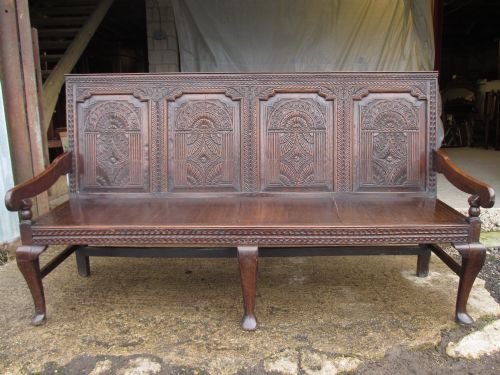
Traditional carved hall seating comprises a diverse array of wooden benches, settles, and chairs designed for corridors, landings, and reception areas. These furnishings accommodate domestic entrances with sturdy timber frames and sculptural backrests.
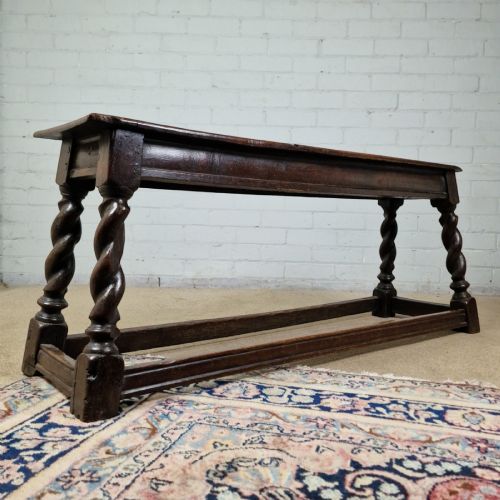
The options span several centuries, featuring pieces originating from the seventeenth century through to the Edwardian period and the early twentieth century. Oak and mahogany appear most frequently, shaped into styles ranging from Jacobean Revival to Regency.
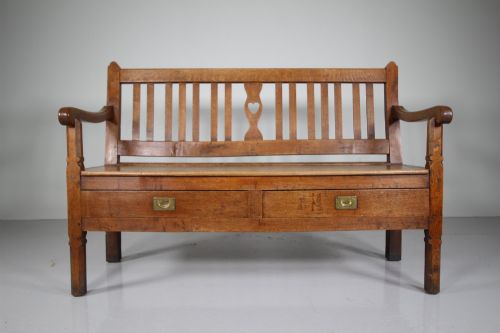
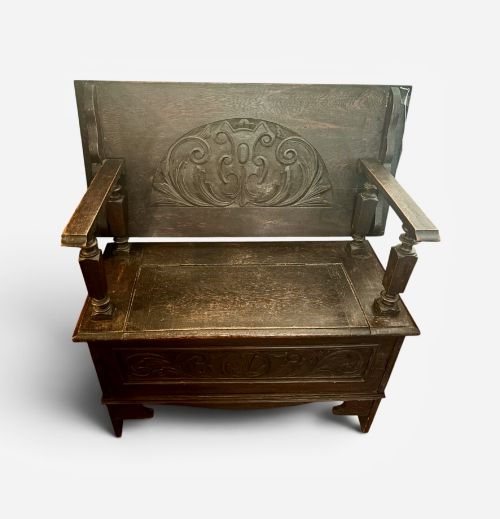
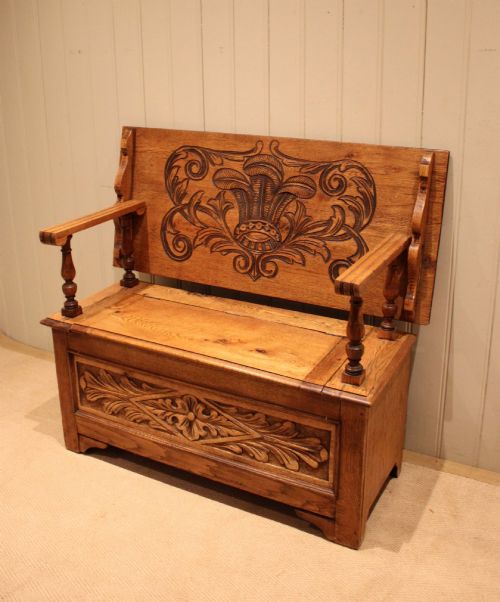
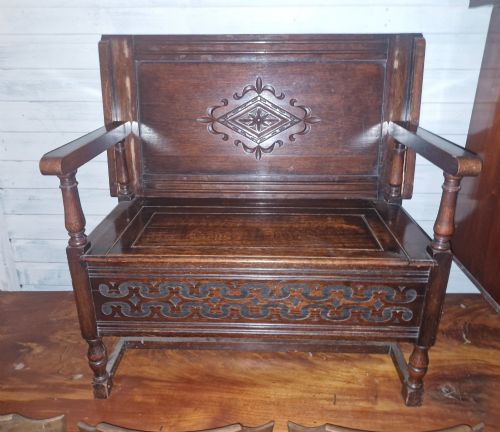
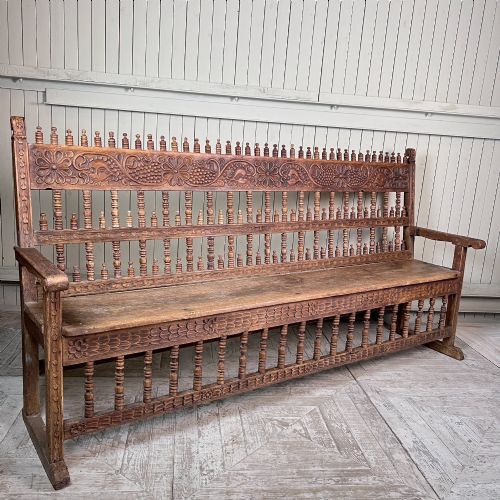
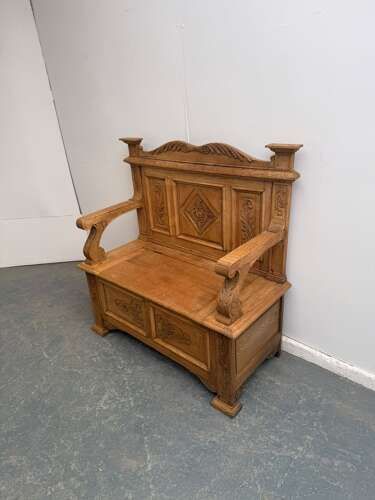
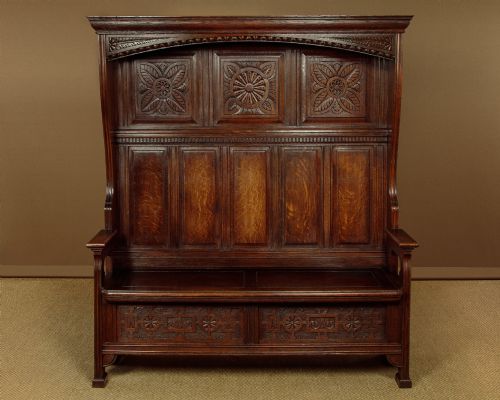
Buyers encounter numerous regional variations, including Welsh heart benches, Scottish shield back chairs, and Spanish colonial hardwood seating. Box settles with lift-up lids and fold-over tops provide dual utility for storage and seating in compact spaces.
Materials and construction
Makers utilised solid timbers such as oak, mahogany, walnut, and pine, selecting woods based on structural strength and grain pattern. Oak predominates in early vernacular pieces, while mahogany and walnut serve formal Regency and Victorian designs.
Joinery methods rely heavily on traditional panel construction, pegging, and dovetailing to withstand heavy daily use. Hand-carving decorates back panels and crestings, displaying geometric strapwork, linenfold, or foliate motifs.
Secondary materials include brass fittings, iron hardware, and occasional fabric or leather upholstery for cushioned seats. Wax finishes protect the timber surfaces while preserving the natural tone and texture of the wood.
Listings feature pieces spanning from the seventeenth century through to the 1930s, constructed predominantly in oak, mahogany, and walnut.
Quality and craftsmanship
The depth and crispness of the hand-carved detail distinguish finer examples from plain utilitarian seating. Sharp relief work on crest rails and back splats indicates skilled workshop execution.
Timber selection and preservation dictate overall structural integrity, with dense, well-figured grains holding up better over time. Original surface patination and minimal timber replacement preserve the historical authenticity of the piece.
Charles Tozer
The Traditional Carved Hall Seating Glossary
- Settle
- A wooden bench with a high back, solid arms, and often a storage box beneath the seat. This form protected sitters from draughts in medieval and early modern hallways.
- Wainscot chair
- An early wooden armchair constructed with panelled backrests and turned legs. These heavy seats date back to the seventeenth century.
- Monk's bench
- A convertible piece featuring a folding top that transforms the backrest into a table surface. This dual-purpose item suited smaller domestic spaces.
- Shield back
- A chair back shaped like a heraldic shield, popular during the eighteenth and nineteenth centuries. Cabinet makers often carved intricate wheatears or drapery into the centre.
- Strapwork
- A decorative carving motif resembling flat interlaced bands or leather straps. Craftsmen applied this geometric pattern during the Jacobean and revival periods.
Traditional Carved Hall Seating: Frequently Asked Questions
What is a monk's bench?
A monk's bench is a dual-purpose piece of furniture featuring a hinged top that folds down over the arms to create a small table. This clever design conserved space in historic hallways and chambers.
Craftsmen built these primarily from solid oak during the Victorian and Edwardian eras, combining seating and surface utility into one compact frame.
How do I use a hall settle?
A hall settle provides a robust seating option for entranceways, cloakrooms, or large landings. Many examples incorporate hinged seats that open to reveal storage for boots, textiles, or outdoor gear.
Placing one against a hallway wall creates an immediate focal point while offering practical everyday utility for busy households.
Are hall chairs comfortable?
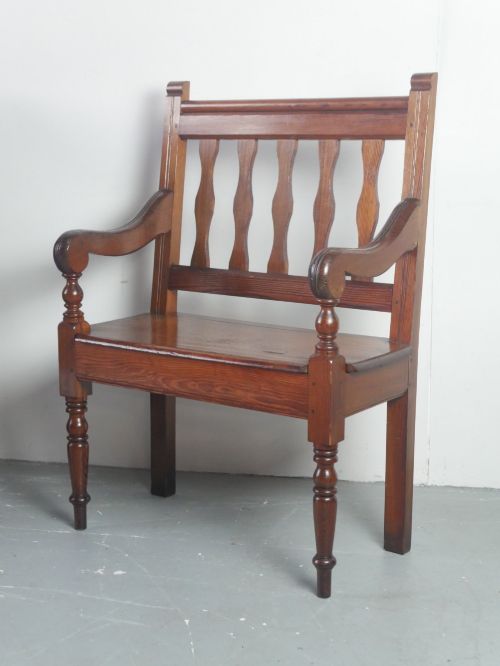
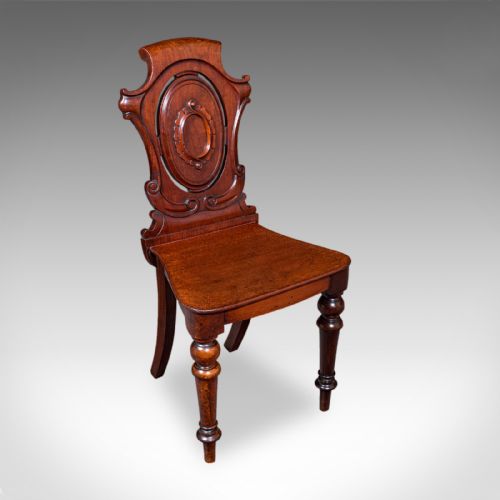
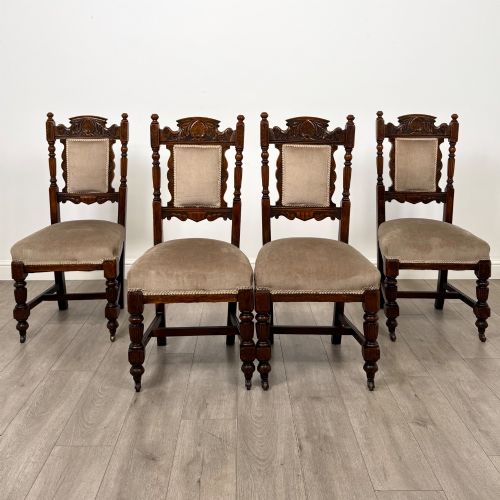
Historic hall chairs prioritised upright posture and durability over plush cushioning, as visitors used them for brief waits in reception rooms. Wooden seats and carved wooden backrests define most traditional examples.
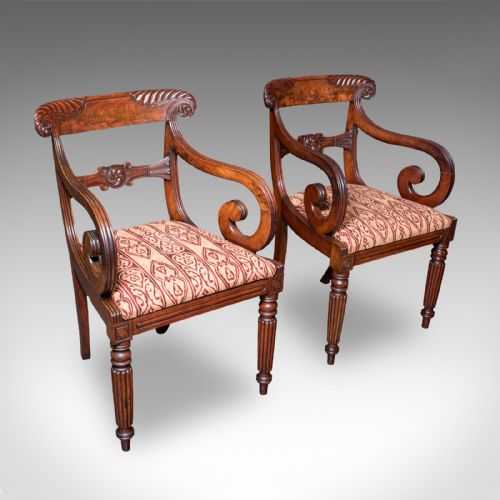
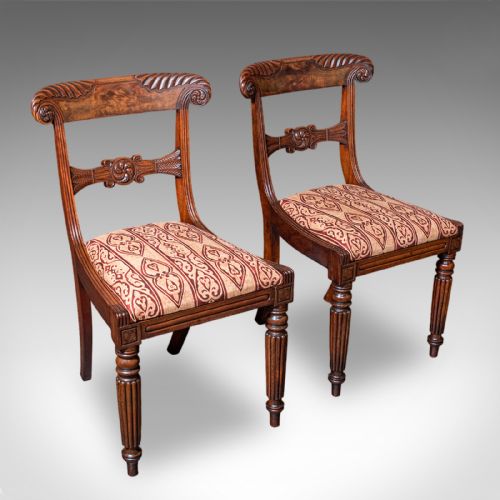
Some later nineteenth-century pieces include upholstered drop-in pads or leather panels to soften the seat for longer periods of sitting.
How do I date an oak bench?
Dating relies on examining the construction methods, tool marks, joinery, and stylistic carving motifs present on the timber. Seventeenth-century pieces display pegged joints and heavy wainscot panels, whereas Victorian revivals exhibit machine-sawn elements.
Comparing the patination and wear patterns helps confirm whether the woodwork matches the expected historical period.