


Traditional Cane Bergere Chair
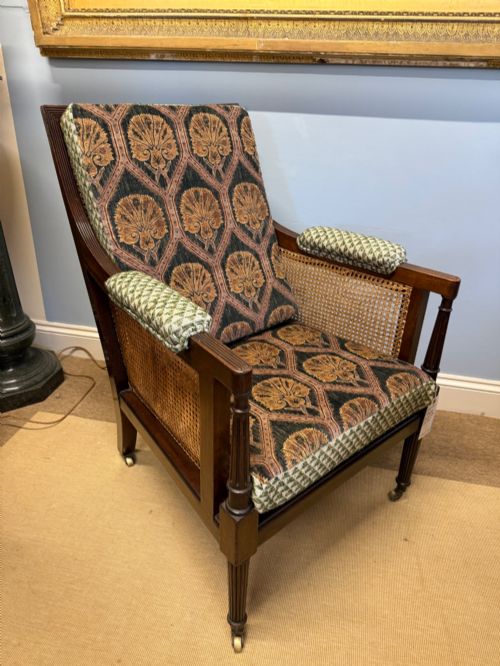
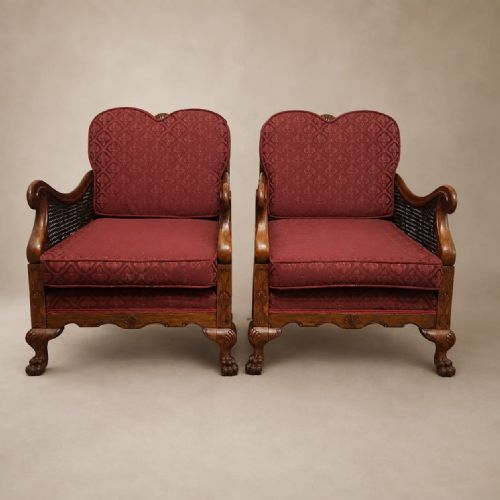
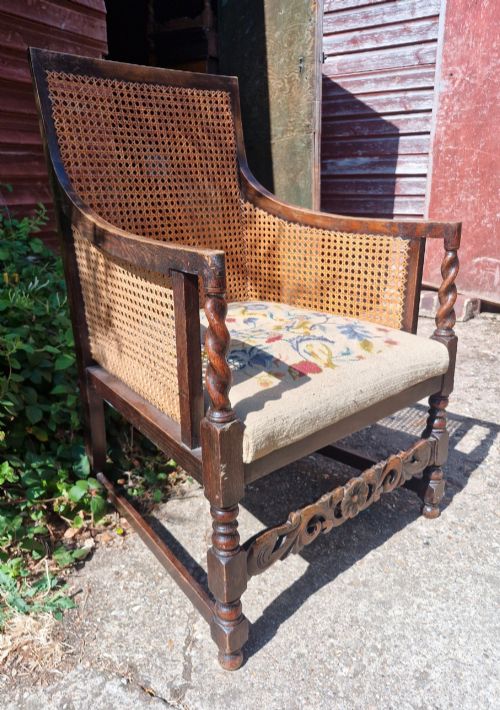
A traditional cane bergere chair offers deep, enclosed seating crafted across multiple centuries of distinct British and French revival styles.
Traditional Cane Bergere Chair
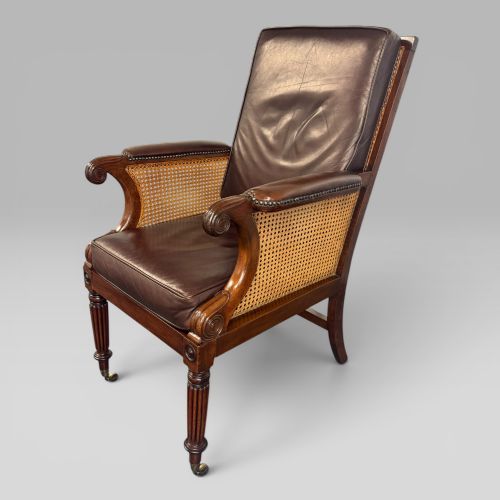
A traditional cane bergere chair is a deep, enclosed armchair designed for comfort and reading, appearing frequently in mahogany frames from the nineteenth century. These comfortable seats span periods from the Georgian era through to the 1920s, incorporating library armchairs and occasional suites.
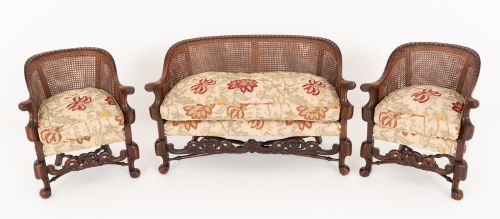
The versions most commonly met on this page include mahogany armchair forms from the nineteenth century alongside walnut and oak interpretations. Buyers also encounter specialised seating types such as children's high chairs, side chairs, and expansive seating suites reflecting revival tastes.
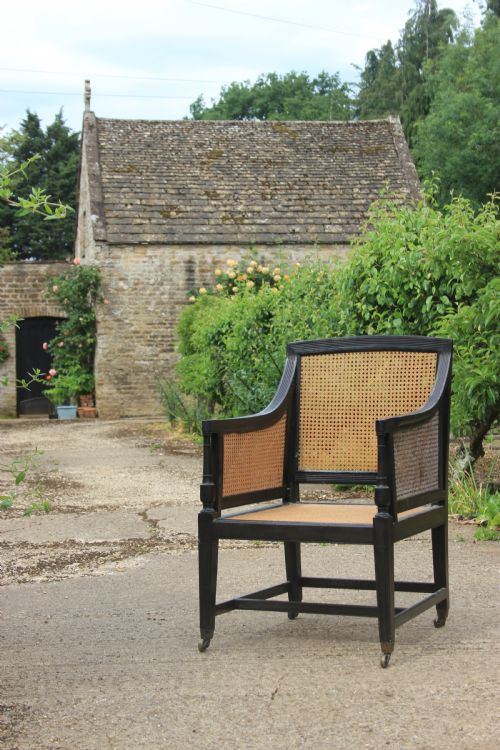
Originating in French designs before finding favour in British drawing rooms and libraries, these chairs maintain a distinct profile defined by enclosed sides and cane panels. The structural variety extends from Regency library models to Carolean style suites and Anglo-Indian variants.
How they were made
Makers constructed the structural frames primarily from timbers such as mahogany, walnut, and oak, often shaping the wood with carving or inlay. These sturdy skeletons support the woven components while providing a durable architectural base for daily use.
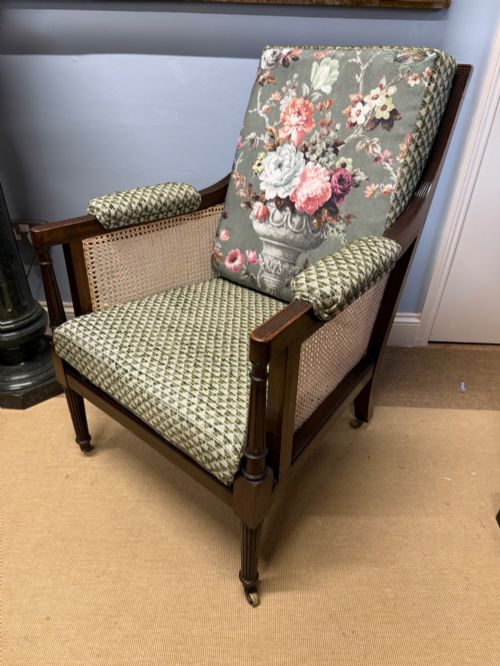
The defining characteristic involves woven cane panels, utilising split cane threaded through drilled frame channels to form tight supportive walls. Workshops incorporated secondary materials including brass, leather, and velvet for upholstery cushions and decorative detailing.
Listings feature mahogany, walnut, and oak frames spanning from the Georgian period through the nineteenth century and into the 1920s.
What varies in quality
The standard of craftsmanship shows in the tightness and regularity of the cane weave, alongside the crispness of timber carvings on mahogany and walnut frames. Superior pieces demonstrate seamless integration between the wooden structure and the woven panels.
Proportion and timber selection dictate the standing of individual chairs, with dense mahogany or figured walnut marking the upper tier of production. The handling of revival styles, from Regency to Carolean, reveals the maker's adherence to traditional proportion.
The Traditional Cane Bergere Chair Glossary
- Bergere
- An upholstered armchair of French origin characterised by closed sides filled with cane or upholstery. This seating form became a staple of British libraries and drawing rooms.
- Caning
- A method of weaving split rattan or cane through holes in a wooden frame to create a light yet supportive panel. It requires considerable skill to maintain tension across curved surfaces.
- Klismos
- An ancient Greek chair design featuring curved legs and a sweeping concave backrest. Nineteenth-century makers revived this classical form with caned seats.
- Carolean Style
- A revival of late seventeenth-century English furniture design featuring exuberant carving, scrolls, and crown motifs. It appears on nineteenth-century seating frames.
- Regency
- A British design period spanning the early nineteenth century defined by classical restraint and archaeological influence. Pieces from this era often utilise dark timbers like mahogany.
Traditional Cane Bergere Chair: Frequently Asked Questions
What is a bergere chair?
A bergere chair is a French-style armchair featuring enclosed sides filled with cane or upholstery, designed for comfortable lounging.
These chairs evolved to become central fixtures in nineteenth-century British libraries and drawing rooms, often paired with loose cushions.
How do I care for cane furniture?
Cane furniture requires stable humidity levels to prevent the natural rattan material from drying out and becoming brittle.
Regular dusting with a soft brush keeps the weave clean, while occasional dampening helps maintain the flexibility of the split cane.
Are these chairs comfortable for daily use?
These armchairs are built with deep seats and enclosed wooden frames designed to offer substantial postural support during extended periods of reading.
The addition of loose feather or hair-filled cushions adapts the firm woven base for relaxed seating.
How can I tell the period of a chair?
Dating relies on examining the timber species, joinery techniques, and stylistic markers such as Regency curves or Victorian proportions.
Comparing the turning of the legs and the style of the cane work against documented examples helps confirm the era of manufacture.