
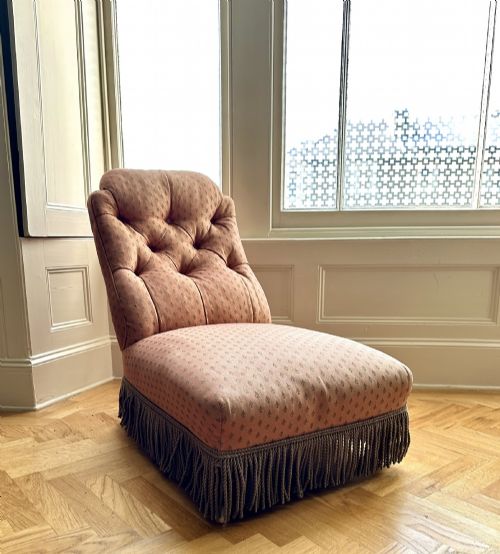


Traditional Buttoned Easy Chair
A traditional buttoned easy chair offers deep upholstery and sprung comfort, bringing nineteenth-century sitting rooms directly into modern homes.
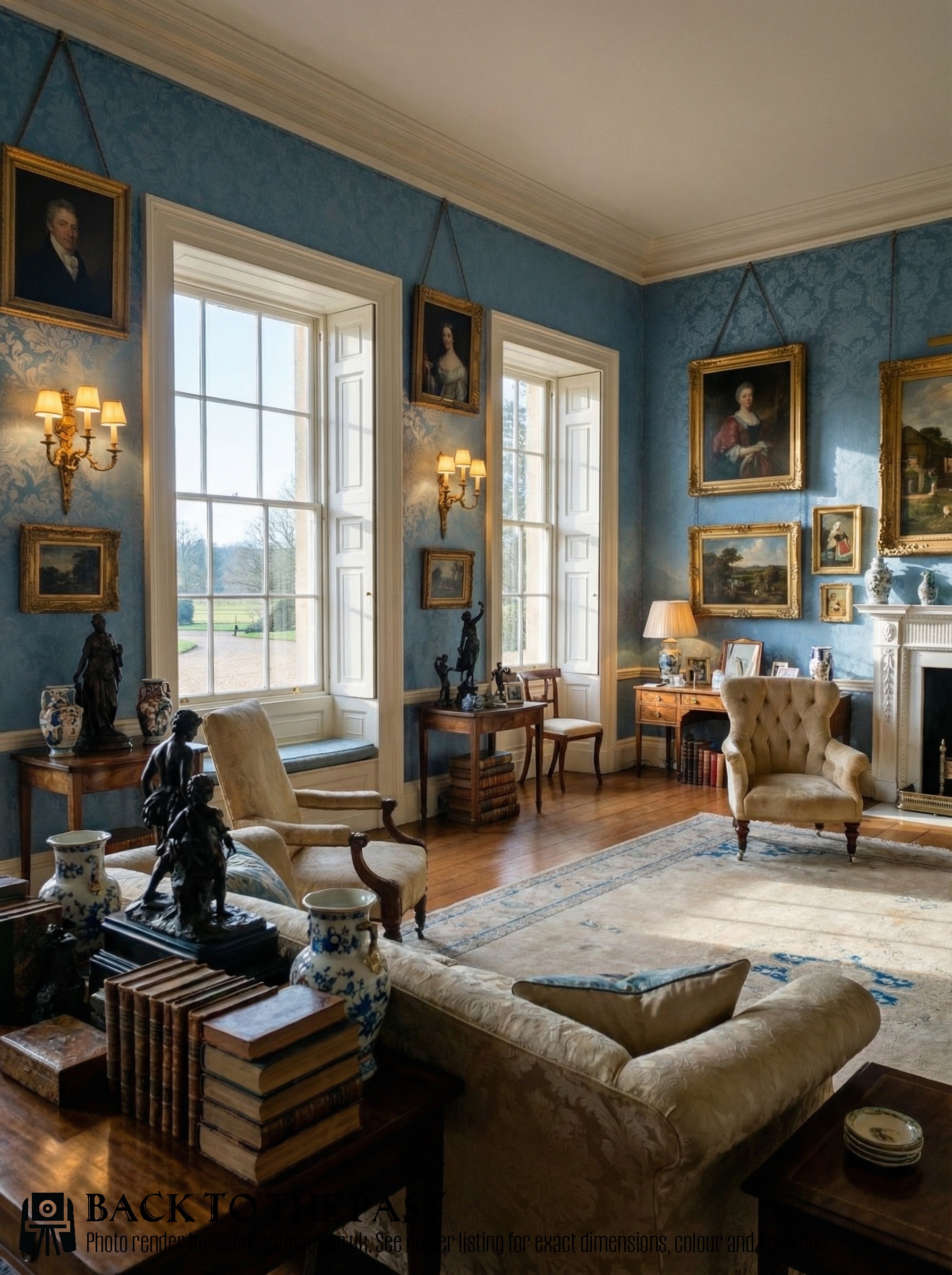
Traditional Buttoned Easy Chair
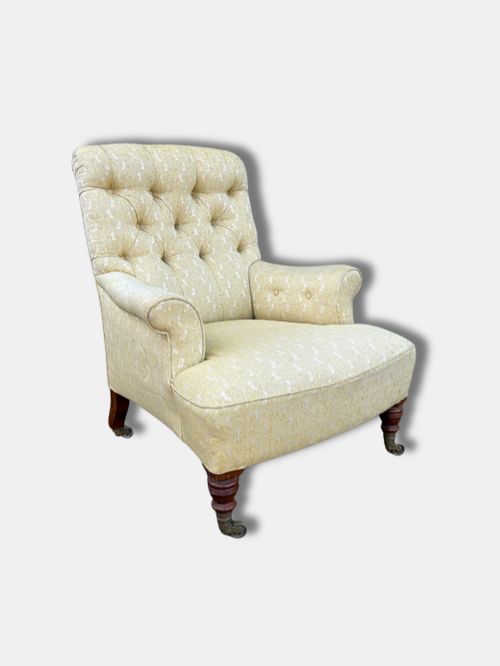
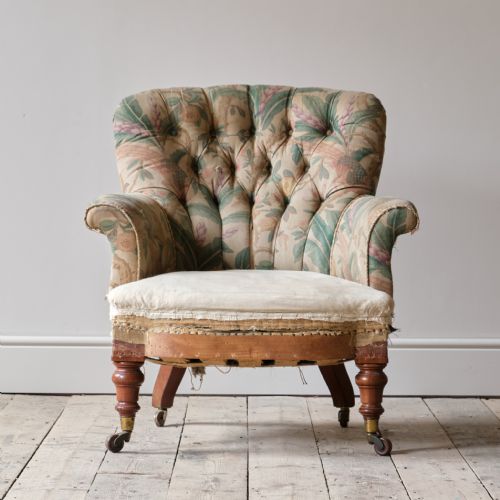
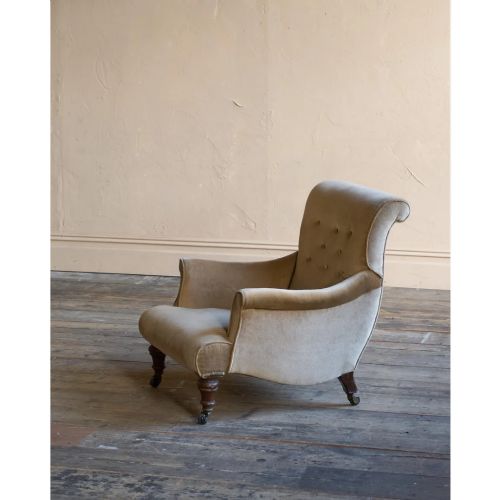
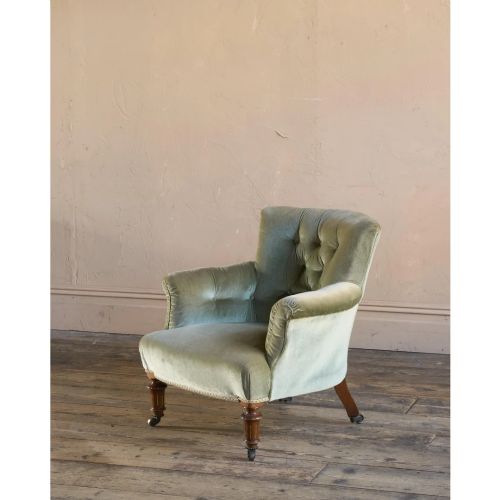
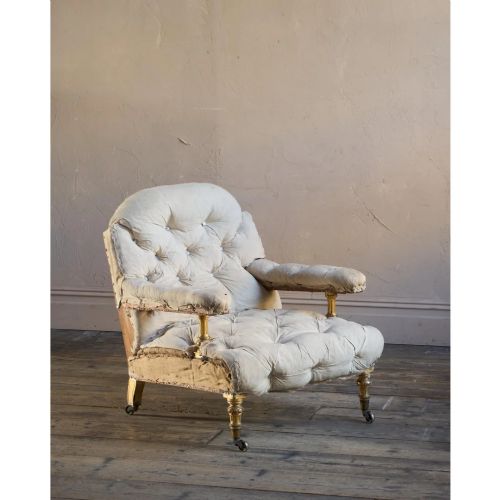
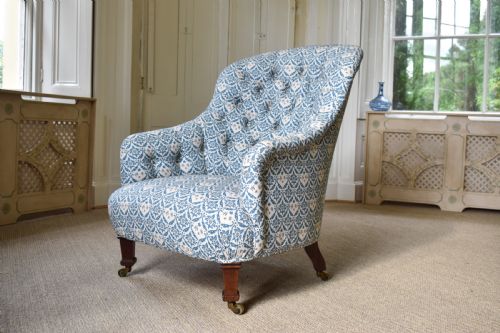
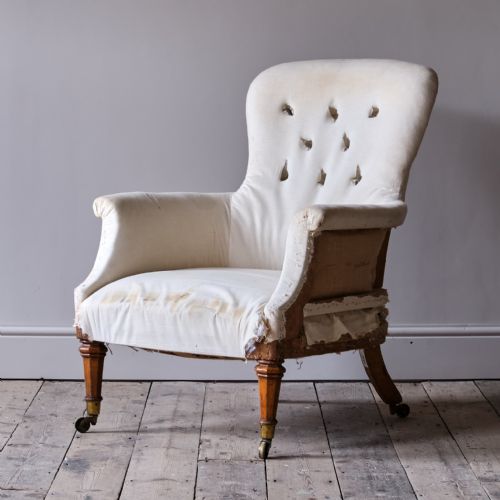
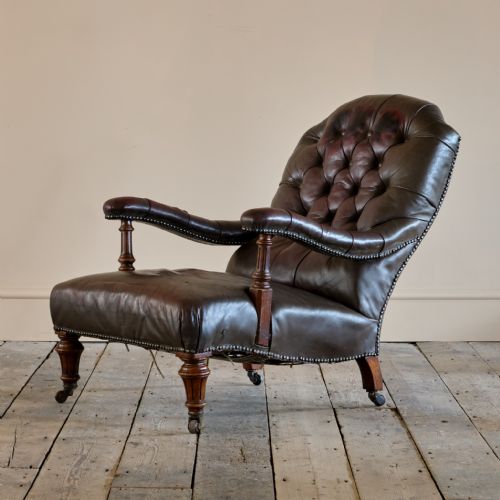
A traditional buttoned easy chair is fundamentally a low, upholstered seat designed for deep relaxation, usually featuring sprung backs and generous armrests. These pieces belong predominantly to the nineteenth century, spanning Victorian, Edwardian, and William IV periods, alongside distinct workshop styles.
The specimens seen here appear most frequently as nineteenth-century armchairs and slipper chairs, often carrying the characteristic low profile of English country house seating. Makers such as Howard and Sons and Gillows dominate the finer examples, while Woodstock and Shoolbred styles provide alternative expressions of the form.
Buyers encounter these seating forms in various frames, ranging from open armchairs in walnut and mahogany to fully upholstered club chairs covered in velvet, leather, and ticking. Each piece reflects the domestic comfort prioritised by Victorian and Edwardian households.
What varies in quality
Quality in a traditional buttoned easy chair rests primarily on the integrity of the maker's signature touches, such as original stamped brass castors and authentic frame markings. Pieces originating from renowned workshops like Howard and Sons command attention through superior carpentry and retained labels.
The handling of materials also separates ordinary examples from exceptional ones, seen in the density of the hardwood frame and the fidelity of subsequent upholstery to historical methods. Fabric choice and the crispness of the buttoning further distinguish workshop pieces from standard commercial production of the period.
Original brass castors stamped with maker's names often hide quietly beneath the skirts of nineteenth-century armchairs.
Howard and Sons·Gillows·Cornelius V Smith
The Traditional Buttoned Easy Chair Glossary
- Buttoned
- Upholstery secured with deep tufting pulled tight by twine and fastened with fabric-covered or leather buttons. This technique creates a diamond pattern across the backrest that holds the internal stuffing firmly in place.
- Castor
- A small wheel fitted to the base of furniture legs to ease movement across floors. Brass variations are frequently found on nineteenth-century seating.
- Ticking
- A tightly woven cotton or linen fabric, traditionally striped, used as a durable dust cover beneath outer upholstery or as a primary covering.
- Slipper chair
- A low-set bedroom chair without arms, designed to allow easy movement while dressing. They share the cushioned comfort of larger easy chairs.
- Wingback
- An armchair featuring protective side panels attached to the backrest. These wings historically blocked drafts in large rooms.
Traditional Buttoned Easy Chair: Frequently Asked Questions
How do I identify a Howard and Sons chair?
Authentic pieces by this maker often feature stamped wooden frames and original brass castors bearing the company's name. The distinctive proportions and high-grade spring construction also signal their origin.
Many examples retain original ticking or bear faded workshop stamps beneath the upholstery layers. Comparing the turned wood legs and structural weight against known examples confirms the attribution.
Where were these chairs placed originally?
Victorian households positioned these comfortable seats in libraries, drawing rooms, and master bedrooms where relaxation took precedence. Their low frames suited intimate conversation areas near fireplaces.
Country houses utilised them extensively in communal family spaces, leading to the durable upholstery choices seen today. Their versatile scale allowed them to integrate easily into various reception rooms.
How should I care for leather and velvet upholstery?
Leather surfaces require regular conditioning with specialist creams to prevent drying and cracking over time. Gentle dusting maintains the natural grain without harming the hide.
Velvet textiles need careful brushing with the pile to lift dust and prevent crushing of the delicate fibres. Professional cleaning remains advisable for antique fabric to preserve the integrity of the original weave.