

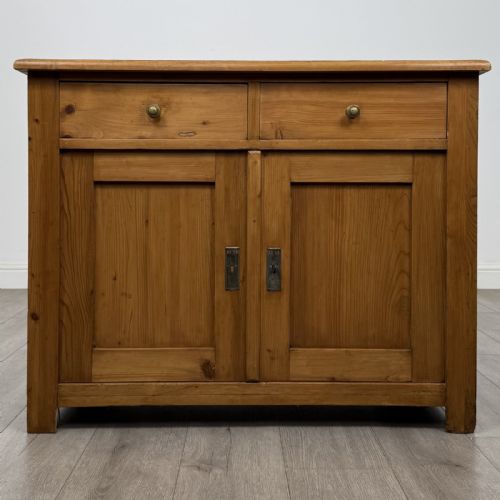
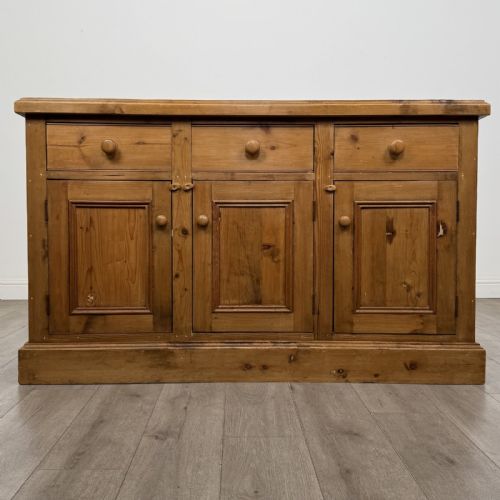
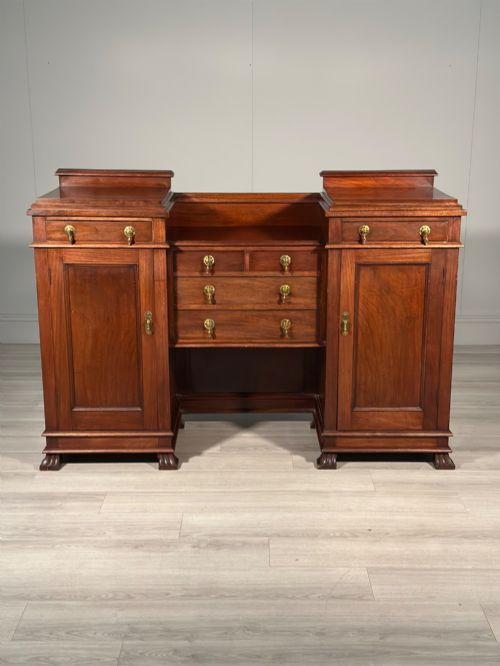
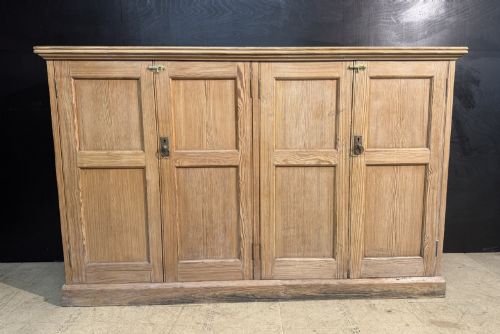
Traditional Buffet Cabinet
A traditional buffet cabinet anchors a dining room with practical storage and enduring presence.
Traditional Buffet Cabinet
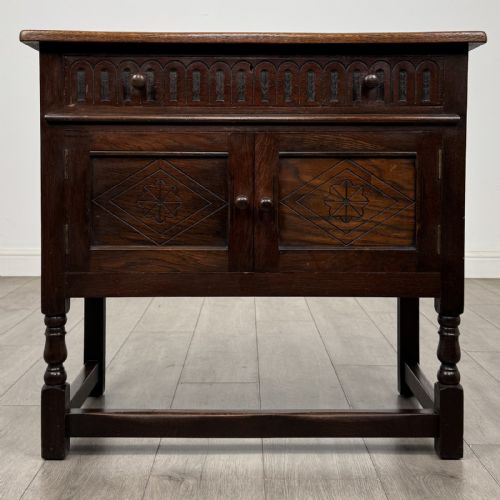
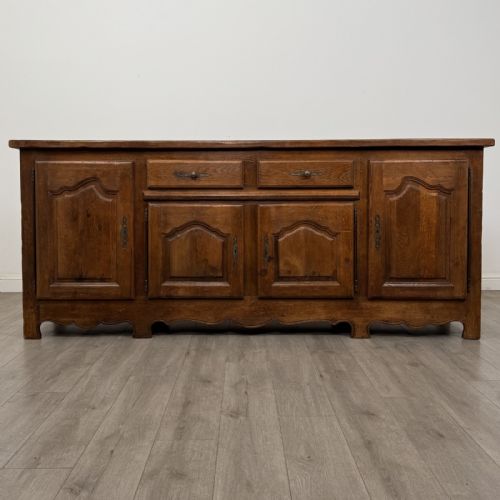
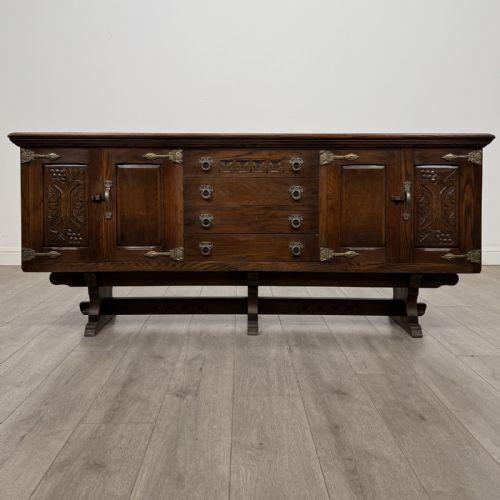
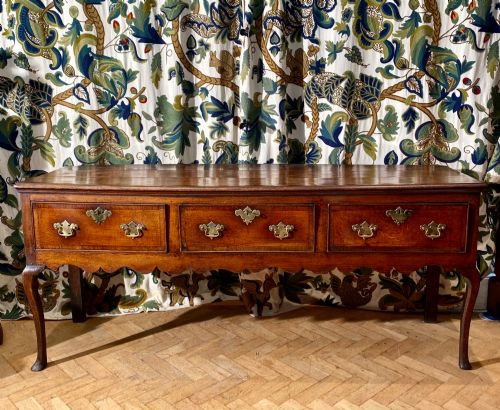
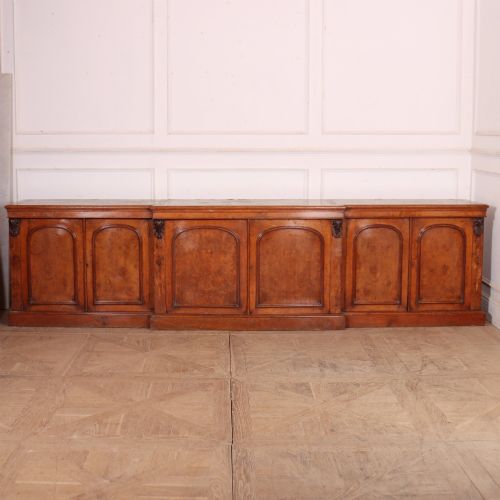
A traditional buffet cabinet encompasses sideboards, dresser bases, and large cupboards designed for dining rooms and kitchens. These storage pieces appear across Georgian, Victorian, Edwardian, and twentieth-century periods.
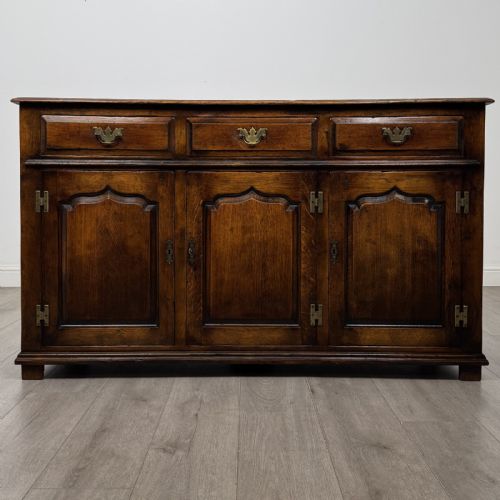
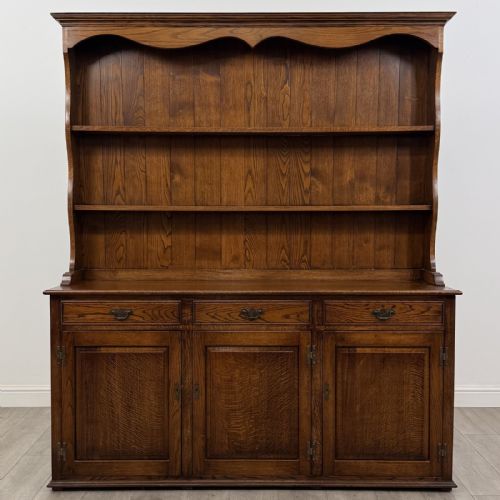
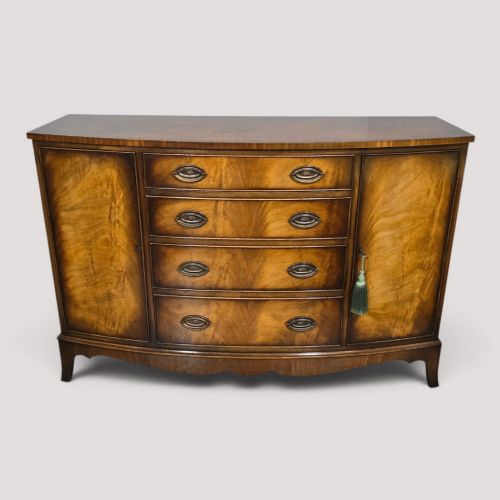
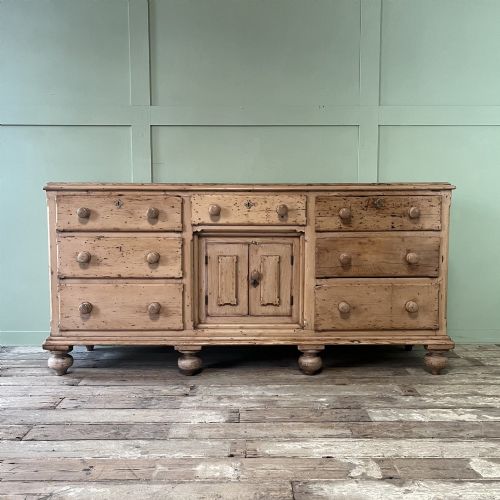
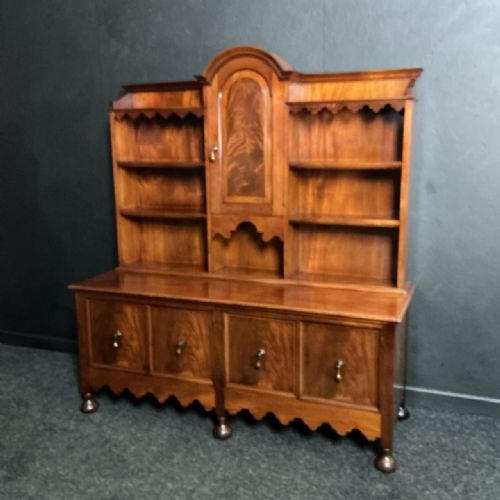
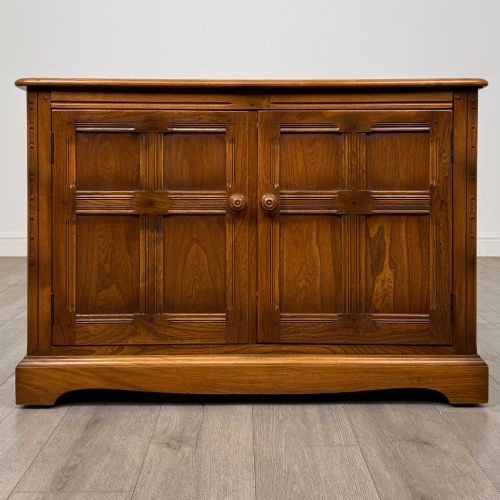
The most common examples on this page are oak and pine dresser bases and sideboards, ranging from rustic country pieces to formal mahogany designs. They provide substantial surface space and interior storage through combinations of drawers and doors.
Origins stretch from English workshops to French provincial and Chinese ateliers, bringing diverse regional proportions and timber selections to the category.
Materials and Construction
Cabinetmakers utilised sturdy hardwoods and softwoods such as oak, mahogany, and pine, frequently selecting burr walnut or flame mahogany veneers for decorative surfaces. These timbers provide the structural integrity required for heavy daily use.
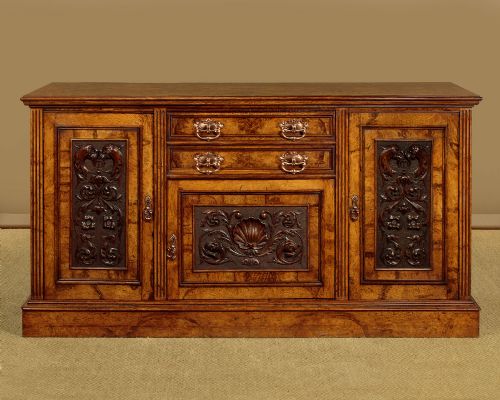
Construction techniques include hand-carved details, raised linenfold panels, and shaped stretcher bases, complemented by fitted drawers and brass handles.
Some examples retain original paint finishes, while others display waxed grain surfaces or marble tops.
Traditional Buffet Cabinet Retail Price Guide 2026
Typical asking prices for traditional buffet cabinet among the pieces listed under this phrase on Sellingantiques today, from the lower quarter to the upper quarter. They describe what is for sale here now, not the wider market.
Some nineteenth-century pine dressers still carry the faint, pleasant aroma of decades spent storing kitchen spices and damp garden herbs.
Assessing Quality and Execution
Quality rests in the selection of timber and the precision of the cabinetmaker's joinery, distinguishing utilitarian storage from refined furniture. Superior pieces exhibit well-figured wood grains, such as burr walnut or flame mahogany, matched carefully across doors and drawers.
Carved ornament and brass hardware reflect the standard of the workshop, with hand-tooled details outlasting mass-produced ornamentation. The integrity of the original structure and drawers determines how well the piece retains its function.
Rushworth's·Jaycee
The Traditional Buffet Cabinet Glossary
- Dresser base
- A low cabinet with drawers and cupboards, originally used in kitchens for food preparation and storage.
- Breakfront
- A piece of furniture where the central section projects forward from the flanking sections.
- Linenfold
- A style of wood carving that resembles folded parchment or linen, common on Tudor and revival oak panels.
- Serpentine
- A curved furniture front shaped in a convex-concave-convex wave line.
- Enfilade
- A long sideboard or cabinet format originating in France, typically featuring three or more doors.
Traditional Buffet Cabinet: Frequently Asked Questions
What is a traditional buffet cabinet used for?
These cabinets provide surface space for serving food and interior storage for tableware, linen, and dining room essentials. They function as both practical storage units and focal points in dining spaces.
Historically, they evolved to meet the demands of hosting and food preparation, moving from kitchens into more formal dining rooms over the centuries.
How do I date a wooden sideboard?
Dating relies on identifying period characteristics such as timber choice, hardware styles, and construction methods. Georgian pieces lean toward formal mahogany, while Victorian examples often feature heavy proportions and dark finishes.
Twentieth-century pieces frequently employ revival styles like Jacobean carving, bridging historical inspiration with later manufacturing dates.
Are pine and oak pieces different in style?
Pine pieces generally present a more rustic appearance, often associated with country kitchens, painted finishes, and simpler lines. Oak items range from early country dresser bases to heavily carved twentieth-century revival cupboards.
Choosing between them depends on whether the interior requires a warm waxed pine aesthetic or the richer, darker tones of figured oak.
Where should I place a buffet cabinet?
A buffet cabinet fits naturally against a dining room wall, providing a surface for lamps, displays, or serving dishes during meals. Their depth requires adequate clearance behind dining chairs for comfortable movement.
In larger kitchens, lower dresser bases serve as continuous preparation counters while housing everyday crockery.