


Traditional Brass Hearth Set
A traditional brass hearth set brings warmth and functional elegance to the fireplace through enduring metalwork.
Traditional Brass Hearth Set
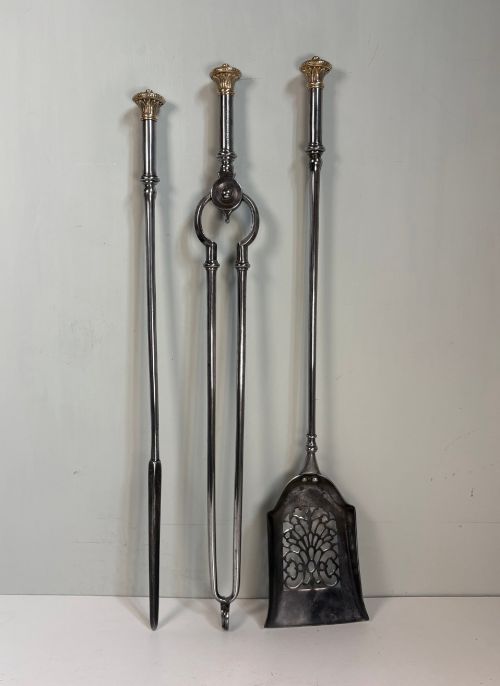
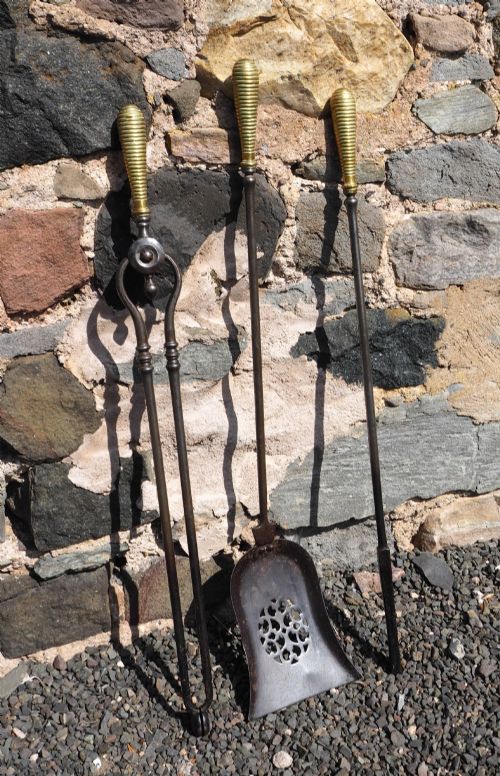
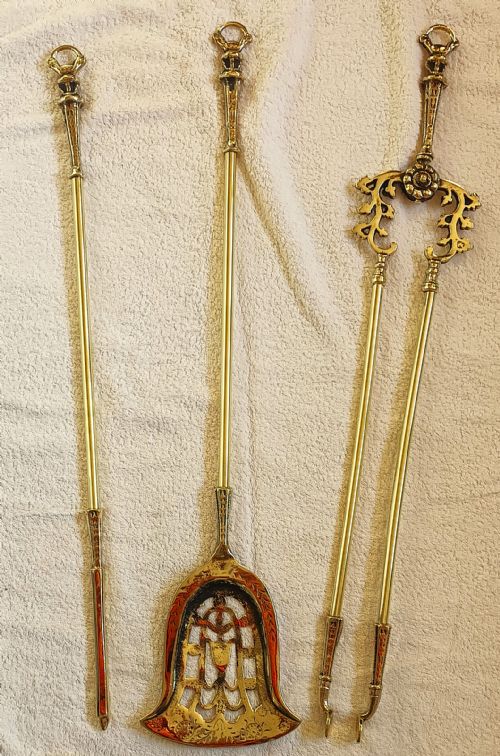
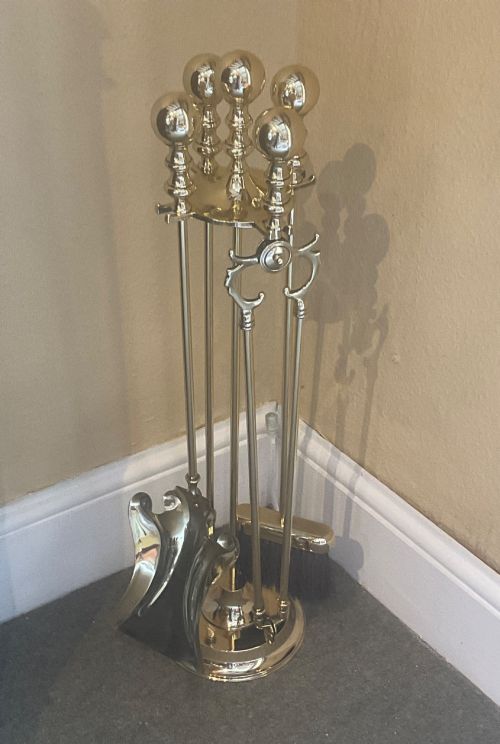
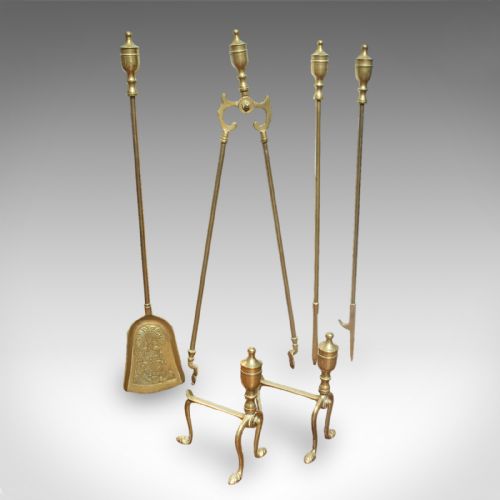
A traditional brass hearth set comprises essential fireplace accessories designed to manage a coal or wood fire cleanly and effectively. When searching for a traditional brass hearth set, buyers encounter collections of coordinated fire irons, companion sets, and associated fire dogs originating primarily from the Victorian and Edwardian eras.
The most common configurations on this page include sets of three fire irons such as a shovel, poker, and tongs, frequently paired with a stand or complementary fire dogs. These items combine polished or cast brass elements with robust steel and iron components to withstand daily use near an active hearth.
Originating largely from the eighteenth century through to the early twentieth century, these suites reflect period domestic interiors where hearth furniture served both a utilitarian purpose and a decorative role in the principal rooms of a house.
How they were made
The construction of these pieces relies heavily on a combination of bright brass, cast iron, and hardened steel, where brass provides decorative visual warmth and iron supplies the structural strength needed for handling burning fuel.
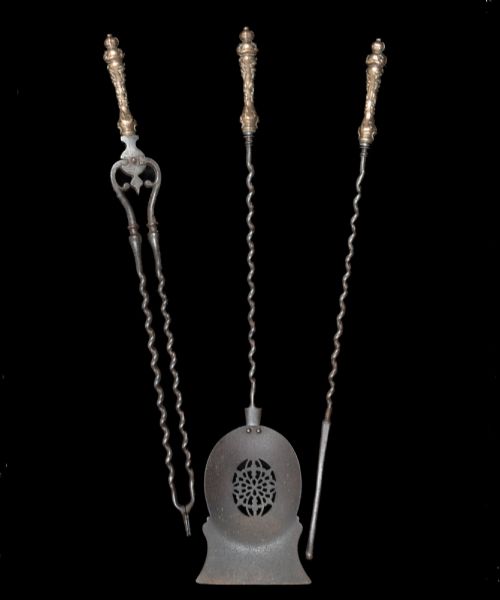
Makers utilised techniques such as casting, forging, and hand-finishing to produce detailed elements like rope twist handles, heavy shafts, and ornate Rococo or Arts and Crafts stylistic motifs.
Individual components were assembled using robust joinery and threaded fittings, ensuring the tools could endure the physical demands of tending an open fire while maintaining their polished finish.
Listings feature periods spanning from the eighteenth century through the Edwardian era, incorporating materials like brass, steel, gunmetal, and copper.
What varies in quality
Quality in these hearth collections is determined by the weight of the metal and the precision of the manufacturing, with heavier brass and substantial steel shafts indicating superior durability and material substance.
The refinement of surface detail, from crisp casting in Rococo revival styles to cleanly turned rope twist handles, separates standard utility items from finer domestic show pieces produced by skilled workshops.
Preservation of the original metal surfaces and the integrity of the joints also influence the overall standard, as untouched patination and solid, unbent tool heads demonstrate careful handling over generations.
The Traditional Brass Hearth Set Glossary
- Companion set
- A coordinated collection of fireplace tools, typically comprising a shovel, poker, and tongs, arranged together on a stand or rack beside the hearth.
- Fire irons
- The functional implements used to tend a fire, traditionally including pokers for adjusting fuel, shovels for clearing ash, and tongs for moving embers.
- Fire dogs
- Ornamental iron or brass supports placed on either side of a hearth to hold logs above the floor of the fireplace and improve airflow.
- Rope twist
- A decorative spiral carving or moulding resembling twisted rope, commonly found on the handles of better quality fire tools.
- Gunmetal
- A type of bronze alloy containing copper, tin, and zinc, occasionally utilised alongside brass and steel in nineteenth-century hearth tool manufacturing.
Traditional Brass Hearth Set: Frequently Asked Questions
What tools come in a set?
Traditional sets generally include a shovel, a poker, and a pair of tongs designed to handle fuel and ash.
Some collections also incorporate fire dogs, fenders, or a dedicated stand to keep the implements organised.
How do I clean brass safely?
Maintenance involves gentle dusting and the occasional use of a mild metal cleaner suitable for brass.
Avoid abrasive materials that can strip away the historical patination accumulated over decades of domestic use.
Are these tools usable today?
Most pieces are constructed from durable steel and brass, making them fully functional for tending an active open hearth.
Heavier Victorian and Edwardian examples are particularly robust and built to withstand regular handling.
How do I date these items?
Dating relies on stylistic clues such as Rococo revival curves, Arts and Crafts simplicity, or Georgian proportions.
Manufacturing methods and material combinations, such as the pairing of gunmetal and steel, also point toward specific decades.