


Victorian Fire Tool Set
A victorian fire tool set brings the practical hearth equipment of the nineteenth century into modern rooms with enduring metalwork.
Victorian Fire Tool Set
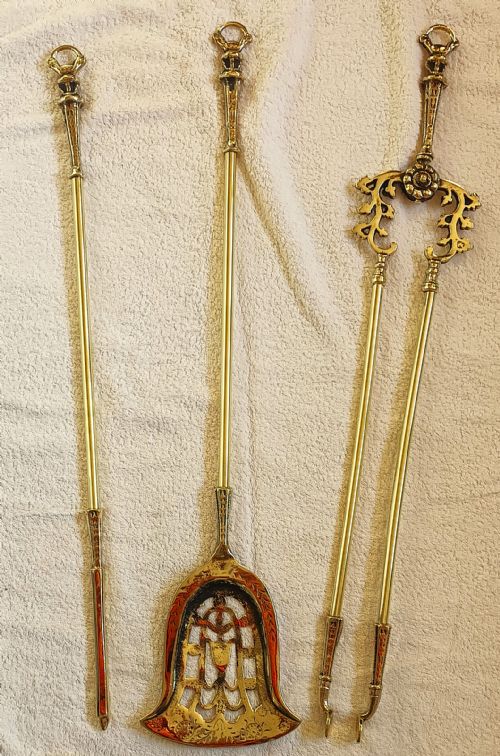
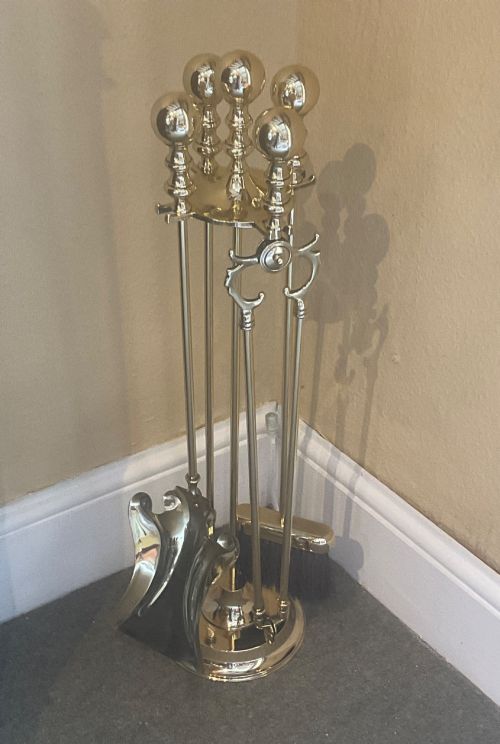
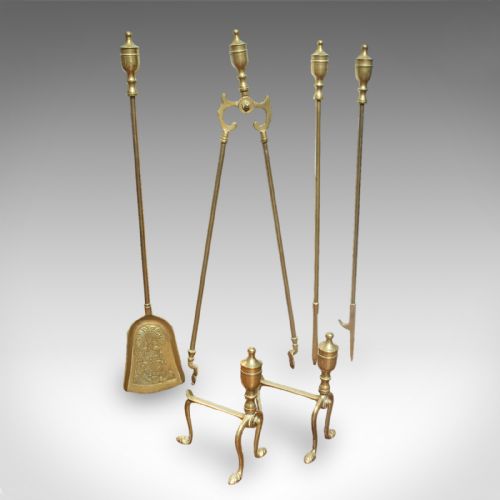
When you search for a victorian fire tool set, you encounter groupings designed to tend coal or wood hearths efficiently. These assemblages typically comprise a poker, shovel and tongs, sometimes gathered alongside fire dogs or a companion stand.
The most common versions met here combine bright brass shafts with steel working ends or feature solid cast and wrought iron. Sets range from restrained country house inglenook groupings to decorative Rococo and Arts and Crafts designs.
English country house examples sit alongside continental variants, reflecting diverse period tastes from Gothic Revival to Art Nouveau. Individual pieces often arrive together on matching stands or hung from dedicated umbrella and companion stands.
Materials and Techniques
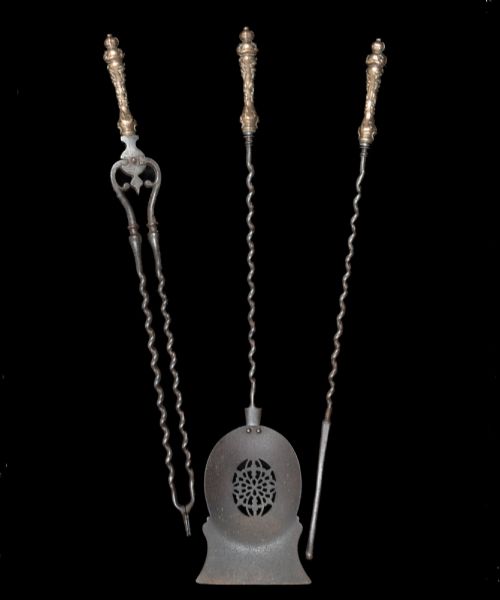
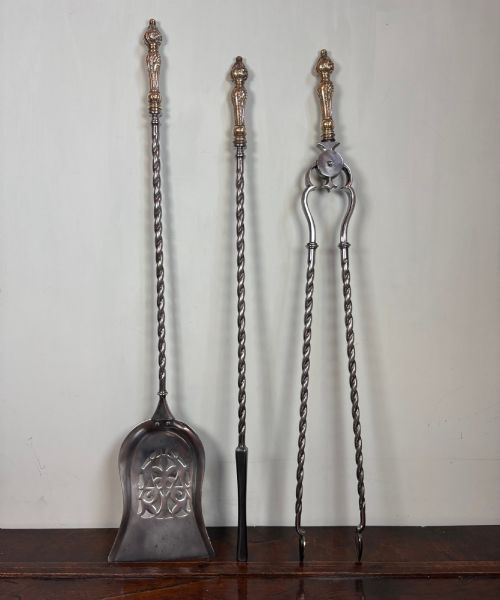
Blacksmiths and metalworkers shaped these objects using durable combinations of brass, steel, iron, and cast iron. Polished steel provided strong functional shafts for pokers and tongs, while brass added ornamental warmth through cast handles and finials.
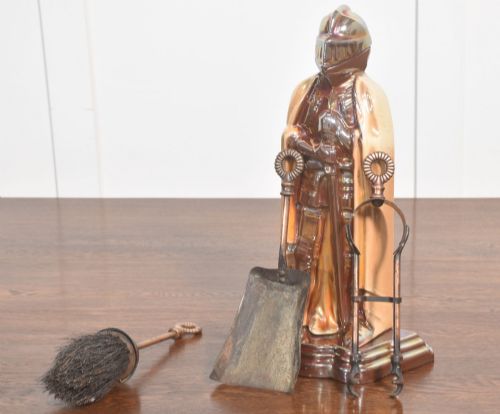
Craftsmen utilised techniques such as rope twist handles, applied decoration, and riveted joints to secure working ends under heavy use. Painted metal and gun metal also appear in select groupings, showing the wide range of workshop methods employed.
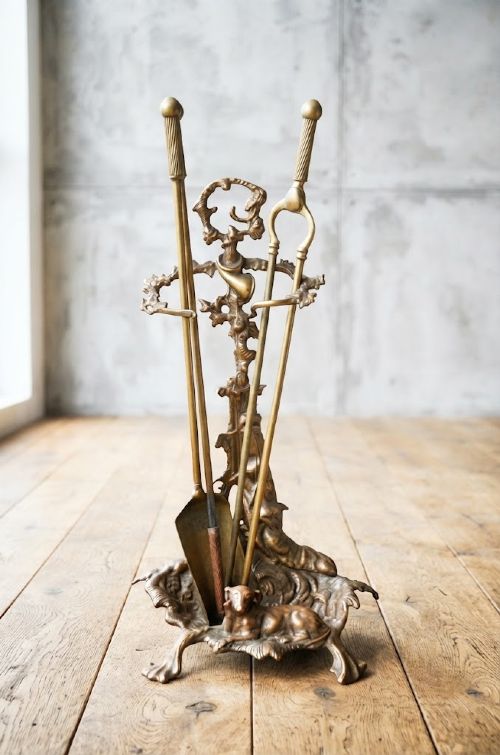
One brass companion stand doubles as an umbrella rack featuring a detailed hunting scene.
Judging Quality
Quality rests on the weight of the metal and the integrity of the joins between handles and shafts. Heavier gauges of brass and thick forged steel indicate better survival through decades of active hearth maintenance.
Refinement in the casting of handles and the crispness of decorative details separate standard utilitarian sets from superior examples. Companion stands with integrated heavy bases or detailed hunting scenes show greater ambition in design.
The Victorian Fire Tool Set Glossary
- Companion set
- A matched collection of fireplace implements usually arranged on a shared stand or rack. This term covers standard groupings of pokers, shovels, and tongs.
- Fire irons
- The individual functional implements used for managing burning fuel in a grate. They include pokers, shovels, and tongs.
- Fire dogs
- Supporting metal irons placed inside a hearth to hold logs above the floor of the grate. They frequently accompany larger tool suites.
- Rope twist
- A decorative spiralling pattern worked into metal handles or shafts. This technique catches the light and adds grip.
Victorian Fire Tool Set: Frequently Asked Questions
What tools are in a set?
A standard grouping includes a poker for moving logs, a shovel for clearing ash, and tongs for handling fuel. Some configurations add fire dogs or a companion stand.
These implements worked together to maintain an open fire safely throughout the nineteenth century.
How were they used?
The poker adjusted burning coal or wood, the tongs placed fresh fuel onto the grate, and the shovel cleared fallen debris. Together they kept the hearth functioning cleanly.
Servants or homeowners used these metal implements daily during colder months.
Are these sets still functional?
Most surviving metal tools remain sturdy enough for regular use around an open hearth or wood burner. Solid brass and steel constructions withstand normal heat and handling.
Owners often place them by working fireplaces as well as using them for static decorative display.
How do I date a set?
Stylistic clues such as Rococo curves, Gothic Revival motifs, or Arts and Crafts simplicity help place a set within the nineteenth century. Material choices like polished steel and cast brass also point to specific manufacturing decades.
Comparative forms in archive records provide further context for dating individual pieces.