


Traditional Brass Fire Rail
These traditional brass fire rail pieces bring genuine period character to a hearth while protecting the room.
Traditional Brass Fire Rail
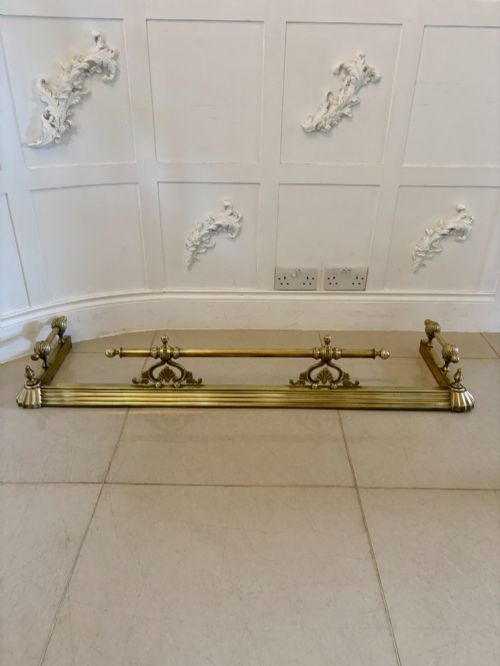
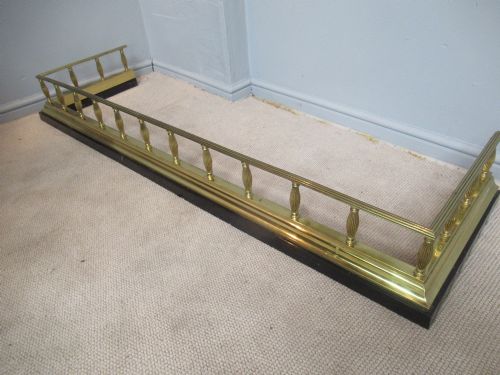
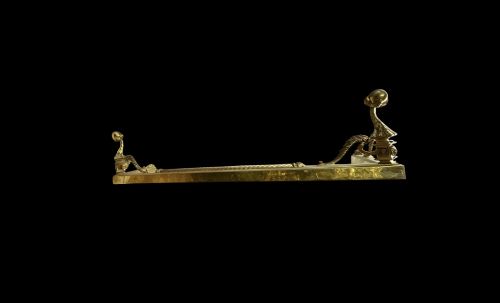
When you search for a traditional brass fire rail, you are looking at fireplace accessories designed to fit around the hearth and keep stray embers from the floor. These items range from simple low curbs to substantial guards incorporating elevated rails.
On this page, you are most likely to meet Victorian and Edwardian examples dating from the nineteenth and early twentieth centuries. The selection spans straightforward metal curbs to nursery guards equipped with integrated clothes rails.
How they were made
Maker workshops constructed these fenders primarily from brass, often pairing the bright metal with iron or steel for added structural weight. Many incorporate polished brass components alongside wire mesh and occasional copper accents.
Construction techniques involved heavy gauge casting and fabrication, producing robust frames designed to withstand daily fireside heat. Pierced sheet metal, scrolled details, and decorative elements such as lions frequently ornament the structural iron and steel bases.
Some nineteenth-century guards doubled as indoor drying racks for damp socks after a rainy ride.
What varies in quality
The division between standard examples and top-tier pieces lies in the gauge of the metal and the crispness of the casting. Heavy gauge brass and substantial iron or steel foundations indicate a higher grade of manufacture intended for long service.
Quality also shows in the ambition of the design, moving from plain utilitarian curbs to scrolled fenders and fully detailed nursery guards with integrated rails. The presence of fine pierced work and well-executed decorative attachments elevates the piece.
The Traditional Brass Fire Rail Glossary
- Curb fender
- A low metal barrier that sits directly on the hearth to contain ash and burning embers. These pieces mark the boundary of the fireplace opening.
- Nursery guard
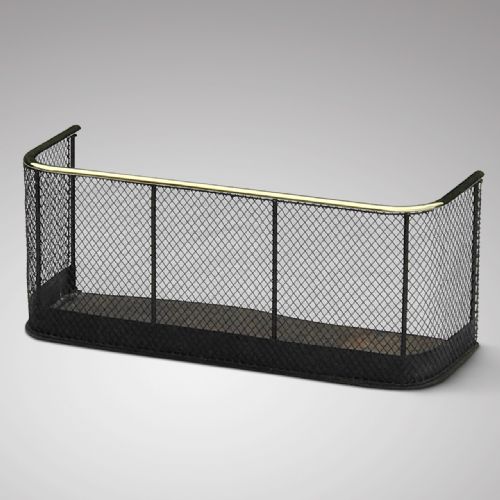
- A tall protective screen fitted with a clothes rail designed to keep children safely away from the fire. These often combine sturdy wire mesh with a prominent brass top rail.
- Pierced brass
- Sheet metal cut through with decorative repeating patterns to allow heat to circulate while retaining a finished appearance. This technique adds visual lightness to heavy fireplace furniture.
- Heavy gauge
- A term describing thicker, more robust sheet or tubular metal used in construction. Pieces made with heavier metal resist bending and hold up better under constant domestic use.
Traditional Brass Fire Rail: Frequently Asked Questions
What is a traditional brass fire rail?
A traditional brass fire rail is a metal fixture placed around a hearth to protect the surrounding room from sparks and ash. These items often form part of a fender or act as an elevated guard.
Such pieces date primarily from the Victorian and Edwardian periods, combining functional iron or steel frames with polished brass decorative elements.
How do I date a brass fender?
Dating a fender involves looking at the combination of materials, construction methods, and decorative styles present in the piece. Victorian examples often feature cast iron bases with heavy brass mouldings and pierced metalwork.
Edwardian items frequently display lighter construction or specific decorative motifs typical of the early twentieth century. Examining the weight of the metal and any assembly screws helps confirm the era of manufacture.
Can I use these with a modern fireplace?
These fenders and guards fit standard hearth layouts and function effectively around modern fireplace installations. They provide the same practical containment of embers as they did in nineteenth-century rooms.
Measuring your hearth space carefully ensures the fender sits properly around the fireplace opening without obstructing airflow or hearth accessories.
What is a nursery fender used for?
A nursery fender is a taller protective barrier designed specifically to keep young children at a safe distance from an open fire. The integrated clothes rail was traditionally used for airing garments near the warmth.
These taller guards combine sturdy wire mesh panels with a prominent brass top rail for added security and stability around the hearth.