



Traditional Brass Desk Accessories
Traditional brass desk accessories bring tangible weight and steady utility to a workspace, combining period craftsmanship with enduring desktop function.

Traditional Brass Desk Accessories
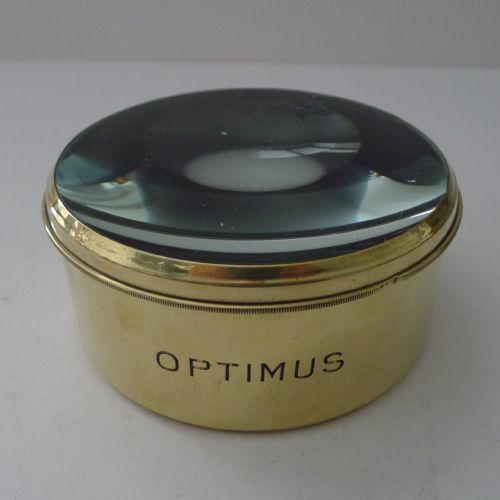
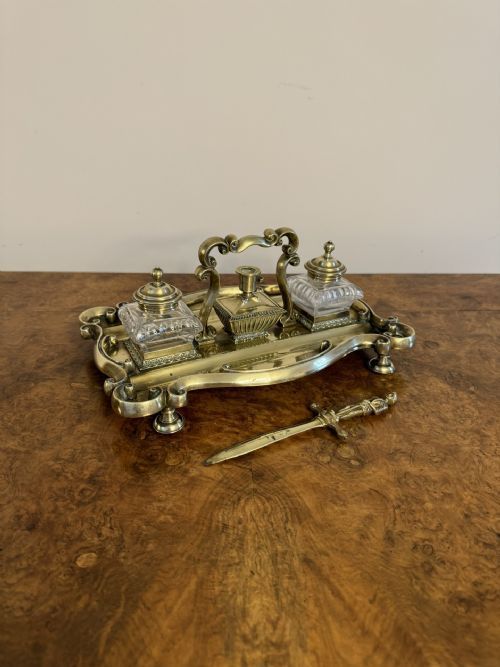
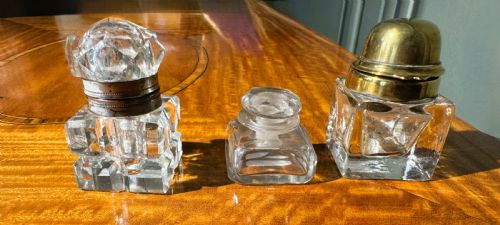
Traditional brass desk accessories encompass functional pieces designed for writing desks and studies during the nineteenth and early twentieth centuries. When searching for traditional brass desk accessories, buyers encounter items such as postal scales, inkwells, inkstands, and magnifying glasses.
The pieces listed on this page span several distinct periods including the Victorian and Edwardian eras, alongside Art Deco and Regency examples. Forms range from simple glass inkwells and brass desk sets to oak and brass standishes and desktop globes.
Origins vary across the selection, featuring traditional British designs as well as Anglo-Indian pieces. Buyers are most likely to meet Victorian postal scales and oak-mounted ink stands among these listings.
How traditional brass desk accessories were made
Construction relies heavily on cast and turned brass, often paired with dense hardwoods such as oak, mahogany, and rosewood. Metal components are frequently combined with cut glass, crystal, or opaline glass to form inkwells and magnifying glass mounts.
Makers utilised durable materials suited to daily desktop use, incorporating wooden bases to anchor heavier brass elements like postal scales and ink stands. The physical weight of the metal and glass defines the construction of these desktop items.
Traditional Brass Desk Accessories Retail Price Guide 2026
Typical asking prices for traditional brass desk accessories among the pieces listed under this phrase on Sellingantiques today, from the lower quarter to the upper quarter. They describe what is for sale here now, not the wider market.
Listings incorporate brass, glass, oak, and mahogany across Victorian and Edwardian desk accessories.
What varies in quality
Quality in these items is determined by the crispness of the brass casting and the solidity of the material combination, such as oak and brass fitted together. Finer pieces display substantial metal gauge and careful integration with glass or wooden components.
The presence of complete associated elements, such as original weights for postal scales or matching inkwell inserts, separates standard utility items from more resolved desk accessories.
P H Vogel & Co.
The Traditional Brass Desk Accessories Glossary
- Postal scales
- Weighing devices designed specifically for letters and small parcels, often featuring calibrated brass weights. They sit on a wooden or metal base.
- Standish
- An inkstand or tray holding writing materials such as inkwells, sanders, and penholders. It served as a central fixture on a gentleman's desk.
- Opaline glass
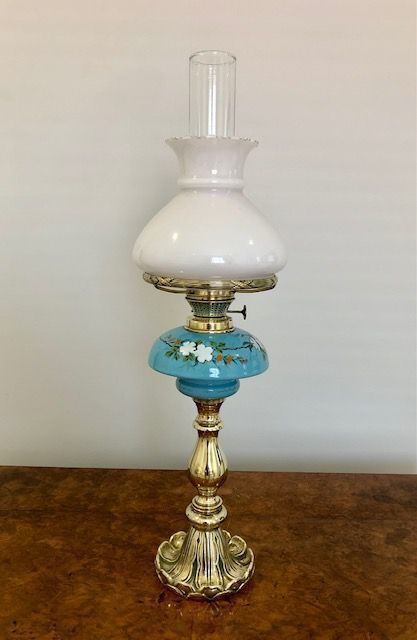
- An opaque or translucent glass, often coloured, used for decorative inkwell inserts and small desk containers. It provides a smooth, milky finish.
- Inkstand
- A desktop stand or tray holding one or more inkwells and sometimes pen rests. These pieces anchor the writing implements on a desk.
Traditional Brass Desk Accessories: Frequently Asked Questions
What are postal scales used for?
Postal scales were utilised in studies and offices to weigh correspondence accurately before dispatch. They ensured the correct postage was applied to letters and parcels.
These devices typically feature a balanced arm or platform paired with a set of small brass weights.
How do I identify a standish?
A standish is distinguished by its fitted tray holding integrated inkwells, pen rests, and sometimes stamp compartments. It functions as a comprehensive writing station.
Materials commonly include oak, brass, and glass arranged in a fixed composition.
Where were these items placed?
These pieces sat upon writing desks, Davenport tables, and library tables in nineteenth and early twentieth century interiors. They were arranged for daily correspondence and administrative tasks.
Desk tidies and ink stands kept writing implements organised within easy reach.
How do I date a desk set?
Dating relies on stylistic markers from periods such as the Victorian, Edwardian, or Art Deco eras. Material combinations like oak and brass point towards specific decades.
Construction techniques and the presence of maker marks further clarify the period of production.