

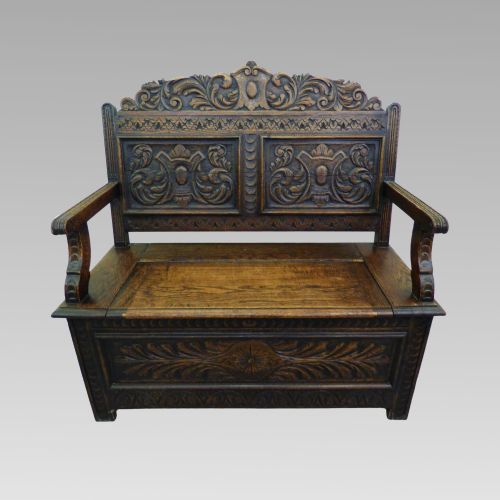

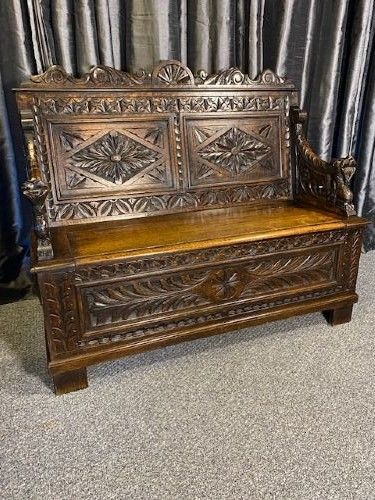

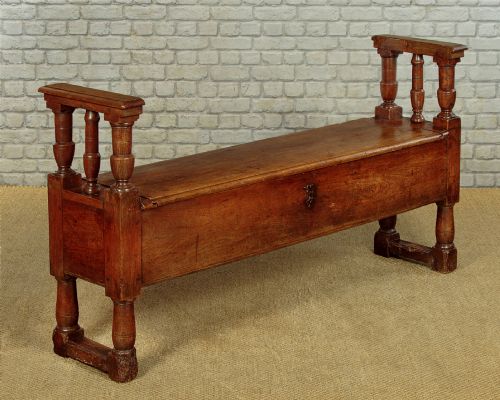
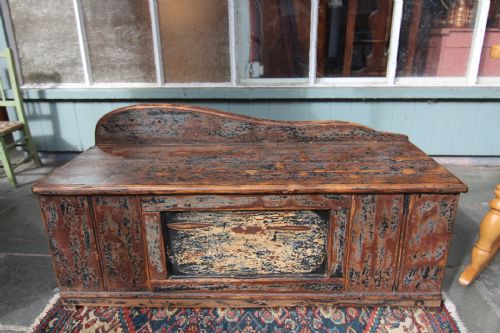

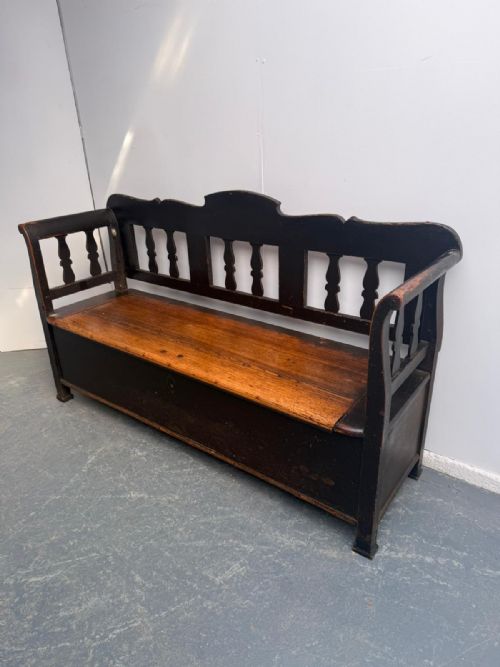
Traditional Box Seats
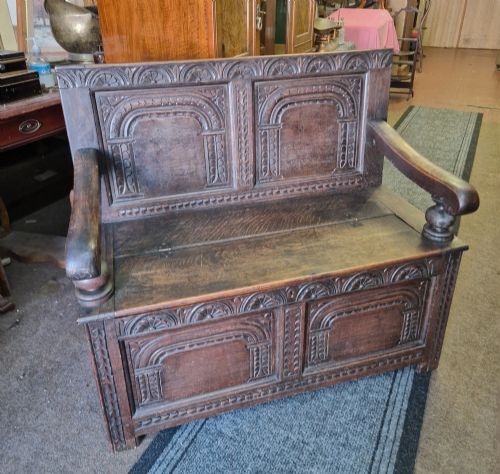
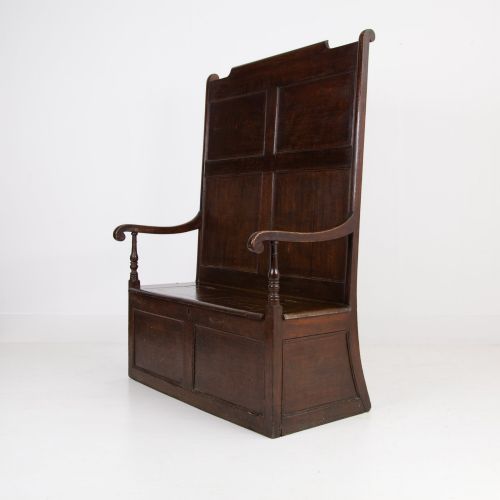
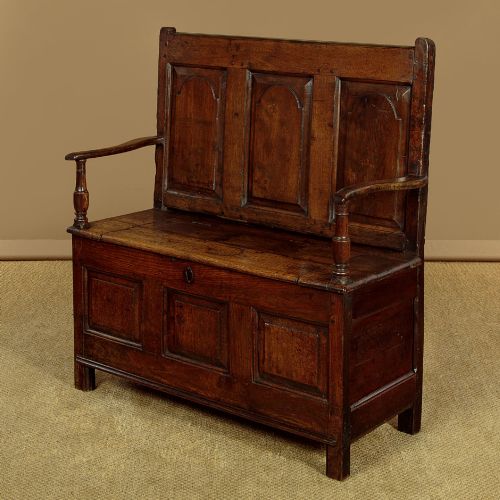
Traditional box seats combine heavy timber construction with hidden storage, offering a practical seat and chest in one heavy form.
Traditional Box Seats
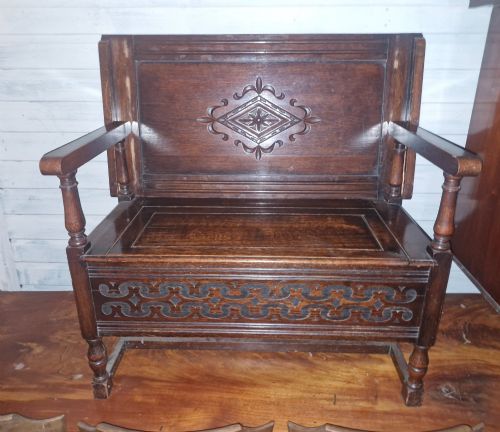
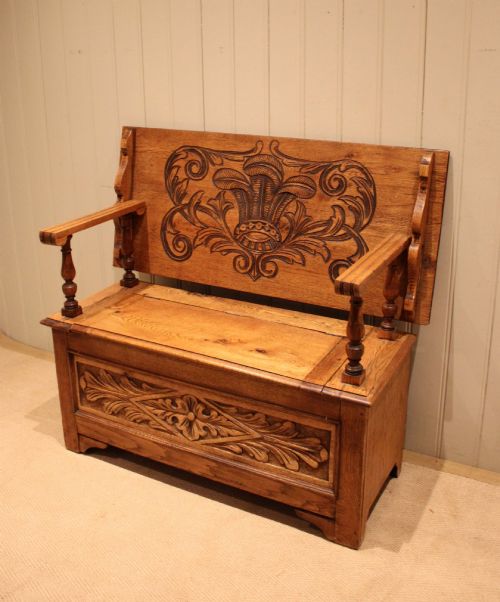
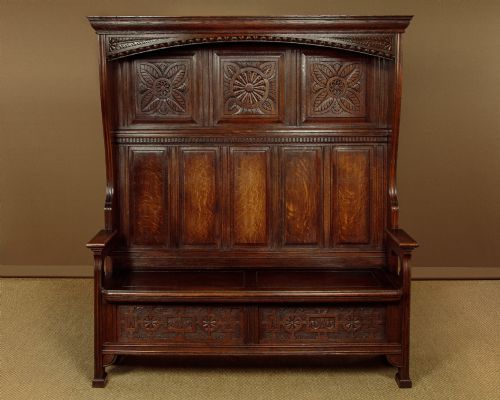
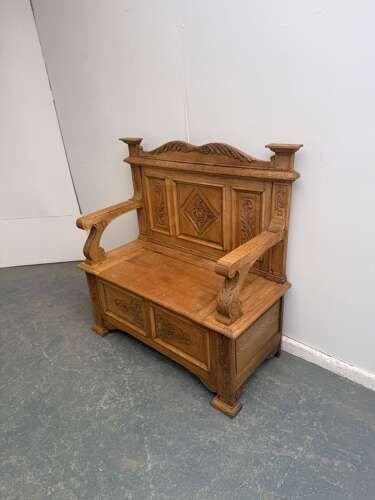
Traditional box seats encompass settles, hall benches, and monks benches that combine seating with enclosed storage beneath the lid. These pieces appear across periods from the eighteenth century through to the early twentieth century, spanning Georgian, Victorian, and Edwardian eras.
The version you meet most often on this page is the oak or pine box settle, frequently originating from country workshops or regional traditions such as Hungarian folk art and Scandinavian country design. These forms serve functional roles in hallways and large rooms, providing both a place to sit and a deep well for household goods.
How they were made
Makers built these pieces primarily from solid timber, selecting durable local woods such as oak, elm, and pine. Planks are joined with traditional methods, forming robust box bases that support hinged lift-up seats or fold-over tops.
Surface treatments vary widely from waxed finishes that reveal the natural grain of mahogany and oak to layers of paint on pine and polychrome barge pieces. Iron hinges and fixings provide the mechanical strength needed for heavy lids and daily use.
Traditional Box Seats Retail Price Guide 2026
Typical asking prices for traditional box seats among the pieces listed under this phrase on Sellingantiques today, from the lower quarter to the upper quarter. They describe what is for sale here now, not the wider market.
The listings here feature pieces from the Georgian, Victorian, and Edwardian eras, constructed in materials like pine, oak, mahogany, and elm.
What varies in quality
The distinction between ordinary and superior examples lies in the integrity of the timber and the subtlety of the joinery. Solid construction using dense oak or figured mahogany with intact original panels represents the upper end of the range.
Surface finish also dictates the character of the piece, where original painted surfaces or deep period wax patination hold more distinction than later interventions. The balance of proportions and the smoothness of the lifting mechanism reflect the skill of the original maker.
The Traditional Box Seats Glossary
- Settle
- A wooden bench with a high back and solid arms, often featuring a box compartment beneath the seat for storage. This form kept drafts away from occupants in older homes.
- Monks bench
- A multifunctional seat featuring a hinged back that folds down over the arms to create a table surface. It represents a clever space-saving invention from earlier centuries.
- Bacon settle
- A tall wooden storage bench associated with rural houses, traditionally used for curing and storing meat in the upper sections while providing seating below.
- Polychrome
- Decorated in multiple colours, typically applied to pine furniture in folk traditions. This technique adds vibrant surface pattern to otherwise utilitarian wooden boxes.
- Ottoman
- A low upholstered seat or bench without arms or back, featuring a hinged lid that opens to reveal storage space inside. These often date to the Victorian era and use leather or fabric coverings.
Traditional Box Seats: Frequently Asked Questions
What is a box seat?
A box seat is a form of furniture that combines a bench with a built-in chest beneath the seat. The top lifts or hinges open to provide enclosed storage for blankets or household items.
These pieces served functional roles in hallways and main living spaces, appearing in heavy woods like oak and pine across various historical periods.
Where were box settles used?
Box settles traditionally stood in hallways, kitchens, and large living rooms of country homes. Their high backs helped shield people sitting near hearths from cold drafts.
The enclosed lower box kept everyday items out of sight while offering a sturdy bench for family and guests.
How do I date a box seat?
Dating relies on examining the timber species, construction joints, and stylistic details such as carvings or paint finishes. Eighteenth-century examples often feature pegged oak joints and simpler rustic construction.
Later Victorian and Edwardian pieces introduce machine-sawn elements, mahogany panels, or different revival styles like Jacobean motifs.
Are these seats comfortable?
Traditional wooden box seats are firm and upright by design, intended for functional seating rather than lounging. Many historical examples feature high backs and solid wooden arms.
Some later Victorian variations incorporate upholstery or leather pads to soften the seat, while others remain strictly in bare timber.