







Traditional Bookcase Desk
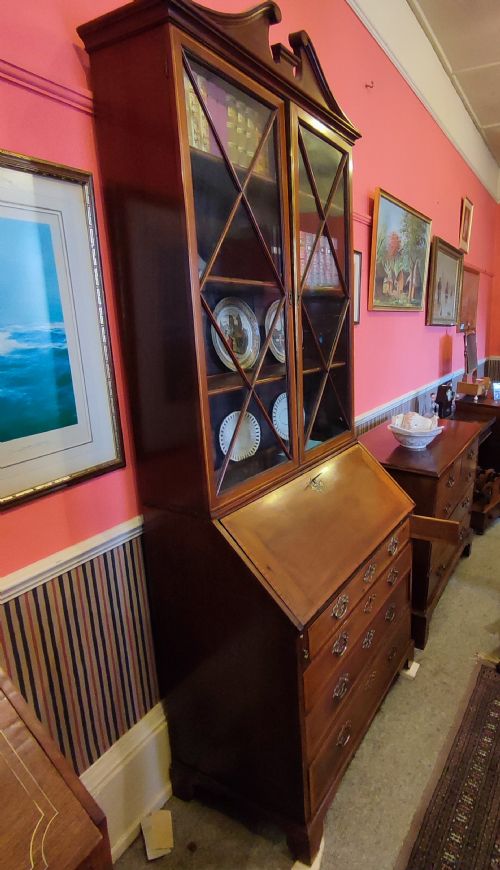
A traditional bookcase desk marries upper shelving with a drop-front writing surface, offering a practical combination of display and private workspace.
Traditional Bookcase Desk
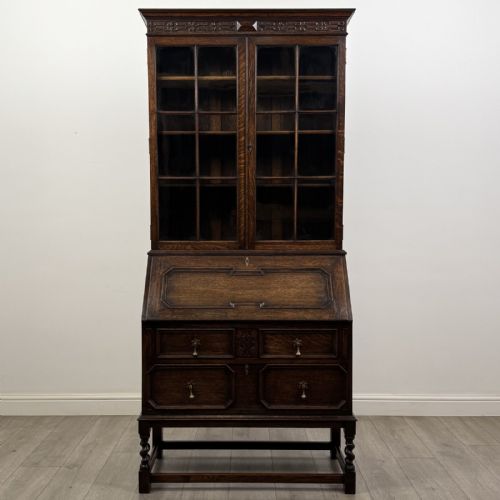
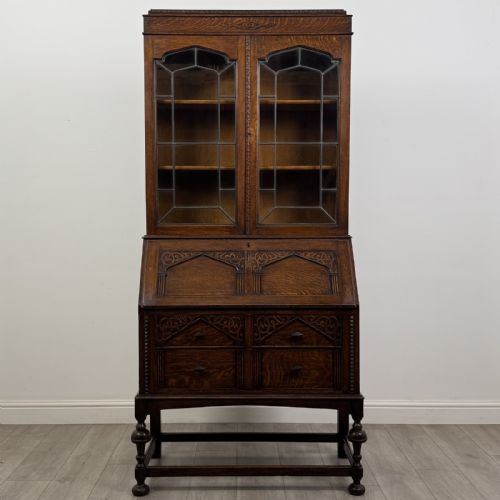
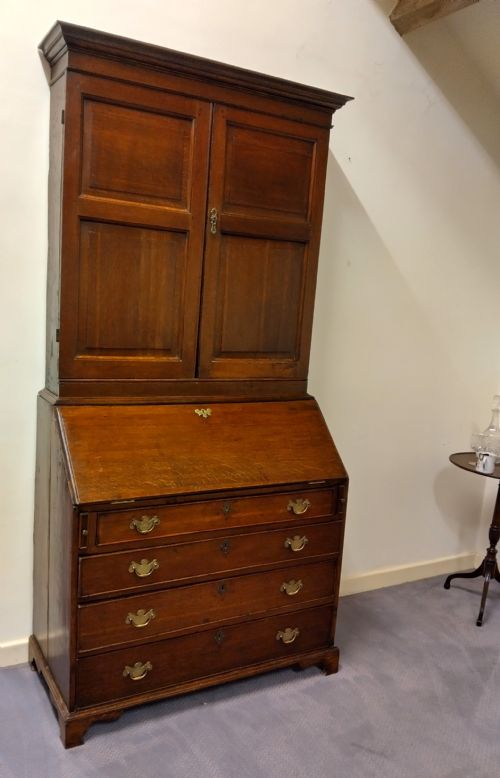
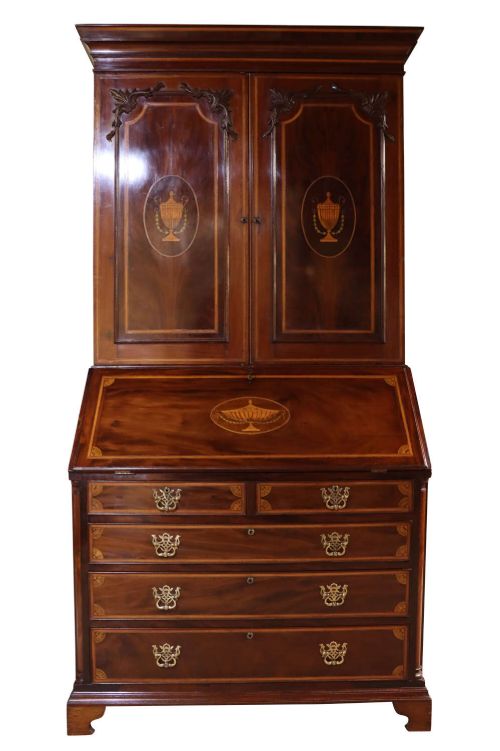
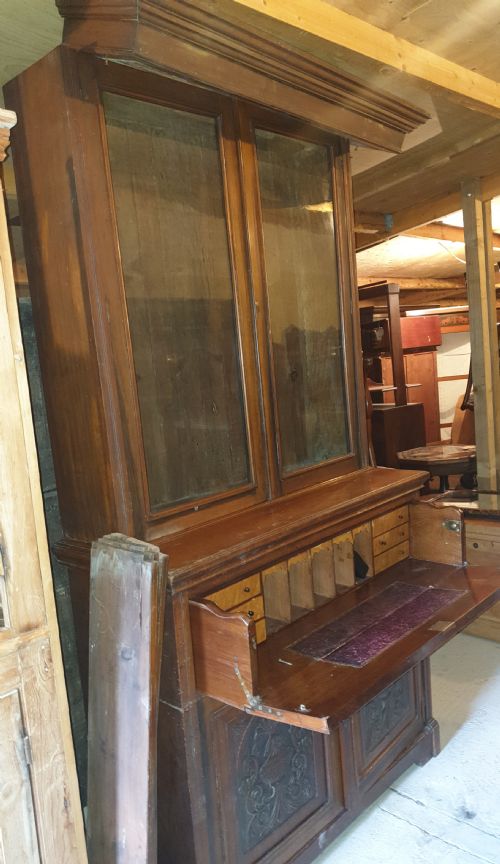
A traditional bookcase desk combines a shelved upper cabinet with a lower writing compartment, taking the form of bureau bookcases and secretaire cabinets. These pieces span from the 1700s through the Edwardian era, encompassing Georgian, Victorian, and Jacobean Revival styles.
The most frequent encounter on this page is the mahogany Georgian or Georgian style bookcase desk, alongside Jacobean Revival oak examples from the early 1900s. These dual-purpose items served domestic studies and libraries, housing leather-bound volumes above while concealing correspondence below.
Materials and Construction
Makers utilised dense timbers such as mahogany, oak, walnut, and satinwood, occasionally accented with marquetry inlays. Glazing bars structured the upper cabinet glass, while brass handles and lead details completed the hardware.
The lower section typically relied on a hinged writing flap or a fitted secretaire drawer that dropped forward on side arms. Inside, small pigeonholes and secret drawers provided compartmentalised storage for stationery and documents.
Traditional Bookcase Desk Retail Price Guide 2026
Typical asking prices for traditional bookcase desk among the pieces listed under this phrase on Sellingantiques today, from the lower quarter to the upper quarter. They describe what is for sale here now, not the wider market.
Early makers occasionally built secret compartments inside the writing drawers, accessed only by removing hidden interior dividers.
Gradations in Execution
The distinction between ordinary and superior pieces rests on timber selection, such as Cuban mahogany, and the crispness of cabinetmaking details. Hand-cut dovetails in the drawer construction and precise marquetry inlay separate ambitious commissions from standard workshop output.
Proportion and glass quality also define the upper cabinet, where original leaded or clear panes sit within balanced architectural frames. Alterations or later adaptations, such as televisions fitted into early carcasses, shift a piece away from its original state.
The Traditional Bookcase Desk Glossary
- Bureau bookcase
- A combination furniture piece featuring a sloping writing flap above drawers, surmounted by a glazed or panelled bookcase cabinet. This form became popular in the eighteenth century for home administration and library storage.
- Secretaire
- A cabinet or desk containing a drawer with a drop-front writing surface that conceals internal pigeonholes and small drawers. It often masquerades as a standard chest of drawers or sits beneath upper shelving.
- Barley twist
- A turned column or leg carved in a helical spiral resembling a twisted rope. This decorative turning appears frequently on Jacobean Revival oak furniture from the early twentieth century.
- Glazing bar
- A wooden strip that holds individual panes of glass within a sash window or cabinet door. Early examples often present fine, slender profiles defining geometric or arched window patterns.
Traditional Bookcase Desk: Frequently Asked Questions
What is a traditional bookcase desk?
A traditional bookcase desk is a dual-purpose item featuring enclosed shelving above a lower writing compartment. The desk section usually opens via a sloping flap or a pull-down secretaire drawer.
These pieces were designed for studies and libraries to keep books and writing materials in one unified piece of furniture.
How do I date a bookcase desk?
Dating relies on timber choices, construction methods, and prevailing historical styles. Georgian pieces favour mahogany and architectural proportions, while Edwardian and 1920s revivals often imitate earlier Jacobean or Georgian designs.
Examining drawer linings, handles, and glass characteristics provides further clues to the manufacturing decade.
How should I care for antique wood?
Antique mahogany, oak, and walnut require stable indoor humidity away from direct heat sources and sunlight. Regular dusting with a soft, dry cloth preserves the finish without stripping natural oils.
Applying occasional specialist wax helps maintain the lustre of the timber surfaces.