


Traditional Boat Harbour Painting
A traditional boat harbour painting captures maritime life along the coast, offering buyers a window into historic ports and working vessels.
Traditional Boat Harbour Painting
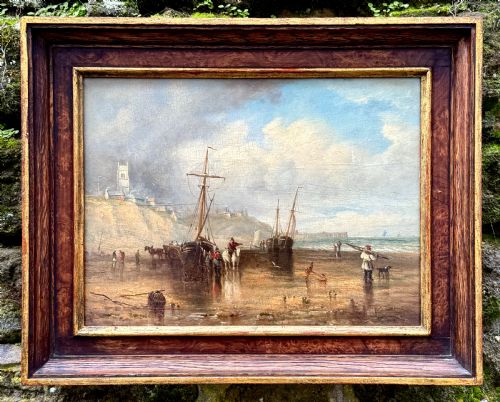
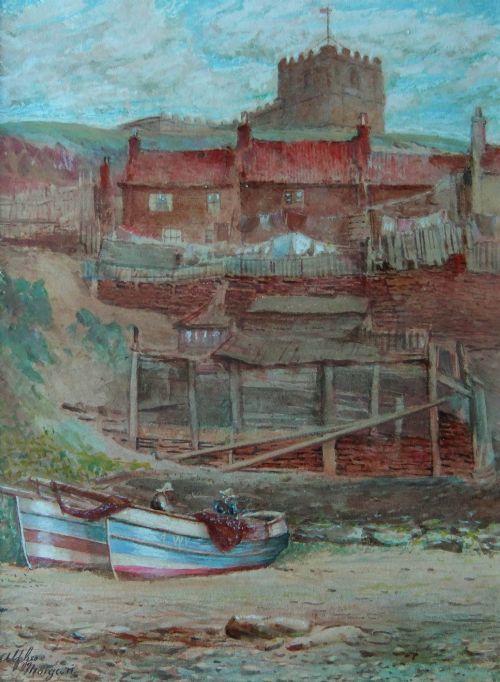
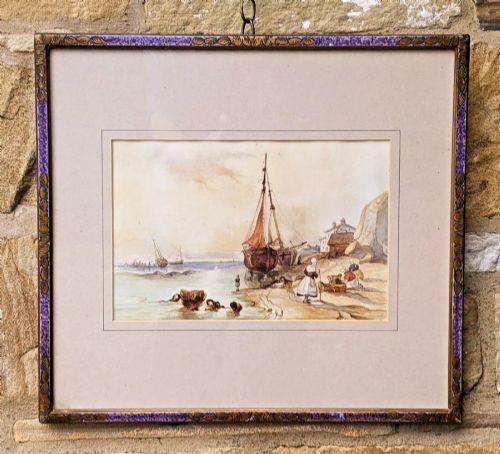
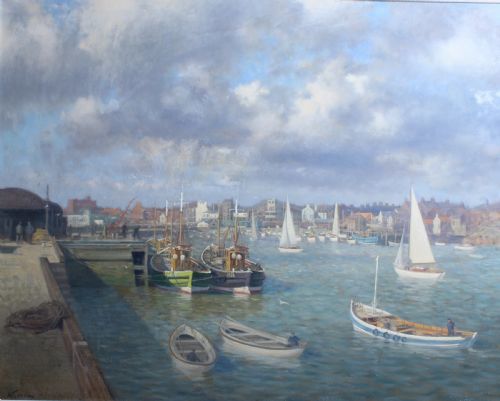
A traditional boat harbour painting depicts coastal scenes featuring fishing vessels, shipping boats, and historic quaysides across various periods.
The selections available here range from early Georgian and Victorian works to mid-century British watercolours and oils.
Buyers will encounter specific named locations such as Whitby, Bridlington, Peel Harbour, St Ives, Mousehole, and Brixham rendered in marine realism and impressionistic styles.
Materials and Technique
Artists employed oil paint on canvas or board and watercolour pigment on paper to capture the movement of water and the atmosphere of busy coastal towns.
Works utilise traditional framing in wood, supporting delicate paper watercolours or substantial oil paintings intended for wall display.
Listings span from the Georgian era through Victorian times to mid-century British art, utilising canvas, paper, wood, oil, and watercolour.
Evaluating Quality
Quality rests in the artist's ability to handle light, water, and vessel rigging with conviction rather than mere technical neatness.
The presence of a recognised hand, such as Thomas Creswick, Walter Goodin, or Edward Henry Holder, distinguishes finer artistic output from anonymous topographical records.
Thomas Creswick·Alfred G. Morgan·Walter Goodin·William Edward Webb·Ernest F. Hill·Edward Henry Holder·Walter Sweet·Hubert Thornley·Owen Bowen·Micheal Matthews·Robert Leslie Howey
The Traditional Boat Harbour Painting Glossary
- Watercolour
- A painting method where fine pigment is suspended in water-based solution on paper. This medium creates translucent washes suited to coastal light.
- Oil on Canvas
- Pigment mixed with drying oil applied to woven fabric stretched over a wooden frame. It allows for rich texture and deep colour layering in marine scenes.
- Seascape
- A work of art depicting the sea, coastal views, shipping, and harbour life. These pieces focus heavily on maritime subjects and weather conditions.
- Maritime Realism
- An artistic style dedicated to accurate representation of ships, coastal architecture, and sea conditions. It values precise detail over loose interpretation.
Traditional Boat Harbour Painting: Frequently Asked Questions
Where were these harbour scenes painted?
Many works record specific British and European coastal locations, including Yorkshire ports, Cornish fishing villages, and French coastal towns.
Artists set up their easels directly at quaysides or worked from preliminary sketches to capture local maritime activity.
How should I hang an oil painting?
Oil paintings on canvas or board require stable indoor environments away from direct sunlight and excessive humidity.
Ensure the wall fixings match the weight of the wooden frame to support the artwork securely.
What is the difference between oil and watercolour?
Oils offer a heavy, textured surface built up with pigment and drying oil, often presented on canvas or wooden board.
Watercolours utilise thin pigment washes on paper, protected behind glass to prevent moisture damage.
How do I identify the period of a painting?
Dating relies on stylistic clues, framing techniques, artist signatures, and recorded biographical dates of the painter.
Clothing styles of figures on the quayside and the rigging of depicted vessels also offer chronological markers.