
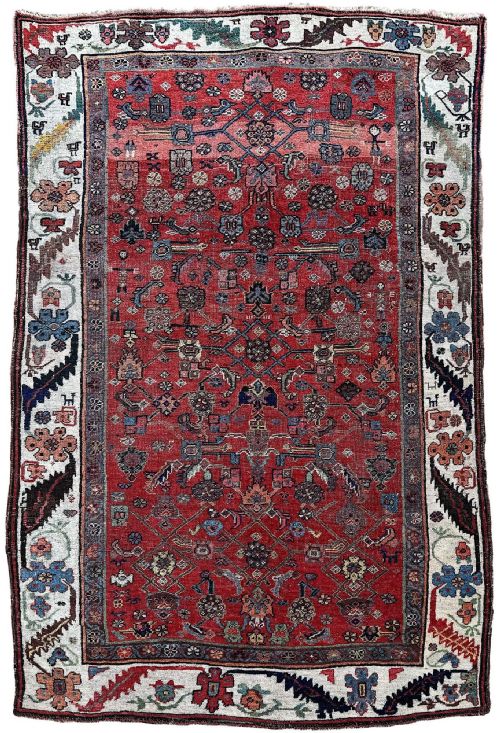
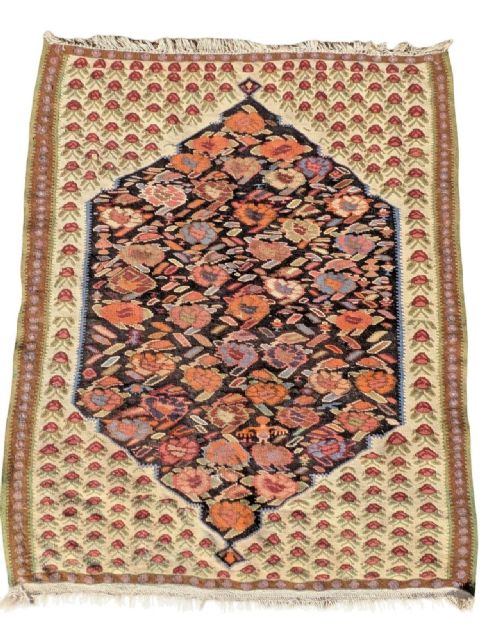
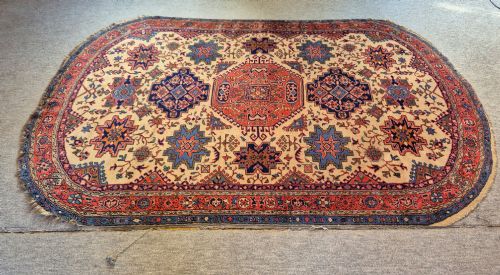
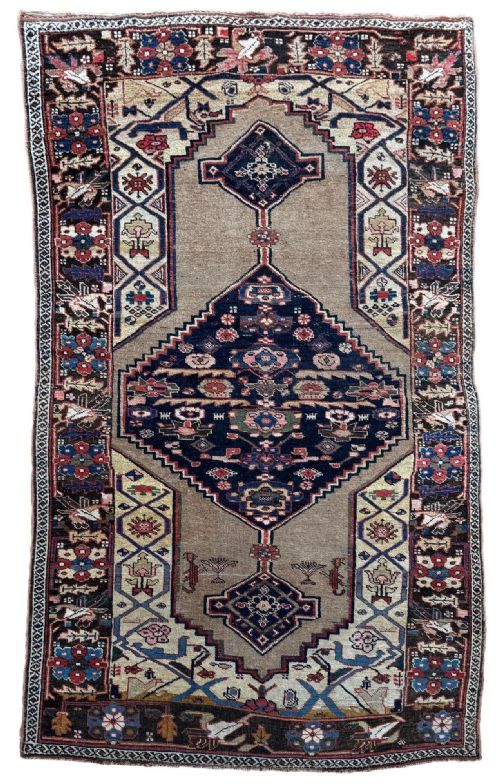
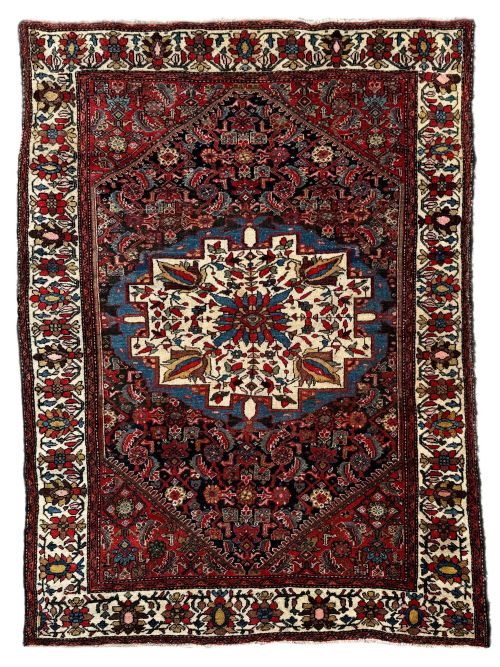


Traditional Bidjar Carpet
Traditional Bidjar carpets are dense Persian floor coverings made by Kurdish weavers, sought after for their legendary resilience and robust village designs.
Traditional Bidjar Carpet
A traditional bidjar carpet brings heavy structure and village character into a room, originating primarily from Persian Kurdish workshops and weaving communities. When you examine a traditional bidjar carpet on this page, you meet pieces ranging from compact scatter rugs to grand kelleh formats and oversized room carpets.
The selection spans production dates from the nineteenth century through the early decades of the twentieth century. These furnishings demonstrate distinct tribal roots, often described through Persian, Kurdish, and Garrus stylistic attributions.
What varies in quality in traditional bidjar carpets
Quality rests in the precision of the knotting density and the integrity of the heavy foundation structure. Superior examples maintain structural crispness and balanced proportions across large formats.
The distinction between standard village production and finer workshop pieces lies in the articulation of the design and the purity of the wool pile.
The Traditional Bidjar Carpet Glossary
- Kelleh
- A long rectangular format of carpet traditionally suited for narrow rooms or hallways. This shape provides substantial length while maintaining a balanced width.
- Kilim
- A flat-woven carpet or rug produced without a raised pile. These pieces rely on interlocking warp and weft threads to form geometric patterns.
- Garrus
- A specific district style associated with robust curvilinear and Herati designs within the broader region. Pieces bearing this attribution display notable scale and drawing.
- Warp
- The stationary vertical threads stretched across the loom that form the foundational skeleton of the rug. Cotton forms this rigid base in these Persian pieces.
Traditional Bidjar Carpet: Frequently Asked Questions
Where were traditional bidjar carpets made?
These floor coverings originate from the town of Bidjar and the surrounding Kurdish villages in western Persia. Local weavers developed distinctive techniques focused on structural durability.
The communities produced various formats ranging from small scatter rugs to room-sized carpets for both local use and export.
How do I care for a traditional bidjar carpet?
Protect the heavy wool pile and cotton foundation by using a quality breathable underlay beneath the rug. Regular gentle vacuuming without a beater bar removes trapped grit effectively.
Rotate the carpet periodically to ensure even wear patterns across high-traffic household areas over the years.
What is a kelleh carpet?
A kelleh is a specific long rectangular carpet format traditionally woven for specific room dimensions. These pieces offer an extended length relative to their width.
They serve well in corridors, grand hallways, or alongside larger room layouts.
How do I identify a Kurdish attribution?
Kurdish attribution is evident in the heavy handling, dense foundation packing, and robust village motifs. The construction relies on sturdy materials designed for longevity.
Design elements often feature characteristic tribal geometries and saturated ground colours.