
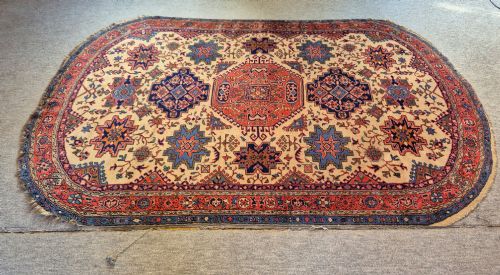
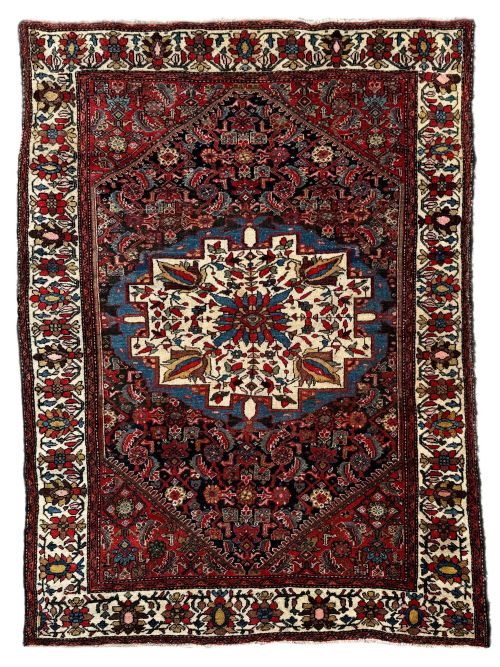


Persian Bijar Rug
These heavy, durable woven floor coverings known as a persian bijar rug bring enduring tribal artistry and dense wool pile into a room.
Persian Bijar Rug
A persian bijar rug originates from the Kurdish region of west Persia, traditionally woven by tribal village weavers. These pieces appear in various formats, from small area pieces and runners to large room-size carpets and kellehs.
Most examples found here date from the late nineteenth century through to the early decades of the twentieth century. Buyers encounter traditional Persian designs alongside distinctive Kurdish tribal patterns created in village workshops.
Materials and Construction
Construction relies on natural materials, utilising wool and hand-spun wool for the dense pile, supported by cotton foundations. Weavers packed the knots tightly using heavy iron combs, producing a stiff, rigid structure that withstands heavy foot traffic.
The use of hand-spun wool allows natural dyes to take varied, rich tones across the field. Kilims and flatweaves utilise similar wool yarns to create durable runner rugs and carpets without a deep pile.
The selection includes formats ranging from small village rugs to room-size carpets and long runner rugs woven in wool and hand-spun wool.
Factors That Shape Quality
Knot density and structural tightness dictate the calibre of the piece, as denser weaving creates a heavier, more resilient fabric. Finer examples display precise control over the traditional motifs and floral designs.
The clarity of the ground colour, whether lemon, ivory, or deep tones, influences the visual impact. Original edge finishes and complete borders indicate a well-preserved piece from the Kurdish tradition.
The Persian Bijar Rug Glossary
- Bijar
- A town in western Persia and the surrounding Kurdish region renowned for producing exceptionally heavy and durable woven carpets.
- Kelleh
- A long, rectangular format of Persian carpet, traditionally narrower than standard room-size rugs and suited for corridors or specific hall spaces.
- Kilim
- A flatwoven rug or carpet made without a pile, utilising warp and weft interlacing to form geometric and floral patterns.
- Kurdish
- Pertaining to the tribal groups of Persian Kurdistan who inhabited and worked in the region surrounding Bijar.
- Runner
- A long and narrow rug format designed primarily for hallways, stairs, or narrow passageways.
Persian Bijar Rug: Frequently Asked Questions
How do I clean a Persian Bijar rug?
Regular gentle vacuuming without a beater bar removes surface dust and grit from the dense wool pile. Professional specialist cleaning is necessary for deeper maintenance to protect the natural dyes and cotton foundations.
Avoid harsh chemical treatments or domestic carpet washing machines. Allowing air drying prevents moisture retention in the heavy foundation.
Where were these rugs made?
These pieces originate from the town of Bijar and the surrounding Kurdish villages in western Persia. Tribal weavers in this region produced them using traditional techniques passed down through generations.
The Kurdish weavers utilised local wool and natural dyestuffs characteristic of Persian Kurdistan.
Are these rugs durable enough for hallways?
The dense weave and heavy construction make these pieces exceptionally resilient for areas with constant foot traffic. Their stiff foundation helps them lie flat on the floor without curling at the edges.
Placing an appropriate underlay beneath the rug prevents slipping and reduces wear on the wool pile.
How do I identify the age of a rug?
Dating relies on examining the specific wool types, dye palettes, and structural characteristics visible in the weave. Pieces from the nineteenth century often show distinct hand-spun wool textures and traditional tribal motifs.
Comparing construction methods against documented regional examples helps narrow down the production period.