



Traditional Barometer
A traditional barometer measures atmospheric pressure to forecast weather changes while serving as a fine functional ornament for your wall.
Traditional Barometer
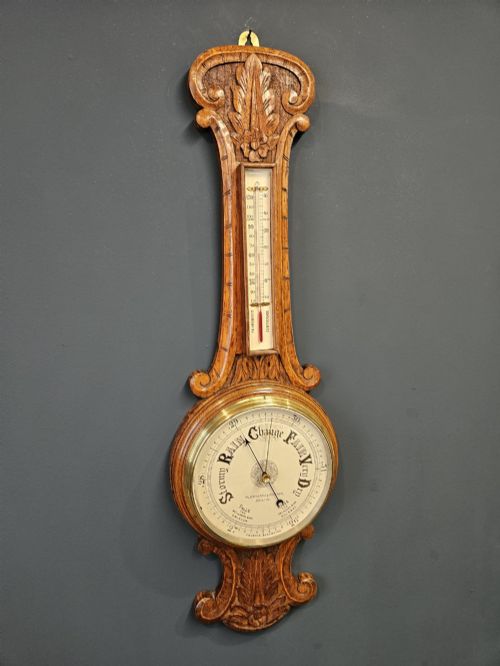
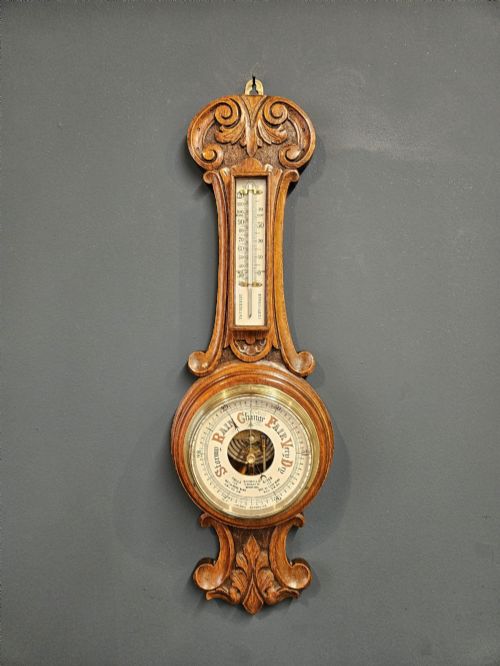
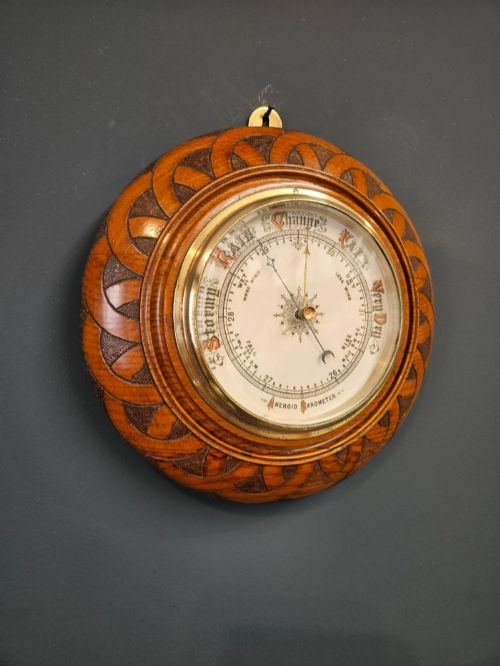
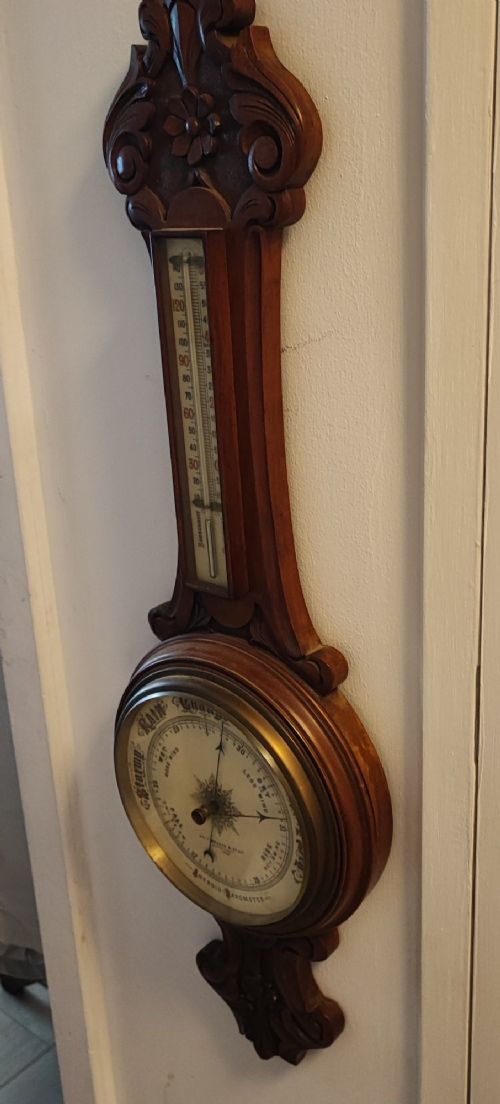
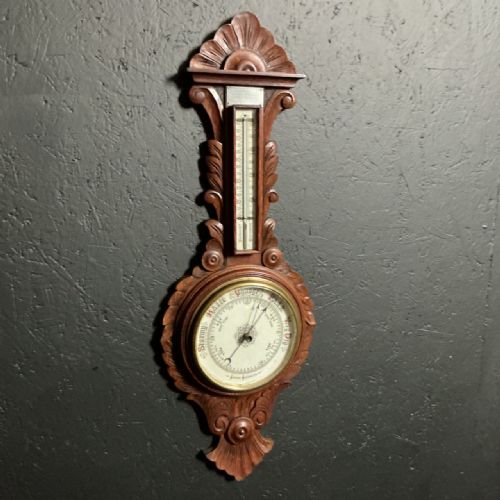
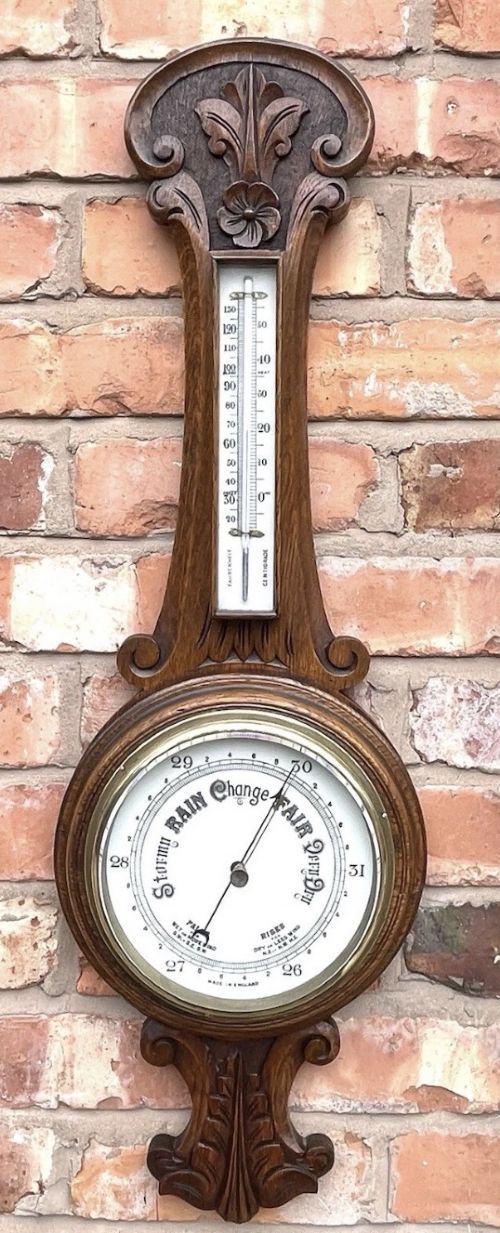
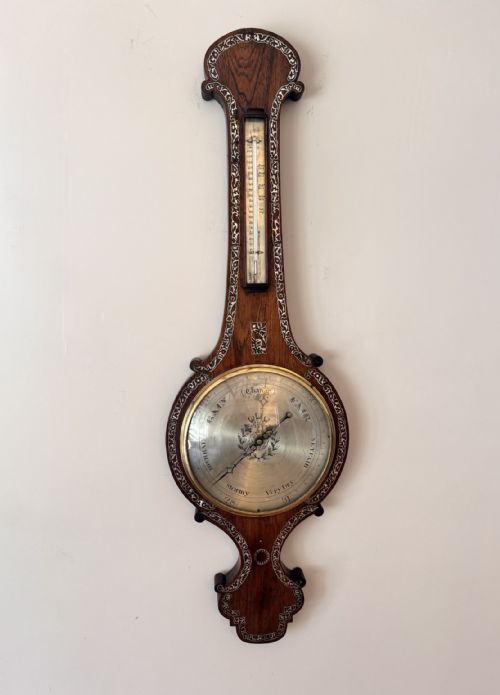
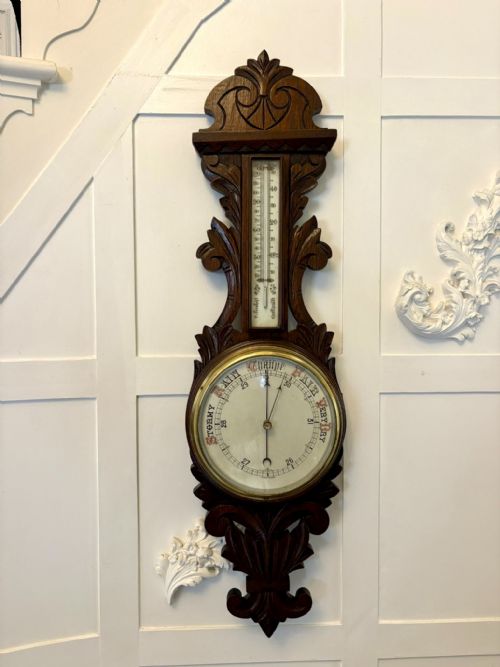
A traditional barometer is a scientific instrument housed in a decorative wooden case designed to indicate shifts in atmospheric pressure. When searching this phrase, you encounter examples spanning the Georgian, Victorian, and Edwardian periods.
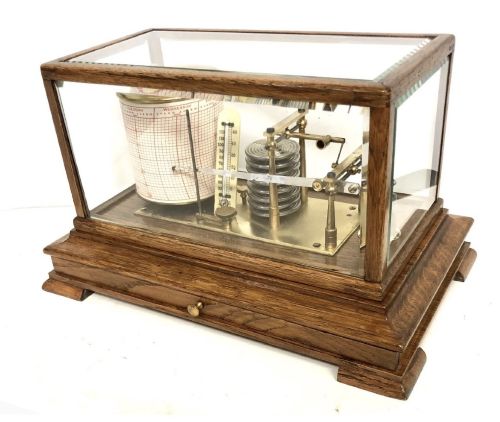
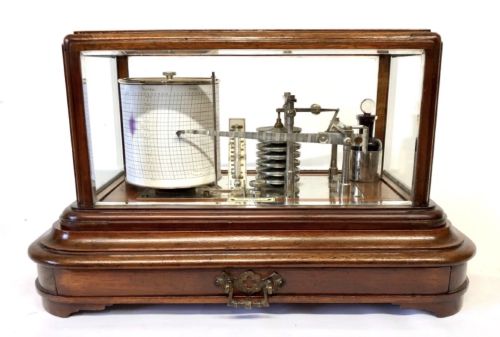
The most common form on this page is the banjo barometer, alongside stick barometers, wheel barometers, and mechanical barographs. These instruments frequently incorporate thermometers and occasionally clock movements or porcelain dials.
Originating largely from British and European workshops, these pieces combine domestic utility with cabinet-making traditions. They range from simple functional wall pieces to heavily carved decorative items.
How they were made
Cases were constructed from dense timbers such as mahogany, oak, walnut, rosewood, and beech, shaped through turning, carving, and sometimes inlay work using mother of pearl. Glass protects the dials, barograph drums, and thermometer tubes.
Internal mechanisms rely on mercury columns in stick barometers or aneroid metal capsules in banjo and dial barometers. Dials are typically formed from silvered metal or porcelain, featuring engraved or painted graduations.
Traditional Barometer Retail Price Guide 2026
Typical asking prices for traditional barometer among the pieces listed under this phrase on Sellingantiques today, from the lower quarter to the upper quarter. They describe what is for sale here now, not the wider market.
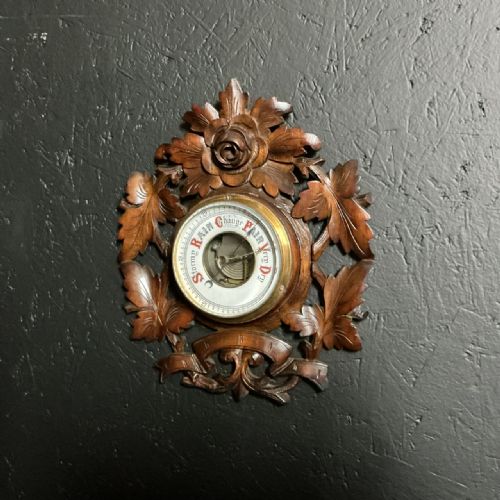
Several examples emerge from the Black Forest style, turning meteorological tracking into a heavily carved exercise in woodland fauna and foliage.
What varies in quality
Quality rests in the crispness of the cabinet work, from the depth of Black Forest carvings to the precision of mahogany inlay and the solidity of oak cases. Maker signatures, such as Negretti & Zambra or James H Kelly, elevate certain pieces.
The sophistication of the movement and secondary functions, including integrated thermometers, chart drawers in barographs, or skeletonised mechanical displays, distinguishes standard domestic instruments from higher-tier scientific pieces.
Gaupp And Co Hongkong And Singapore·Negretti And Zambra·Jenkins Of Old Swindon·Maple And Co·James H Kelly Of Glasgow
The Traditional Barometer Glossary
- Banjo barometer
- A domestic wall barometer shaped somewhat like a banjo, featuring a circular dial at the top and a long trunk containing a thermometer or liquid tube.
- Stick barometer
- A tall, narrow barometer that houses a vertical mercury tube exposed against a scale, representing an earlier and simpler scientific form.
- Aneroid barometer
- An instrument that measures pressure using a flexible metal box rather than liquid mercury, popularised in the Victorian era for domestic settings.
- Barograph
- A self-recording meteorological instrument that draws a continuous line of atmospheric pressure onto a rotating paper chart housed in a glazed wooden box.
- Silvered metal
- A brass or copper dial plate treated to achieve a silvery, reflective surface that is then engraved with weather descriptions and numbers.
Traditional Barometer: Frequently Asked Questions
What is a traditional barometer?
A traditional barometer is a mechanical device enclosed in a wooden case that measures air pressure to help forecast local weather changes.
These pieces combine practical meteorological utility with period cabinet making, often incorporating thermometers and decorative wood carvings.
How do I hang a wall barometer?
Hang your barometer securely from a sturdy wall fixing using the integrated hanging bracket or loop provided on the back of the wooden case.
Ensure the instrument hangs completely vertical, particularly for mercury stick models, so the internal components read pressure accurately.
How do I set a barometer?
Set an aneroid barometer by turning the small internal adjustment screw until the indicator needle matches current local weather readings.
After adjustment, tap the glass lightly to settle the mechanism before using the manual setting hand to mark the present pressure.
How do I date a barometer?
Date a barometer by examining the timber species, case style, dial materials, and any maker signatures recorded on the face.
Georgian models lean toward simple stick or wheel designs in mahogany, whereas Victorian and Edwardian examples often feature heavy oak carving or aneroid banjo layouts.