


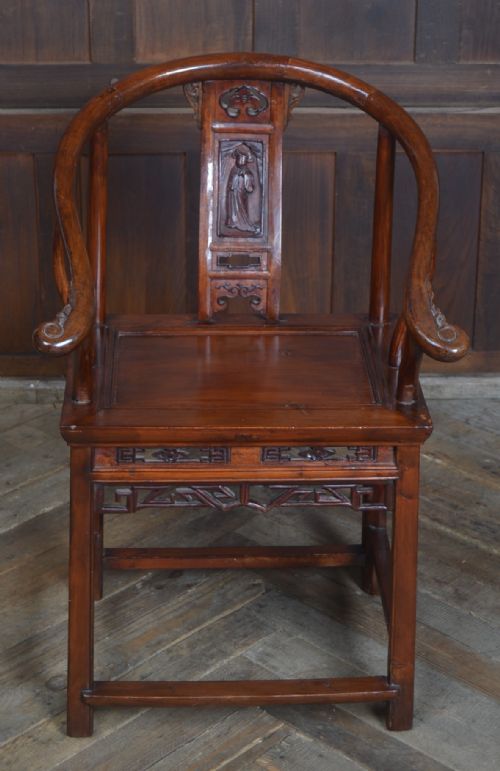


Traditional Asian Armchairs
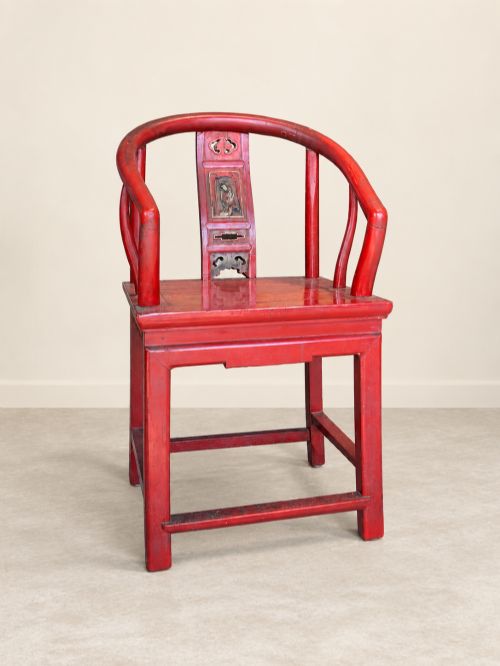
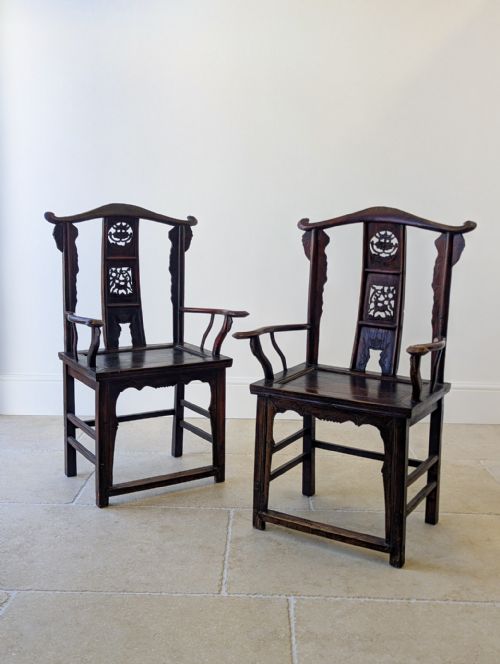
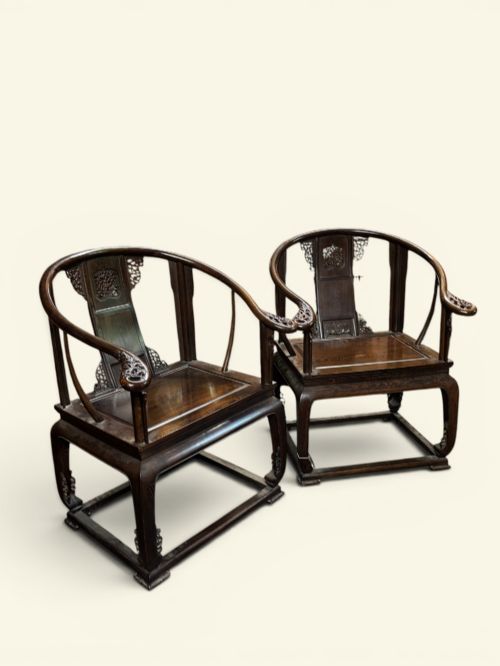
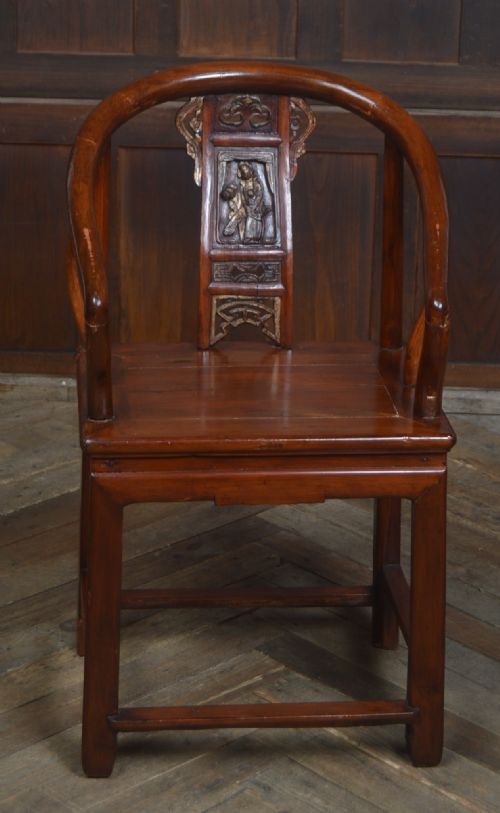
Traditional asian armchairs bring centuries of scholarly restraint and imperial presence into a room through curved wooden frames and carved panels.
Traditional Asian Armchairs
Makers utilised various regional aesthetics across the nineteenth and early twentieth centuries, incorporating elements of Qing Dynasty ornamentation and Ming-style minimalism. Buyers often encounter pieces configured as armchairs, throne chairs, or larger suites accompanied by side tables and benches.
The physical presence of these seats relies on generous proportions and traditional joinery rather than cushioned upholstery. Each piece reflects the functional requirements of historical Chinese domestic and official interiors.
Materials and Construction
Cabinetmakers constructed these frames using resilient indigenous timbers such as elm, rosewood, and dark hardwoods capable of supporting complex joinery without metal fasteners. Elm provides a visible, fibrous grain structure, whilst dense hardwoods allow for crisp carved relief on splats and aprons.
Surface finishes range from clear polish to layers of red lacquer and painted decoration applied directly to the wood. Selected examples incorporate brass inlay or cane panels within the seating surfaces to introduce contrasting textures.
Stargazers chairs offer an adjustable inclined backrest designed for comfortable celestial observation during warm courtyard evenings.
Distinctions in Quality
The distinction between standard examples and exceptional pieces rests upon the precision of the joinery and the depth of the carving. Superior chairs exhibit fluid curves in the crestrail and horseshoe back, achieved through steam-bending or segmented multi-piece construction.
Proportion and wood selection further define the upper tier, where grain patterns align harmoniously across the backsplat and arm supports. Pieces featuring intact original lacquer or complex brass inlay demonstrate higher levels of original craftsmanship.
The Traditional Asian Armchairs Glossary
- Horseshoe-Back
- A chair design featuring a continuous curved crestrail that sweeps downward to form the armrests. This shape derives from classical Chinese seating traditions and supports upright posture.
- Yoke-Back
- A style of chair characterised by a crestrail that projects outward at the ends, resembling an ox yoke. These are frequently associated with scholars and officials.
- Scholars Chair
- A minimalist wooden armchair designed for study rooms, typically featuring a straight backsplat and understated joinery. They reflect the aesthetic values of traditional literati culture.
- Hongmu
- A translation meaning red wood, used to describe dense, heavy tropical hardwoods prized in classical Chinese cabinetmaking. The material accepts fine detail carving and takes a deep natural polish.
- Cane-work
- Woven plant material utilised for seat panels to provide breathable support. This technique appears on historical seating to lighten the visual weight of heavy wooden frames.
Traditional Asian Armchairs: Frequently Asked Questions
How do I care for hardwood furniture?
Maintain stable humidity levels in the room to prevent the timber from splitting at the joints. Dust regularly with a dry cloth and avoid applying modern silicone polishes.
Keep the wood away from direct heat sources and strong sunlight to preserve the original finish and natural colour of the timber.
Are these chairs comfortable to sit in?
Traditional asian armchairs were built to encourage upright posture rather than lounging, relying on ergonomic wooden contours. The curved horseshoe rails and angled backsplats provide firm support for the upper body.
Many owners use custom silk or linen squab cushions on the wooden seats for extended seating comfort without altering the visual profile.
How do I distinguish between periods?
Nineteenth-century examples often display deeper patination and hand-cut joinery showing minor irregularities from manual tools. Later pieces from the early twentieth century frequently incorporate more standardised machine-cut components and brighter lacquer finishes.
Examining the wear patterns on the footrest stretchers and seat edges helps confirm the age and historical usage of the timber.
Can I mix these with modern decor?
The clean architectural lines of traditional asian armchairs allow them to function effectively as sculptural accents within contemporary minimalist interiors. Pairing a single horseshoe-back chair with modern upholstery creates a balanced focal point.
Matching pairs work well placed symmetrically in hallways or living spaces to ground the room with historical weight.