

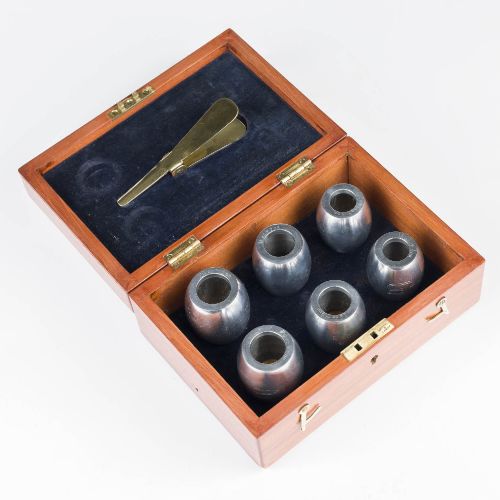


Trade Weight Set
These trade weight set examples are working instruments of commerce and standardisation, offering tactile history and solid brass craftsmanship for the collector.
Trade Weight Set
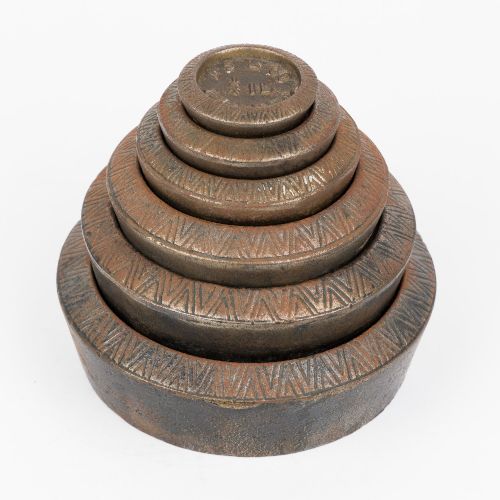
A trade weight set comprises a group of calibrated masses designed for commercial transactions, scientific measurement, or official market standardisation. These sets encompass domestic imperial stacking pieces, civic standards for cities and boroughs, and specialist apothecary or troy variations.
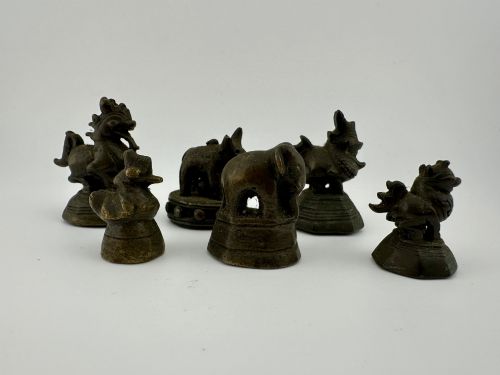
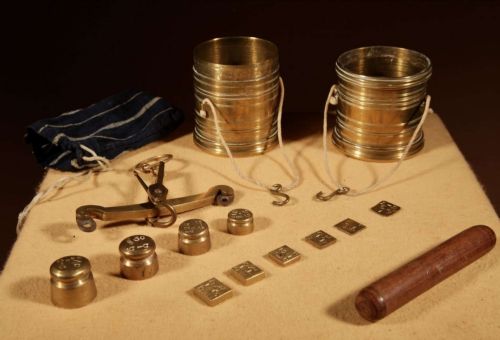
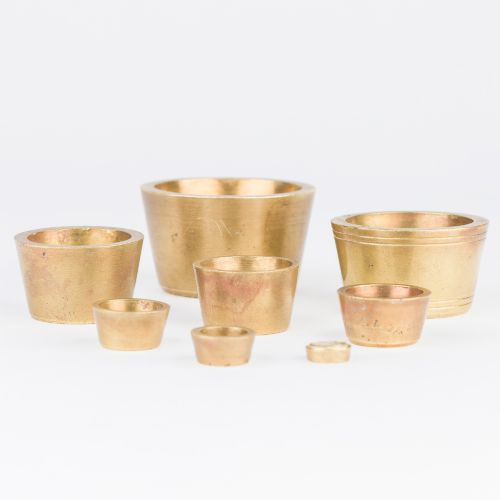
Most examples encountered on this page date from the nineteenth and early twentieth centuries, reflecting the rigorous inspection marks of local authorities such as Liverpool, Lancashire, and Northamptonshire. Forms range from nesting brass bells and flat cylindrical discs to animal-shaped Burmese opium pieces housed in fitted wooden blocks.
Buyers will find complete sets housed in original mahogany cases alongside loose stacking units and larger cast iron variants. These objects connect directly to the history of weights and measures regulation, market trading, and everyday commerce.
Materials and construction
Brass and bronze dominate the construction of these sets, providing a durable and corrosion-resistant metal that maintains its calibrated mass over decades of commercial handling. Founders cast these metals into specific geometric or animal forms before stamping them with civic ciphers, verification dates, and adjustments.
Wooden enclosures, particularly mahogany, provide fitted storage blocks and presentation cases to protect individual weights from damage and loss. Velvet linings frequently cradle delicate components, while secondary metals like cast iron appear in larger civic or grocers scales.
Trade Weight Set Retail Price Guide 2026
Typical asking prices for trade weight set among the pieces listed under this phrase on Sellingantiques today, from the lower quarter to the upper quarter. They describe what is for sale here now, not the wider market.
The listings feature brass, bronze, cast iron, and mahogany materials across nineteenth-century and early twentieth-century periods.
What separates the range
Quality in a trade weight set rests upon the legibility of official stamps, the completeness of the original grouping, and the survival of fitted housing. Sets bearing clear town marks, maker inscriptions, and matching verification numbers hold greater documentary interest than unbranded iterations.
The presence of an intact mahogany block stand or original velvet lining elevates a utilitarian grouping into a curated cabinet display. Surface patination, unpolished cast metal, and the crispness of imperial or troy ounce stampings define the upper tier of surviving examples.
De Grave Short And Co·W And T Avery·Mappin And Webb
The Trade Weight Set Glossary
- Avoirdupois
- A system of weights based on a pound of sixteen ounces, commonly utilised for general goods and retail trade throughout the nineteenth and twentieth centuries.
- Troy weight
- A system of units of mass used for precious metals, gemstones, and apothecary goods, differing significantly from standard avoirdupois measurements.
- Bushel balance
- A specific mechanical apparatus designed to measure the volume and mass of dry agricultural commodities like grain during market transactions.
- Stacking weights
- A set of calibrated metal cups or discs engineered to fit neatly inside one another for compact storage and transport by inspectors.
- Calibration marks
- Official stamps and ciphers impressed into metal surfaces by local government authorities to certify the accuracy of a measuring standard.
Trade Weight Set: Frequently Asked Questions
How do I clean a brass trade weight set?
Maintain the natural historic surface by dusting gently with a dry microfiber cloth without applying abrasive metal polishes.
Harsh chemical cleaners strip away the aged patination and obscure faint civic verification stamps that provide the pieces with their historical context.
What is the difference between imperial and troy weights?
Imperial units govern standard retail commodities like groceries using the avoirdupois system of sixteen ounces to the pound.
Troy weights measure precious metals and medicinal drugs using a distinct twelve-ounce pound configuration intended for specialised trade.
How were these sets used originally?
Inspectors and merchants utilised these calibrated masses alongside balance scales to verify goods in markets, shops, and municipal offices.
Official authorities carried these sets through boroughs to test commercial scales and ensure fair trading practices for the public.
Are these sets complete with all their pieces?
Many surviving sets retain their full complement of nesting units or graduated discs, often housed within fitted wooden block stands.
Listings occasionally feature partial groups or individual stacking components depending on what survived decades of commercial usage.