



Trade Weighing Scales
Trade weighing scales are heavy utility instruments built for commerce, prized today for their robust industrial character and honest mechanics.
Trade Weighing Scales
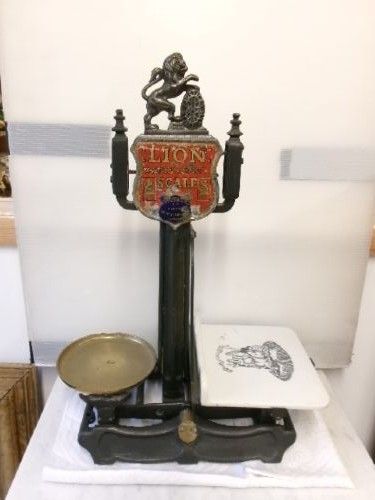
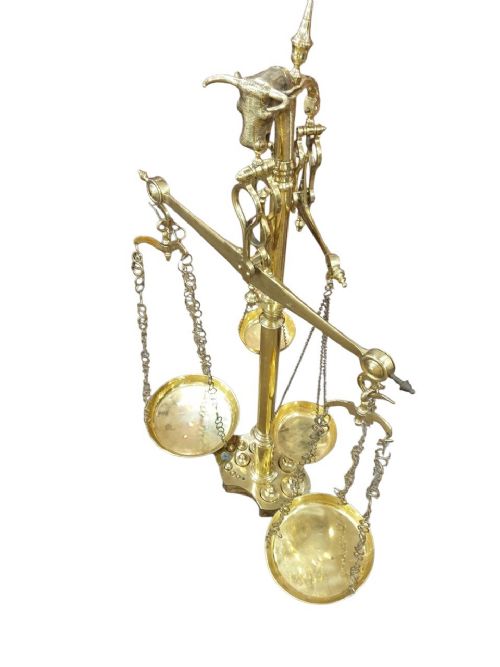
Trade weighing scales encompass robust utility devices designed for commercial environments, spanning balance scales, floor-standing butcher scales, and kitchenalia. The pieces catalogued here include heavy cast iron frameworks, brass beam balances, and ceramic scale pans originating from the nineteenth century into the early twentieth century.
Buyers frequently encounter Victorian examples featuring iron structures alongside specialised apparatus such as grocers scales from cooperative societies and inspectors beam scales. Origins stretch from English workshops to Dutch colonial contexts, offering diverse regional interpretations of commercial weighing.
The assortment balances large monumental floor-standing apparatus with smaller hanging beam balances and ceramic pans. This variety reflects the diverse demands of historical trade, from butcher shops to general grocers.
Materials and construction
Construction relies heavily on durable metals, predominantly cast iron and wrought iron for structural frames, combined with brass for sensitive beams and indicator arms. Many items integrate marble, hardwood such as mahogany, and ironstone ceramic pans to withstand daily commercial use.
Assembly methods unite heavy cast foundations with finely balanced metallic mechanisms, requiring precise engineering to ensure accurate commercial measurement. Materials are selected for functional endurance, resulting in weighty objects that combine industrial strength with metallic sheen.
Trade Weighing Scales Retail Price Guide 2026
Typical asking prices for trade weighing scales among the pieces listed under this phrase on Sellingantiques today, from the lower quarter to the upper quarter. They describe what is for sale here now, not the wider market.
Listings feature iron, brass, mahogany, and ironstone across Victorian, Edwardian, and nineteenth-century periods.
Assessing quality and finish
Quality reveals itself in the substantial heft of the metalwork and the crispness of maker inscriptions cast directly into iron bases or engraved on brass beams. Superior examples demonstrate refined proportions and harmonious material combinations, such as polished brass against dark hardwood or painted cast iron.
The refinement of the mechanical components distinguishes standard utility items from exceptionally decorative pieces intended for prominent display. Intricate casting details, such as figurative elements on iron frames, elevate specific pieces above plain utilitarian designs.
Herbert & Sons London·Fairbanks Scales·Bartlett & Sons·De Grave & Co London·DE Grave Short & Co
The Trade Weighing Scales Glossary
- Balance scales
- A weighing device operating on the principle of equal arms, where the load in one pan is measured against standard weights in the other. This traditional design forms the basis of many commercial and scientific instruments.
- Beam
- The central horizontal lever of a scale from which the pans are suspended. The beam is the critical component for determining balance and accuracy.
- Ironstone
- A heavy, durable type of earthenware developed in the nineteenth century. It appears frequently in scale pans due to its resistance to chipping and staining.
- Stick balance
- A portable weighing instrument utilising a sliding weight along a graduated rod. This form offers a compact alternative to dual-pan platform scales.
- Quick action scale
- A specialised mechanical weighing arrangement designed for rapid commercial transactions. These mechanisms allow merchants to determine weights swiftly during busy trading hours.
Trade Weighing Scales: Frequently Asked Questions
What are trade weighing scales?
Trade weighing scales are heavy mechanical devices utilised in historical commerce for measuring goods accurately. They range from large floor-standing butcher apparatus to delicate hanging beam balances.
These instruments combine utilitarian iron frames with polished brass components and ceramic pans. Their design reflects the specific demands of nineteenth and early twentieth-century trade environments.
How were these scales used?
Merchants employed these scales in shops, markets, and cooperative stores to weigh provisions such as meat, dry goods, and produce. Operators balanced loads against standard weights suspended from beams or platforms.
Inspectors also used specialised portable beam scales to verify commercial standards across different jurisdictions. Every instrument served a strict commercial function before entering the decorative sphere.
How do I live with industrial scales?
Placing heavy trade scales in a modern interior requires a sturdy surface capable of supporting substantial iron and brass weight. They anchor kitchen spaces, reception rooms, and retail displays effectively.
Maintenance involves gentle dusting and preserving the natural patina of the metal and wood surfaces. Avoid harsh chemical cleaners that strip the historical finish.
How do I date an antique scale?
Dating relies upon stylistic cues, material combinations, and cast manufacturer inscriptions. Victorian pieces often display ornate cast iron decoration, while later twentieth-century models lean toward simplified industrial efficiency.
Maker names and regional origins recorded on beams or bases provide additional historical context. Examining the transition from wrought iron to cast components helps narrow the period of manufacture.