




Tortoiseshell Bamboo
Tortoiseshell bamboo pieces are striking items of furniture defined by mottled surfaces that bring organic warmth into a room.
Tortoiseshell Bamboo
Tortoiseshell bamboo encompasses a variety of antique furniture forms produced predominantly during the Victorian era and the broader nineteenth century. These pieces reflect the nineteenth century fascination with exotic design, often incorporating stylistic elements of the Aesthetic Movement and Chinoiserie.
Makers of these items utilised the distinct speckled appearance of the material to create visually engaging focal points for domestic interiors. Each piece demonstrates how nineteenth-century craftsmen transformed natural cane into sturdy and decorative household furnishings.
How they were made
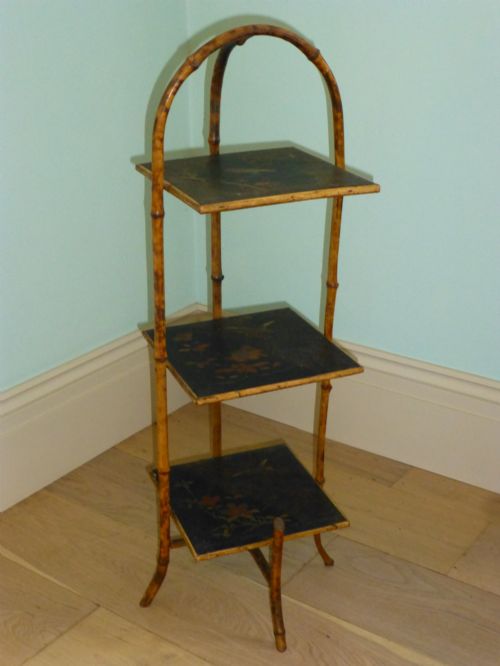
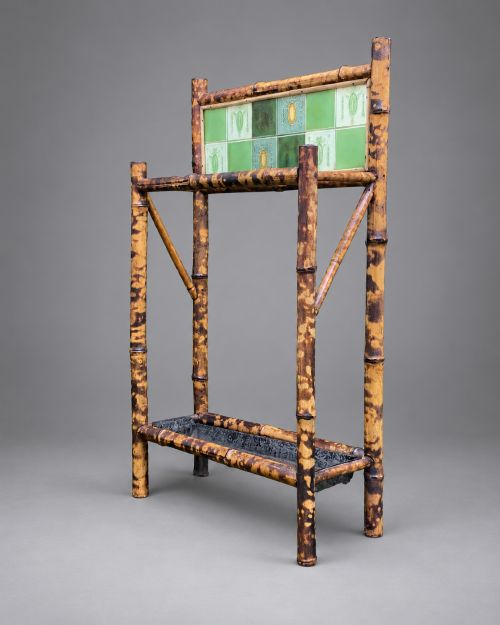
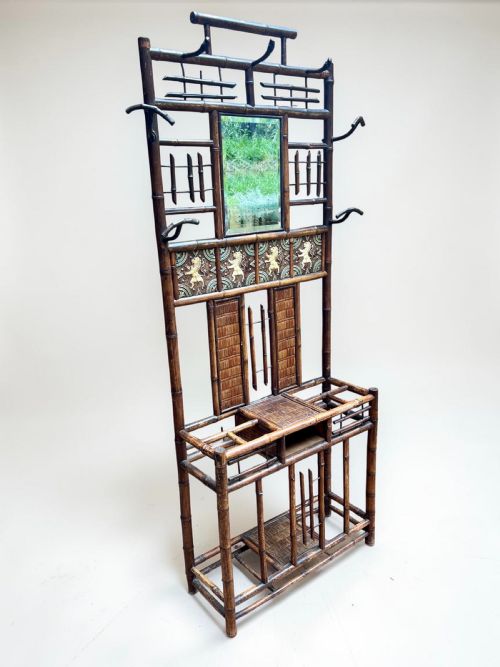
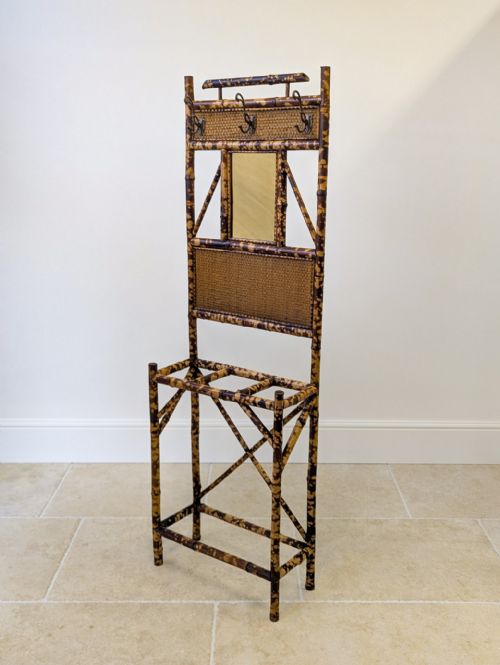
Construction relies heavily on natural bamboo cane, which was artificially scorched or treated to create the mottled tortoiseshell pattern commonly known as tiger bamboo. Artisans shaped these canes into stable frames for furniture such as tables, stands, and etageres.
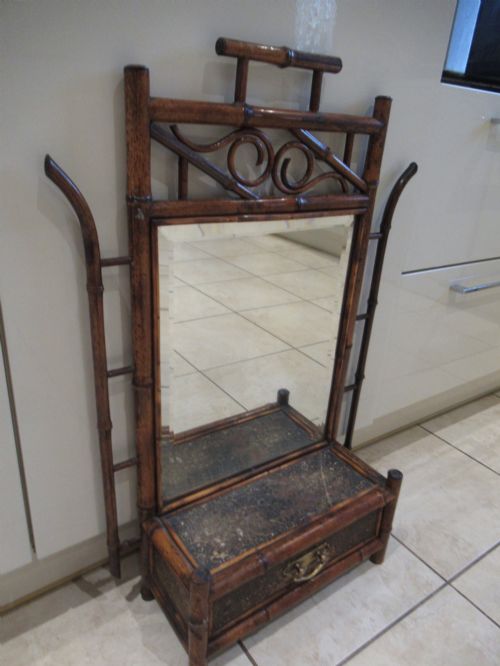
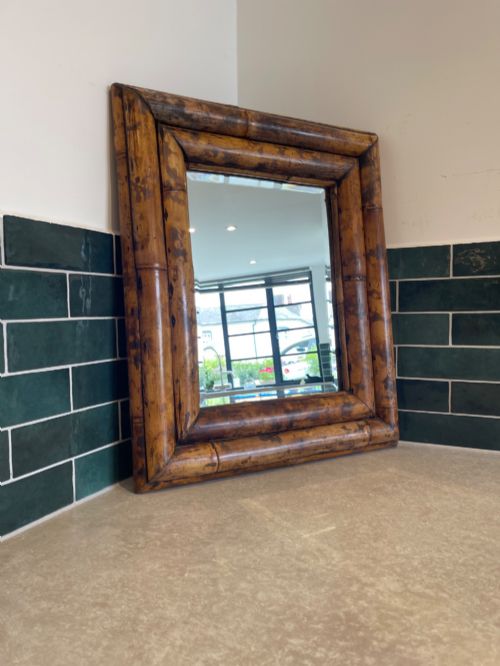
Many items incorporate supplementary materials like wood, metal, brass, and rattan to reinforce structural joints and provide surface contrast. Mirror glass and lacquer further enhance pieces like wall mirrors and cabinets, aligning with the decorative aims of the period.
Tortoiseshell Bamboo Retail Price Guide 2026
Typical asking prices for tortoiseshell bamboo among the pieces listed under this phrase on Sellingantiques today, from the lower quarter to the upper quarter. They describe what is for sale here now, not the wider market.
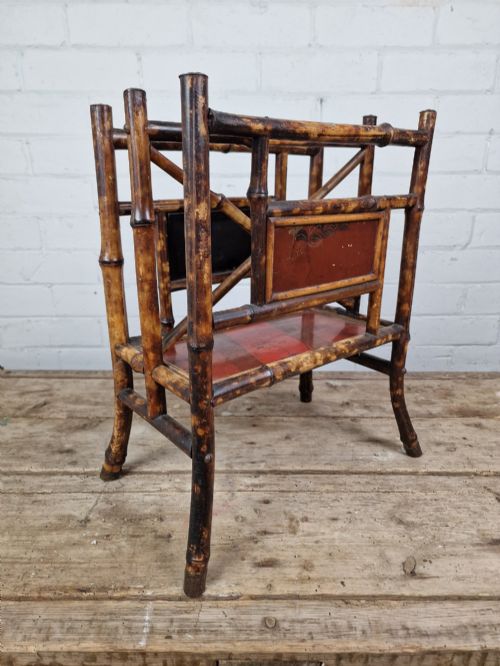
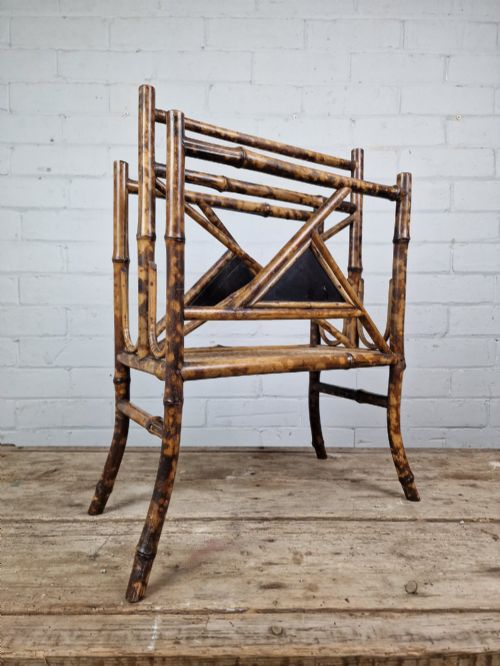
Form variations include magazine racks, wall mirrors, hall stands, side tables, etageres, corner cabinets, and side chairs.
What varies in quality
Quality in these items is determined by the crispness of the mottled tortoiseshell patterning on the bamboo and the structural integrity of the cane frame. Superior examples display careful joinery and well-preserved surface finishes across components like shelving and turned supports.
The inclusion of hand-painted details, lacquer work, or integrated brass fittings elevates the sophistication of individual pieces. Simpler utilitarian items contrast with more elaborate etageres and hall stands that showcase advanced nineteenth-century craftsmanship.
The Tortoiseshell Bamboo Glossary
- Canterbury
- A low wooden or bamboo stand fitted with partitions for holding sheet music, books, or magazines. This form became particularly popular during the nineteenth century.
- Etagere
- A piece of furniture consisting of a set of open shelves for displaying small ornaments. These stands are frequently encountered in nineteenth-century bamboo designs.
- Aesthetic Movement
- A late nineteenth-century artistic and design movement that emphasised visual beauty over narrative or moral themes. Pieces from this period often display influences from Japanese and Chinese art.
- Chinoiserie
- A European style that reflects Chinese artistic influences through decoration and form. It appears across various nineteenth-century bamboo furniture items on this page.
Tortoiseshell Bamboo: Frequently Asked Questions
What periods do these pieces come from?
The items listed span primarily from the nineteenth century, with strong representation from the Victorian era and the Aesthetic Movement around 1890. Occasional pieces trace back to the Regency period.
Craftsmen produced these distinctive furnishings across several decades, resulting in varied stylistic interpretations of the material.
How were these items used originally?
These pieces served practical functions in domestic spaces, acting as magazine racks, hall stands, and side tables. Mirrors and etageres provided both utility and display areas for decorative objects.
Their lightweight construction allowed them to be moved easily between rooms to suit the needs of the Victorian household.
How should I live with bamboo furniture?
Bamboo furnishings require stable indoor environments away from direct heat sources and excessive moisture to prevent the cane from drying out. Regular dusting with a soft cloth helps preserve the surface finish.
Placing them in moderate living spaces ensures the structural bamboo and applied lacquer remain intact for daily enjoyment.
How do I identify Aesthetic period pieces?
Aesthetic period items often incorporate lacquer, painted highlights, and forms inspired by Japanese and Chinese design. The bamboo is frequently mottled to resemble tortoiseshell.
These pieces emphasise decorative harmony and integration within fashionable nineteenth-century interiors.