


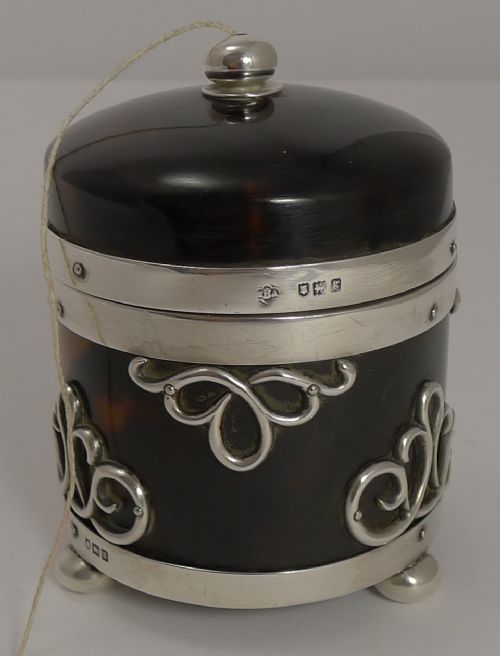


Tortoise Shell Box
A tortoise shell box brings organic warmth and rich amber depth to a desk or dressing table.
Tortoise Shell Box
When you search for a tortoise shell box, you encounter personal containers designed for tea, jewellery, sewing, and desk accessories. The pieces on this page span from the mid-eighteenth century through the Georgian and Regency eras into the early twentieth century.
Tea caddies form a prominent share of the selection, including bow-fronted double containers complete with inner canisters and sugar dishes. Ladies table top jewellery boxes and sewing boxes also appear regularly, alongside desk accessories such as string boxes.
Origins include English and French workshops, encompassing Regency, Edwardian, and French Napoleon III styles. You also encounter early twentieth-century interpretations, including tortoise shell style lorgnettes accompanied by leather cases.
How they were made
Maker's workshops built these pieces using genuine tortoiseshell applied as a veneer over a foundational structure of wood. Brass, gilt metal, and sterling silver mounts were incorporated for hinges, escutcheons, and stringing details.
Decorative techniques include bule work, where metal and shell are inlaid together to create elaborate patterns on the surface. Ebonised wood and bone accents frequently complete the interior compartments and trim of these containers.
Tortoise Shell Box Retail Price Guide 2026
Typical asking prices for tortoise shell box among the pieces listed under this phrase on Sellingantiques today, from the lower quarter to the upper quarter. They describe what is for sale here now, not the wider market.
The listings span periods from 1750 through the Georgian, Regency, and Edwardian eras up to the early twentieth century.
What varies in quality
The sophistication of the surface inlay and the precision of the tortoiseshell veneer application distinguish finer examples from standard work. Elaborate brass bule work and sterling silver mounts elevate a piece above simpler timber and shell combinations.
Completeness of internal fittings, such as original inner canisters, sugar dishes, and keys, defines the desirability of tea caddies and sewing boxes. The survival of matching original boxes and accessories, as seen with certain optical pieces, adds notable context to a piece.
The Tortoise Shell Box Glossary
- Tortoiseshell
- A mottled brown and amber material derived from the shell of certain marine turtles, historically used as a luxury veneer.
- Tea caddy
- A box or container designed to store dry tea leaves securely, often featuring internal compartments or canisters.
- Bule
- An alternative spelling of boulle, referring to an inlay technique combining tortoiseshell and brass.
- Escutcheon
- A flat plate of metal surrounding a keyhole to protect the surrounding wood or shell from wear.
- Lorgnettes
- A pair of spectacles held to the eyes with a handle rather than fitting over the ears.
Tortoise Shell Box: Frequently Asked Questions
What were tortoise shell boxes used for?
These containers served practical domestic functions for wealthy households, primarily storing precious dry tea leaves or safeguarding personal jewellery and sewing equipment. Desk accessories held writing string or twine.
Their presence in the home signalled refinement, keeping valuable or aromatic commodities secure under lock and key.
How do I date a tortoise shell box?
Dating relies on combining the overall silhouette, the style of the mounts, and the construction methods visible inside. Georgian and Regency pieces often feature distinct architectural proportions and silver or brass stringing.
Later nineteenth and twentieth-century examples shift towards French Napoleon III or Edwardian decorative vocabularies and machine-made fittings.
How do I care for tortoise shell?
Keep the material away from direct sunlight, extreme heat, and high humidity to prevent warping and shrinkage of the veneer. Dust gently with a dry microfibre cloth and avoid harsh chemical cleaners.
Stable indoor conditions preserve the natural amber tones and structural integrity of the shell.
Are all these boxes made of real shell?
The historical pieces utilise genuine tortoiseshell applied over wooden foundations, while later twentieth-century items may employ alternative simulated materials. Examining the natural grain, warmth, and joining seams helps identify authentic biological shell.
Listings specify materials ranging from pure shell to ebonised wood and metal combinations.