





Timuri Tribal Weave
A timuri tribal weave brings the nomadic artistry of the Persia and Afghanistan borderlands straight to your floor.
Timuri Tribal Weave
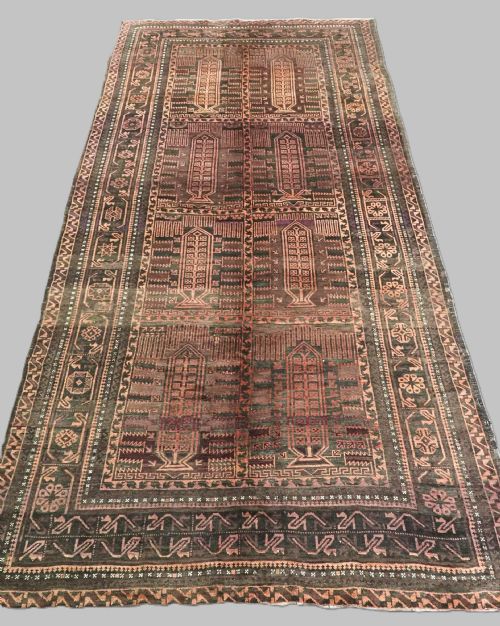
When you search for timuri tribal weave, you encounter hand-knotted rugs, main carpets, and functional nomadic textiles produced across the borderlands of north-east Persia and west Afghanistan. The pieces on this page span the late nineteenth and early twentieth centuries, capturing a distinct regional aesthetic.
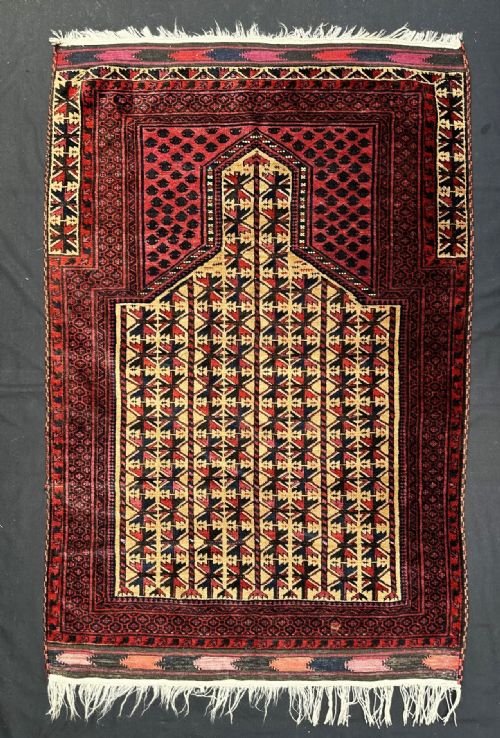
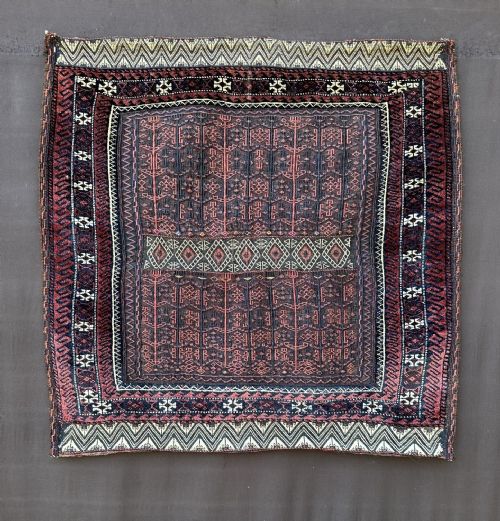
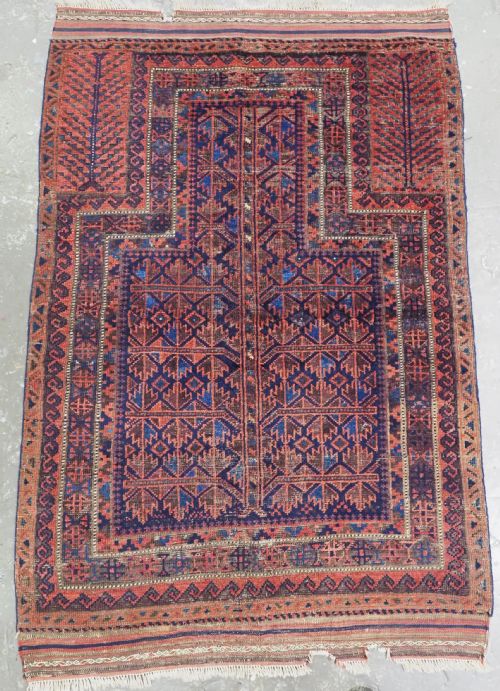
You are most likely to meet prayer rugs featuring the classical 'pencil box' or kalam donneh design, alongside bread sofreh and salt bags. These formats reflect the daily lives and utilitarian needs of the Timuri and Baluch nomads who made them.
Originating from regions such as Khaf and Chakhansur, these items demonstrate deep tribal traditions rooted in nomadic movement. Each textile holds a specific place within the culture that produced it, whether used for daily devotion or household storage.
Evaluating the Weave
The distinction between standard village output and finer tribal work rests in the precision of the knotting and the complexity of the design layout. Finer examples display crisper execution of geometric motifs like the kalam donneh.
Material selection also dictates quality, particularly the purity of the hand-spun wool and the inclusion of soft camel hair. Pieces with well-preserved natural grounds and balanced proportions stand apart from heavier, coarser utility pieces.
Timuri Tribal Weave Retail Price Guide 2026
Typical asking prices for timuri tribal weave among the pieces listed under this phrase on Sellingantiques today, from the lower quarter to the upper quarter. They describe what is for sale here now, not the wider market.
Nomads wove utilitarian salt bags not for salt alone, but to carry all manner of small camp treasures across shifting desert borders.
The Timuri Tribal Weave Glossary
- Pencil box design
- A repeating geometric motif, also known as kalam donneh, resembling stacked boxes or writing cases. It forms the signature pattern of many nineteenth-century main carpets.
- Bread sofreh
- A flatwoven or piled cloth utilised specifically for kneading, serving, or wrapping bread within the nomadic tent. These functional textiles display inventive tribal geometry.
- Ru korssi
- A decorative cover placed over a low traditional heating table during winter months. They are designed to be viewed from multiple angles in a central living space.
- Dokhtar-e-qazi
- A specific tribal design tradition often associated with prayer rugs from the borderlands. It carries distinctive mihrab arches and structured field patterns.
- Camel ground
- A background field composed of un-dyed camel hair, giving a warm, varied golden-brown tone. This natural fibre adds a soft handle to the rug.
Timuri Tribal Weave: Frequently Asked Questions
What is a timuri tribal weave?
A timuri tribal weave is a hand-knotted rug, carpet, or utility bag produced by nomadic groups in the borderlands of Persia and Afghanistan. These textiles use regional wool and camel hair.
They encompass diverse formats from prayer rugs to bread sofreh, reflecting the practical and artistic traditions of nineteenth-century makers.
How do I date a timuri rug?
Dating relies on wool quality, natural dye palettes, and structural characteristics typical of late nineteenth and early twentieth-century production. Early examples often feature finer hand-spun wool and more saturated indigo or madder tones.
Changes in structure and design crispness help distinguish pieces made around eighteen-eighty from those produced closer to nineteen-ten.
How do I use a salt bag at home?
An antique salt bag functions well as a small wall hanging or a textural display piece on a shelf. Its original purpose was holding salt or provisions in a nomad camp.
Because of the sturdy goat hair and wool construction, these bags retain their structural integrity and suit careful interior placement.