


Timber Tilt Top Table
A timber tilt top table offers a clever space-saving surface that pivots upright when not in use.
Timber Tilt Top Table
A timber tilt top table serves as a flexible surface designed to fold flat or stand vertically against a wall when floor space is needed. These pieces appear across several distinct historical periods, notably the Georgian and Victorian eras, alongside specific regional designs.
The selections available here range from compact wine tables and tripods to larger breakfast and centre tables. Mahogany, oak, walnut and various exotic woods form the primary structural materials of these items.
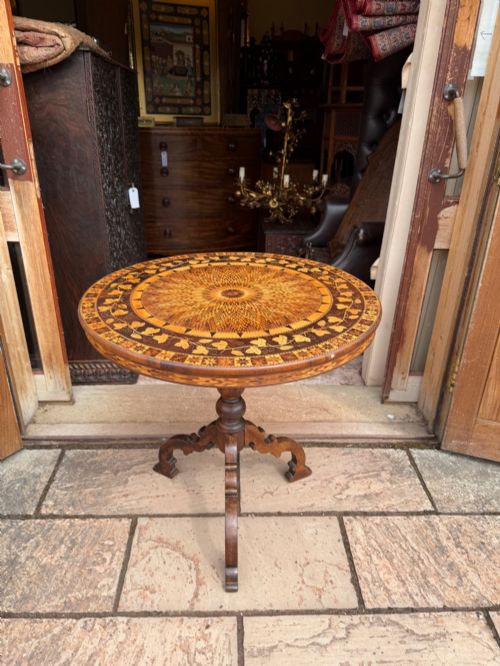
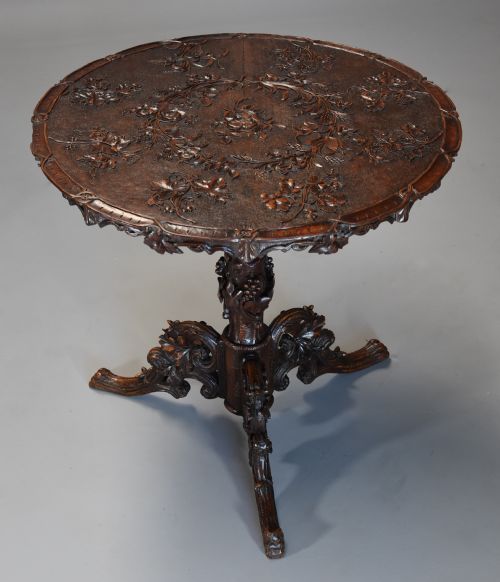
Makers utilised diverse regional styles, spanning from French Provincial and Italian Sorrento to Black Forest carving and British country traditions. Buyers frequently encounter tripod bases paired with circular, oval or inlaid tops.
Materials and Construction
Construction relies heavily on dense hardwoods such as mahogany, oak, walnut and rosewood, often complemented by specialised timbers like burr walnut, goncalo alves, palm wood, sycamore and ash. Joinery involves turning, carving and pivoting mechanisms that allow the top to rotate and lock securely.
Surface decoration ranges from intricate profuse carving and penwork to geometric specimen wood sunburst veneers and delicate Italian inlay. Brass components frequently appear on hardware elements like catches and hinges.
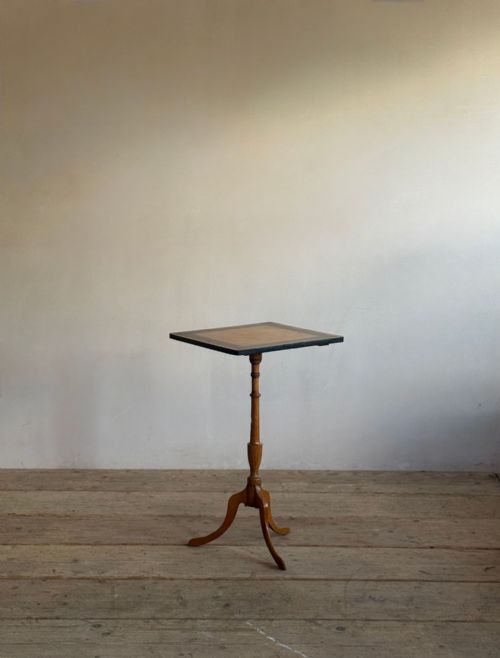
Tripod bases dominate the structural support, requiring skilled lathe work and balanced leg placement to maintain stability when the heavy timber top rests in the horizontal position.
Listings feature woods including mahogany, oak, walnut, burr walnut, rosewood, goncalo alves, palm wood, sycamore and ash.
Assessing Quality and Execution
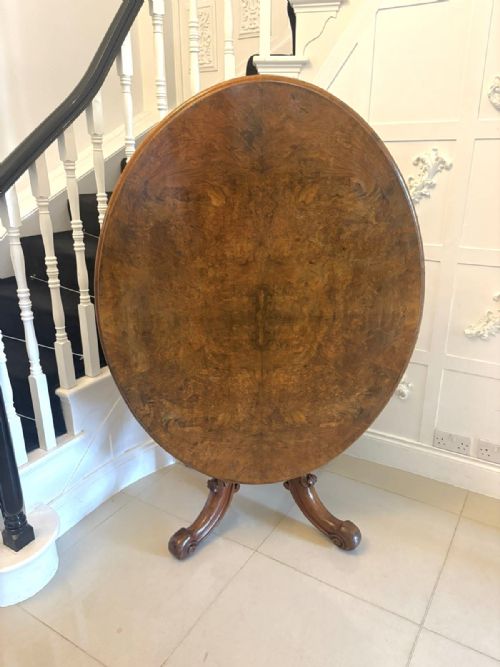
The refinement of the carving and the complexity of the timber selection determine the standing of an individual piece. Highly figured grains, such as burr walnut or multi-timber specimen sunbursts, require greater skill in selection and preparation than plain planks.
The engineering of the tilt mechanism dictates mechanical success. A well-fitted pivot and a secure locking catch ensure the top remains rigid when lowered and sits flush when upright, without excessive play in the joint.
Proportion and stability in the tripod base separate standard items from superior examples. The junction where the pillar meets the legs requires robust joinery to support the weight of the timber top over decades of pivoting.
The Timber Tilt Top Table Glossary
- Tilt top table
- A table featuring a hinged mechanism that allows the surface to rotate vertically. This design enables the furniture to be stored compactly against a wall.
- Tripod base
- A support structure comprising three legs radiating from a central pillar. This configuration prevents wobbling on uneven historic floors.
- Specimen wood
- Furniture constructed from a multitude of different decorative timbers arranged in patterns. Makers used this technique to showcase exotic grains and colours.
- Penwork
- A decorative surface technique involving ink drawings applied directly to the wood before sealing. This method creates fine illustrative details on tables.
- Treen
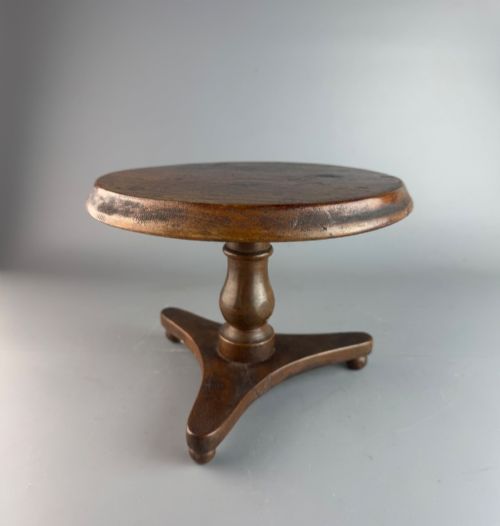
- Small handmade wooden objects and domestic items. In this context, it describes diminutive turned candlestands and miniature tables.
Timber Tilt Top Table: Frequently Asked Questions
What is a timber tilt top table?
A timber tilt top table is a functional antique surface equipped with a hinged mechanism beneath the top. This allows the wooden surface to pivot from a horizontal position into a vertical plane.
Historically, this design allowed households to clear floor space quickly in smaller rooms. When lowered, it functioned as a dining, writing or wine table.
How do I date a tilt top table?
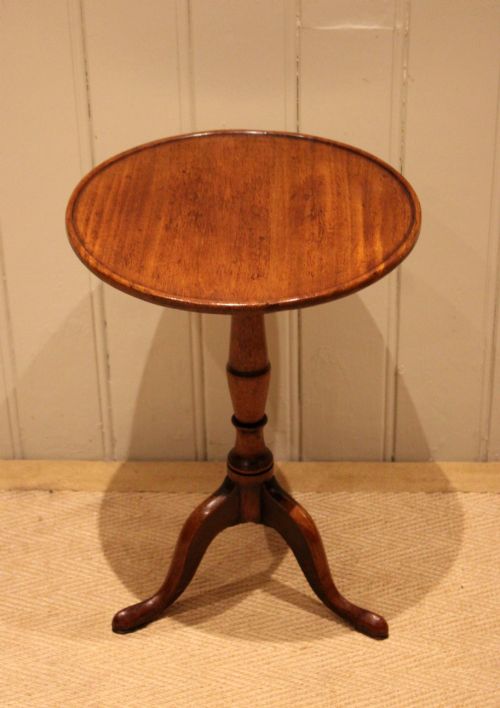
Dating relies on observing the timber species, the turning of the central pillar and the style of the leg joints. Georgian examples often feature slender mahogany proportions with pad or snake feet.
Victorian pieces tend to show heavier carving, alternative woods like burr walnut or rosewood, and more robust pedestal bases. Secondary woods on the underside also provide clues to the era of manufacture.
Where should I place it at home?
These tables suit corners, hallways or reception rooms where flexibility matters. Because the top tilts upright, you can display the decorative wood grain as a panel against a wall when the surface is not in use.
They work effectively beside seating as a wine or occasional table, or centrally in a room as a statement piece.
How do tilt mechanisms work?
The mechanism typically involves a wooden or brass catch block fixed to the underside of the table top, which slides over a pivoting block on top of the pillar. Releasing the catch allows the surface to swing vertical.
A secondary locking pin often secures the table in the flat position to prevent accidental tipping during use.