



Timber Floor Standing Light
A timber floor standing light brings both height and warmth to a room, offering practical illumination through carefully turned wood and carved detail.
Timber Floor Standing Light
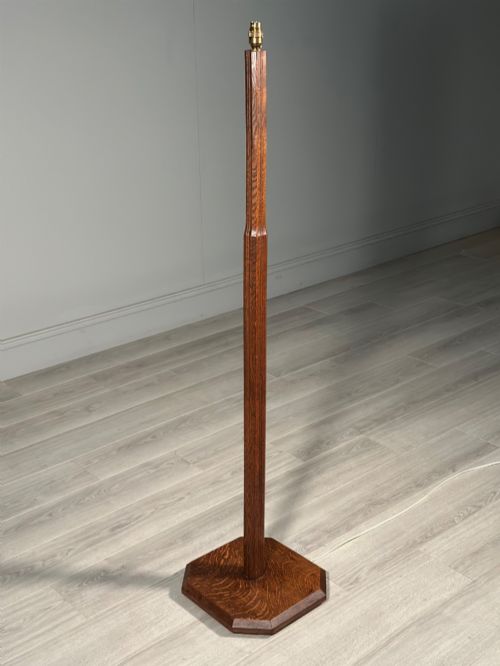
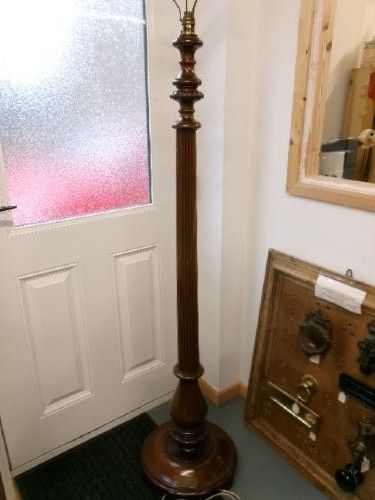
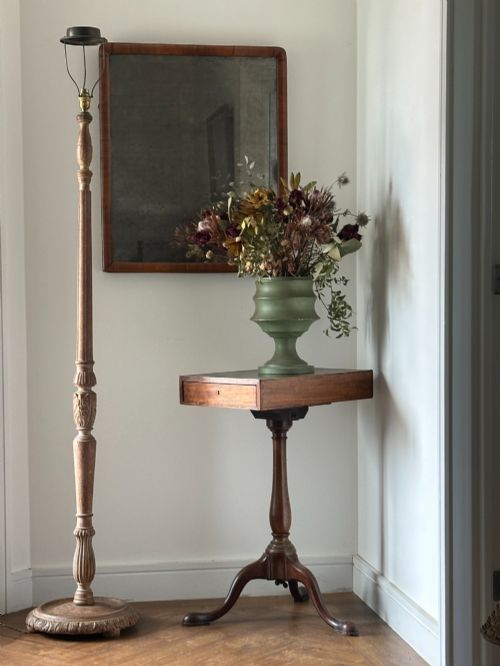
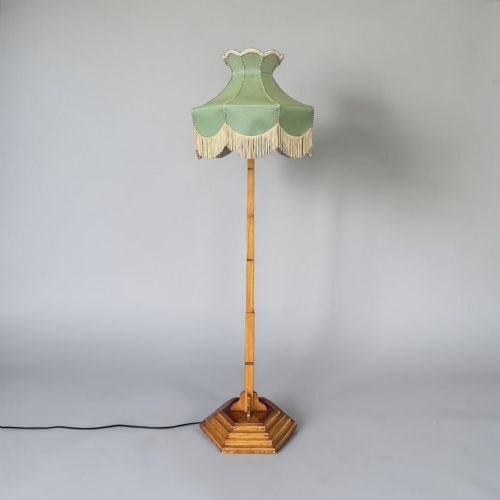
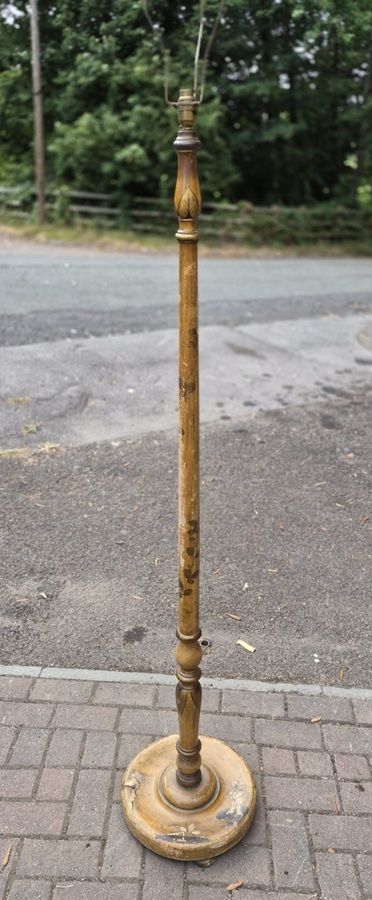
A timber floor standing light provides vertical illumination while anchoring a room with traditional craftsmanship and substantial presence. When searching for a timber floor standing light, buyers encounter everything from austere Arts and Crafts oak designs to decorative Edwardian Chinoiserie and geometric Art Deco creations.
Standard lamps and torcheres form the majority of the pieces on this page, spanning the late nineteenth century through to the interwar decades. The materials range from sturdy oak and walnut to exotic padauk and carved pinewood, each reflecting the dominant aesthetic of its period.
Materials and construction methods
Makers relied primarily on solid hardwoods such as oak, walnut, beech, and mahogany, often shaping the upright shafts through lathe-turning or intricate hand-carving. Metal components in brass frequently provided structural stability or decorative contrast to the wooden bodies.
Finishes varied according to style, utilising limed treatments, polished blond walnut, or darkened ebony inlays to highlight the natural grain of the timber. Fabric shades were typically paired with these columns to diffuse the light downwards.
Timber Floor Standing Light Retail Price Guide 2026
Typical asking prices for timber floor standing light among the pieces listed under this phrase on Sellingantiques today, from the lower quarter to the upper quarter. They describe what is for sale here now, not the wider market.
Listings span from the nineteenth century through the interwar period, featuring oak, walnut, mahogany, and brass.
Defining factors of quality
Quality rests in the depth and precision of the hand-carving, the selection of figured timbers like blond walnut or padauk, and the overall stability of the turned column. Superior examples display thoughtful proportion, integrated detailing such as stepped bases or ebony accents, and robust joinery.
Lesser pieces present plain, uninspired turnings or lack the architectural weight required to balance a tall standard lamp safely. The distinction lies in whether the timber is merely functional or treated as a canvas for sculptural expression.
Whytock and Reid
The Timber Floor Standing Light Glossary
- Standard lamp
- A tall floor-standing lamp designed to illuminate a room from a standing height, usually paired with a fabric shade.
- Torchere
- A tall ornamental stand or pillar, originally designed to carry a torch or candle and later adapted to hold electric lighting.
- Padauk
- A heavy, durable tropical timber with a distinct grain, favoured for decorative and carved furniture.
- Arts and Crafts
- A design movement prioritising traditional craftsmanship, visible construction, and simple, honest use of natural materials like oak.
Timber Floor Standing Light: Frequently Asked Questions
How do I place a floor lamp in a room?
Position the lamp in a corner or beside a seating area where the height can distribute light effectively across the space without obstruction.
Ensure the heavy timber base rests on a level surface so the vertical shaft remains entirely stable.
How do I identify an Art Deco floor lamp?
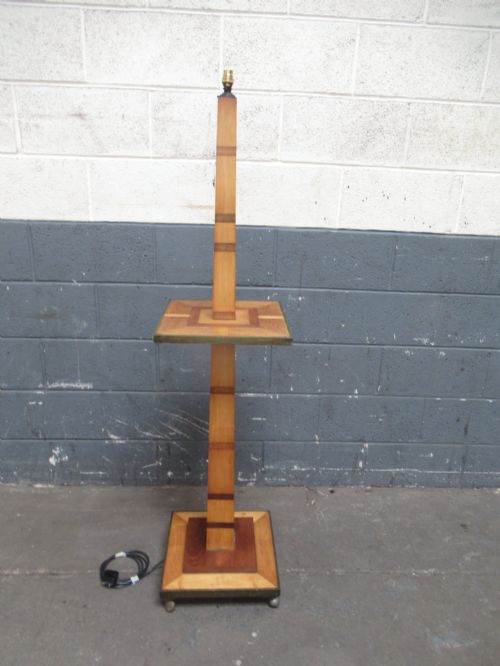
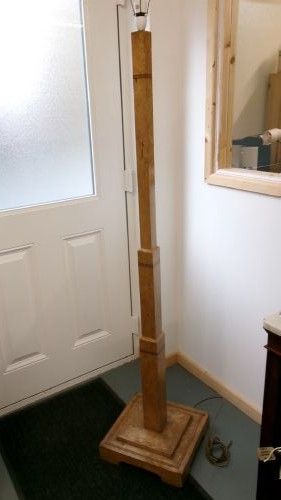
Look for geometric forms, stepped wooden sections, and contrasting timber combinations such as golden oak and ebony.
These pieces usually date from the interwar period and favour streamlined silhouettes over ornate Victorian carvings.
Are these lamps wired for modern use?
Most antique floor lamps have been adapted over time to accept modern electrical standards while retaining their original wooden columns and switches.
It remains wise to have any vintage wiring inspected by a qualified professional before daily use.