

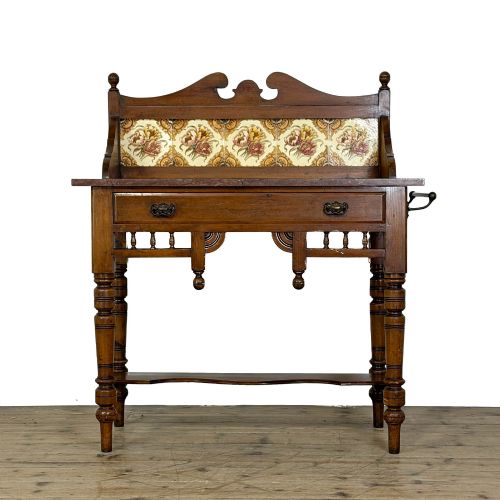
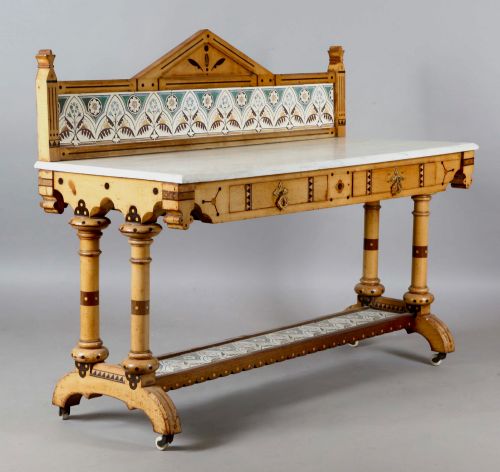
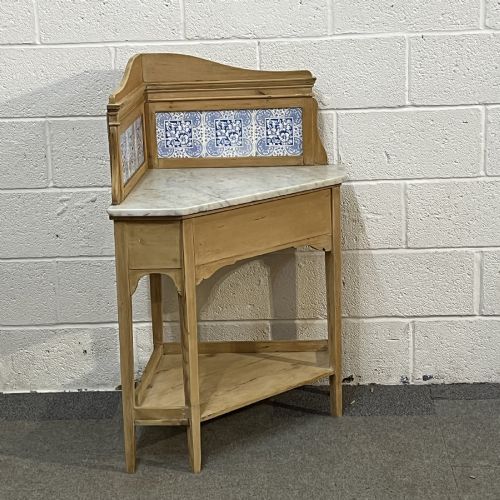
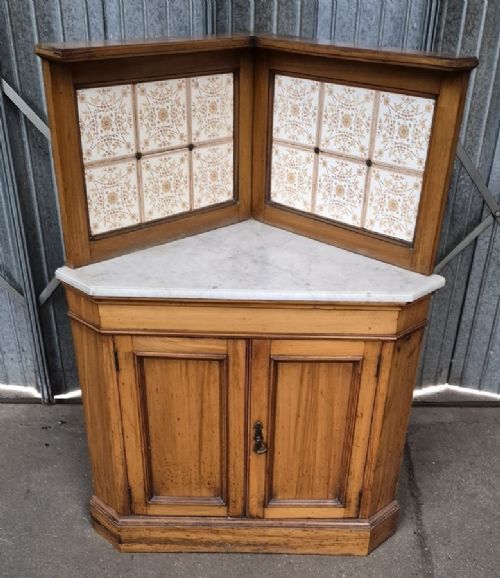
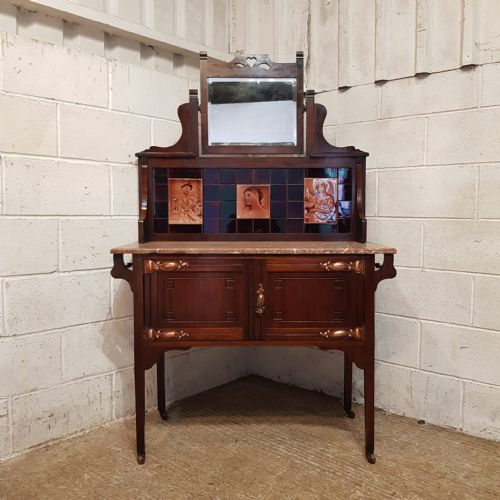


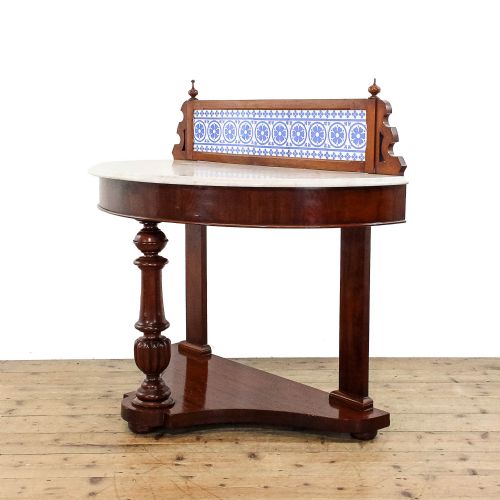

Tiled Top Washstand
These tiled top washstand pieces bring late nineteenth and early Edwardian bedroom furniture into modern spaces with ceramic and marble utility.
Tiled Top Washstand
A tiled top washstand sits firmly in the Victorian and Edwardian periods, functioning historically as a bedroom washing cabinet before plumbed bathrooms took over the home. You will frequently meet Edwardian and Victorian examples across these listings, often framed in mahogany, walnut, pine, or ash.
Makers designed these bedroom furniture pieces to handle water splashing by incorporating ceramic tiles behind the basin area alongside marble tops. They arrive in various forms, from corner washstands to larger townhouse models and dressing table hybrids.
The style spans Aesthetic Movement, Arts and Crafts, Reformed Gothic, and Art Nouveau designs. This variety reflects the shift in domestic interiors from heavy Victorian carving toward lighter Edwardian and aesthetic tastes.
How they were made
Constructed primarily from hardwoods like mahogany and walnut alongside softer timbers such as pine and ash, these pieces relied on sturdy cabinetry joinery to support heavy stone and ceramic elements. Timber frames often received a polished finish or painted treatment depending on the regional workshop or period fashion.
Makers integrated ceramic tiles into the wooden backsplashes using mortar and wooden framing, creating a waterproof barrier behind the basin. Marble slabs were then fitted directly onto the top surface alongside brass hardware and glass components.
Tiled Top Washstand Retail Price Guide 2026
Typical asking prices for tiled top washstand among the pieces listed under this phrase on Sellingantiques today, from the lower quarter to the upper quarter. They describe what is for sale here now, not the wider market.
Materials recorded across the inventory include marble, ceramic tiles, brass, mahogany, walnut, ash, glass, and pine.
What varies in quality
The distinction between standard utility bedroom furniture and high design rests in the ambition of the stylistic movement and the quality of the materials. Pieces associated with specific design influences, such as Reformed Gothic or the Aesthetic Movement, display superior timber selection and deliberate artistic coordination.
Integration of the tiled backsplash with the surrounding timber frame shows the hand of the maker. Finer examples feature coordinated ceramic tiles, substantial marble surfaces, and dense secondary woods like mahogany rather than basic painted pine.
Charles Bevan·Christopher Dresser·Walker & Sons
The Tiled Top Washstand Glossary
- Washstand
- A piece of bedroom furniture designed to hold a basin, jug, and washing accessories before the widespread adoption of indoor plumbing. These items typically feature marble tops and tiled splashbacks.
- Aesthetic Movement
- A late nineteenth-century design style emphasising visual beauty over narrative subject matter, often featuring stylised plant motifs on ceramic tiles. This approach influenced domestic furniture to adopt simpler, more harmonious lines.
- Reformed Gothic
- A Victorian design movement promoting furniture constructed with structural honesty and medieval architectural influences. Pieces from this tradition often display chamfered timbers and incised decoration.
- Backsplash
- The vertical panel rising above the top surface of the washstand, lined here with ceramic tiles to protect the wall from water splashes. This area frequently showcases the decorative ambitions of the maker.
- Arts and Crafts
- A design philosophy championing traditional craftsmanship and honest materials over mass production. Furniture from this movement relies on the natural grain of woods like oak and walnut.
Tiled Top Washstand: Frequently Asked Questions
What is a tiled top washstand?
A tiled top washstand is a piece of Victorian or Edwardian bedroom furniture built to hold washing equipment. It combines a timber frame with a marble top and a ceramic tiled backsplash.
These items served as the precursor to the modern bathroom basin. Today, they function well as decorative hall tables or bathroom sink surrounds in contemporary homes.
How do I style a washstand?
Living with these pieces involves placing them in hallways, bedrooms, or bathrooms where their marble and tile surfaces can handle daily use. Their timber frames pair easily with both period and modern interiors.
Avoid placing them in areas with extreme moisture or direct heat to protect the antique wood and tile mortar. Regular dusting and gentle polishing keep the timber surfaces preserved.
How do I date a washstand?
Dating these items relies on observing the timber, hardware, and stylistic movement visible in the construction. Victorian pieces often use heavy mahogany or walnut, while Edwardian examples can appear lighter in proportion.
Specific design cues like Aesthetic Movement tiles or Reformed Gothic chamfering point directly to the late nineteenth century. Plain painted pine versions typically date toward the end of the century or into nineteen-hundred.
Were washstands used for washing?
Yes, these cabinets were the central washing station in bedrooms before plumbed bathrooms became standard in houses. They held earthenware basins, water jugs, and soap dishes on their stone surfaces.
The tiled backs and marble tops protected the wooden bedroom walls and floors from water damage during daily routines.