



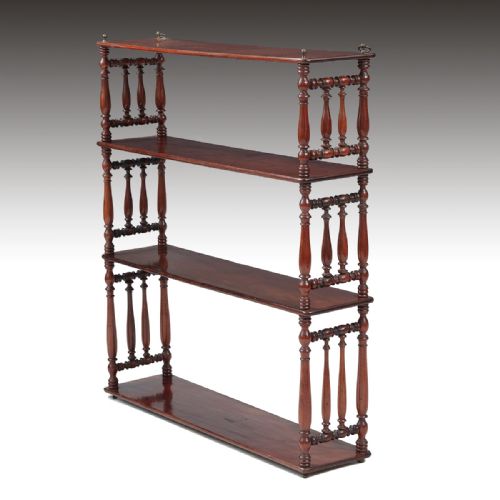
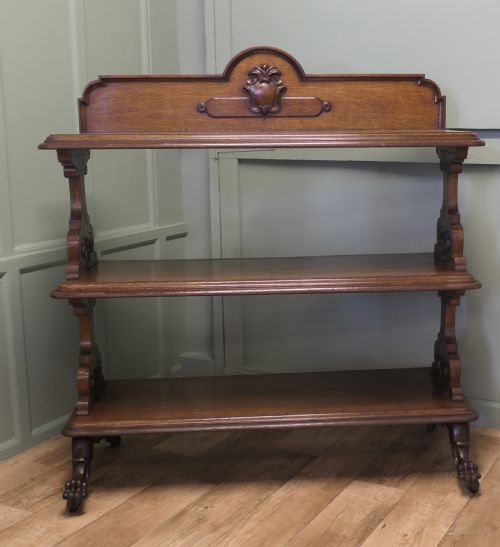
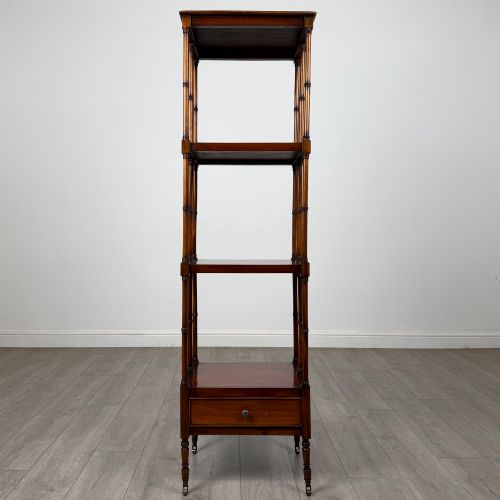
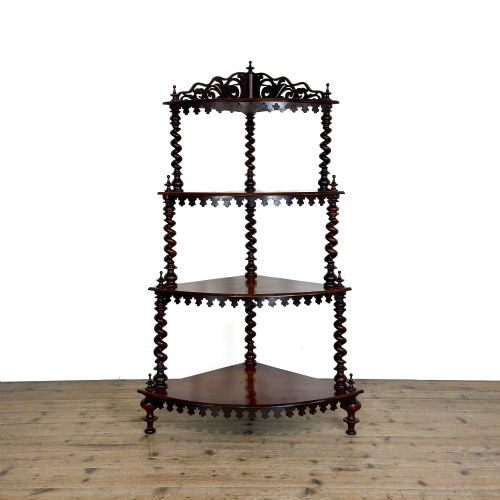

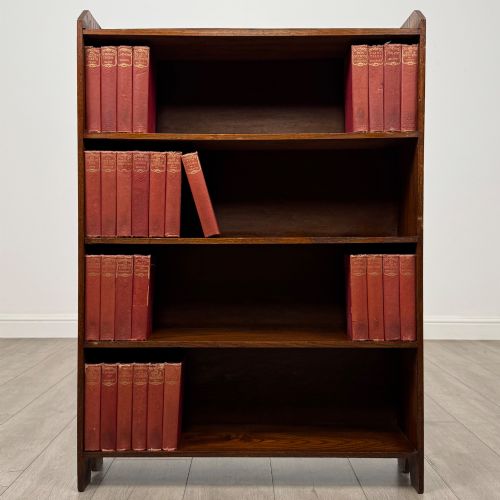
Tiered Wooden Shelving
Tiered wooden shelving offers practical multi-level storage that organises books, displaying ornaments across various historical periods.
Tiered Wooden Shelving
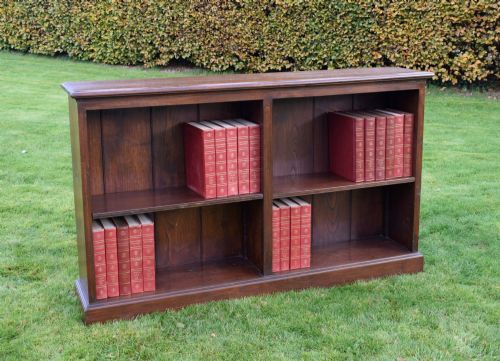
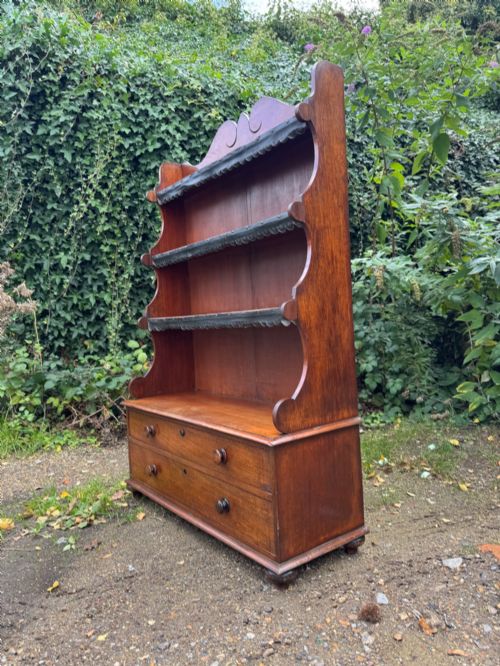
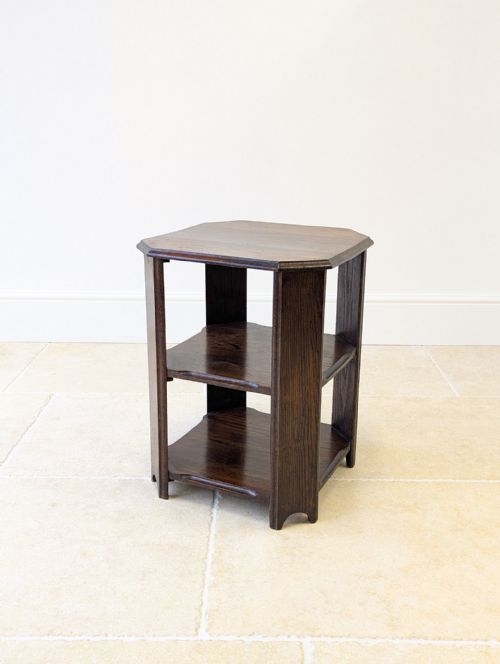
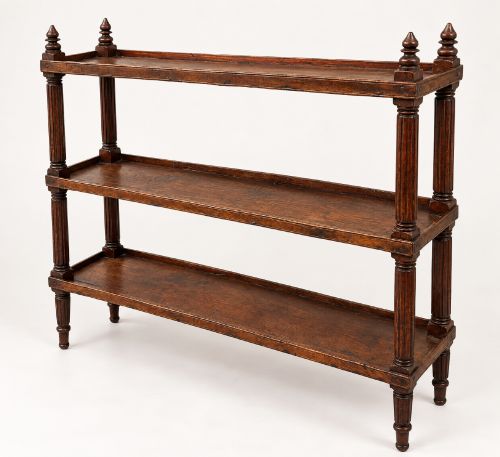
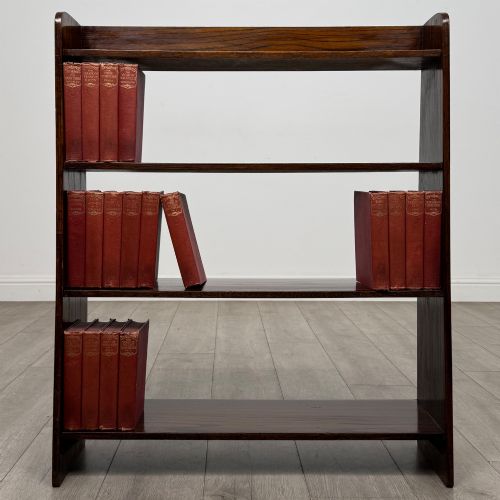
Tiered wooden shelving covers a diverse selection of multi-level storage furniture designed for vertical display and organisation. When you search for tiered wooden shelving, you encounter formats ranging from open bookcases and hanging wall shelves to freestanding whatnots and etageres. The pieces appearing here span the Georgian, Victorian, Edwardian, and Regency periods through to the early twentieth century.
The most common items you meet on this page are mahogany and oak bookcases, alongside corner whatnots and tiered stands. Makers and manufacturers utilised various forms, including rotating stacking bookcases, wall-mounted units, and low side tables featuring multiple tiers. These objects served domestic spaces for books, ceramics, and ornaments.
Materials and construction
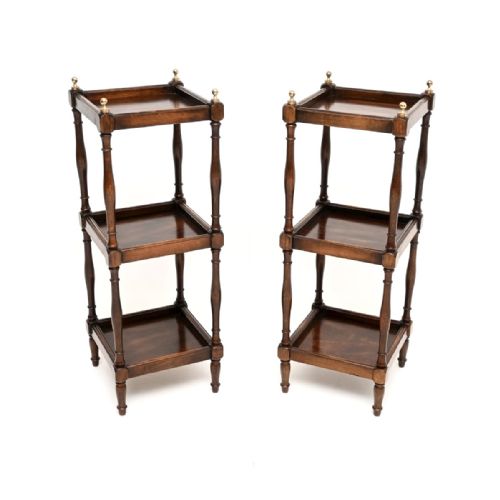
Carpenters and cabinetmakers utilised dense hardwoods like mahogany, oak, walnut, and burr walnut, alongside softer timbers such as pine and satin birch. Brass fittings frequently reinforce structural points or adorn the upright pillars of multi-tiered tables and whatnots. Glass doors and mirrored backs appear on specific display cabinets and enclosed shelving units.
Joinery techniques adapted to the specific form, from slender turned pillars on edwardian open bookcases to stackable barrister modular units. Wall shelves utilised mounting brackets and hanging plates, while freestanding whatnots relied on sturdy corner posts and pegged joints. Surface finishes highlight natural grain patterns through polishing and varnishing.
Tiered Wooden Shelving Retail Price Guide 2026
Typical asking prices for tiered wooden shelving among the pieces listed under this phrase on Sellingantiques today, from the lower quarter to the upper quarter. They describe what is for sale here now, not the wider market.
Current listings span the Victorian, Edwardian, Georgian, and Regency periods, utilising mahogany, oak, walnut, brass, and glass.
What determines quality
The selection of timber dictates the foundational grade of the piece, with figured burr walnut, padauk, and dense mahogany sitting at the higher end. Solid construction methods, such as dovetailed joints in shelving and drawers, distinguish finer workshop output from utility items. Subtle decorative choices, including turned bobbin supports, carved oak detailing, and raised galleries, separate standard utilitarian storage from refined furniture.
The Tiered Wooden Shelving Glossary
- Whatnot
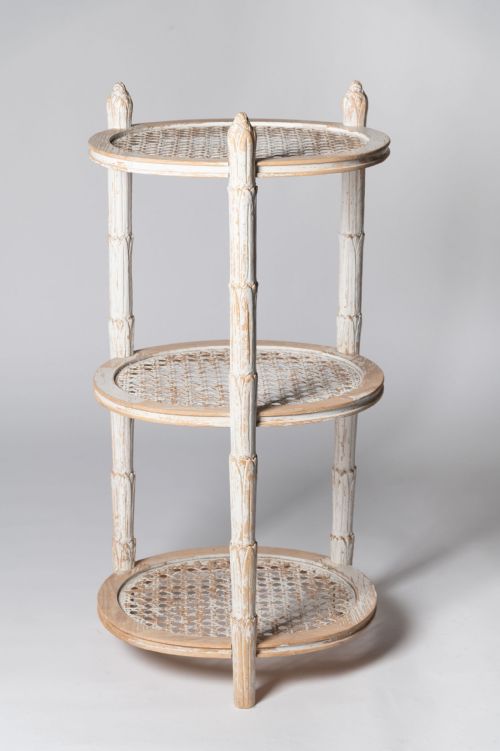
- A multi-tiered piece of freestanding furniture designed for displaying ornaments, books, or small objects. These pieces typically feature three or four open shelves supported by slender pillars.
- Etagere
- A French style of tiered shelving unit used for displaying decorative items and bric-a-brac. They often incorporate turned legs and delicate wooden framing.
- Barrister bookcase
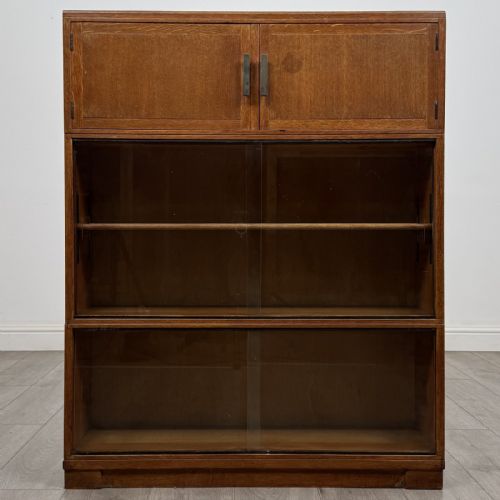
- A modular bookcase featuring stacked sections with glazed glass doors that lift and slide inward. This design protects books from dust while allowing individual tiers to be rearranged.
- Gallery
- A raised wooden or brass railing fitted around the top edge of a shelf or table. This feature prevents items from sliding off the surface.
Tiered Wooden Shelving: Frequently Asked Questions
What is a whatnot shelf?
A whatnot is a multi-tiered freestanding shelving unit designed specifically for displaying ornaments and small decorative objects in Victorian and Georgian interiors.
These pieces feature stacked open platforms held together by vertical supports, making them suitable for corners or narrow wall spaces.
How do I style tiered shelves?
Tiered wooden shelving accommodates books, ceramics, and framed photographs by distributing weight across multiple levels. Alternating vertical and horizontal objects on different tiers maintains visual balance.
Wall-mounted versions work well above side tables, while freestanding corner whatnots utilise otherwise empty room angles.
What wood types are common?
Mahogany and oak appear most frequently across nineteenth and early twentieth-century listings. Walnut, burr walnut, satin birch, and pine also feature in specific regional and period pieces.
Hardwoods provided the structural rigidity required for multi-level weight distribution.
Are these shelves adjustable?
Certain Victorian bookcase cabinets include adjustable shelving mechanisms to accommodate books of varying heights. Many traditional whatnots and open bookcases feature fixed shelves integrated into the frame during construction.
Checking the specific listing details confirms whether shelf heights can be altered.