






Tiered Wooden Cart
When you want a tiered wooden cart, you are looking for a mobile piece that brings function and historical character to a room.
Tiered Wooden Cart
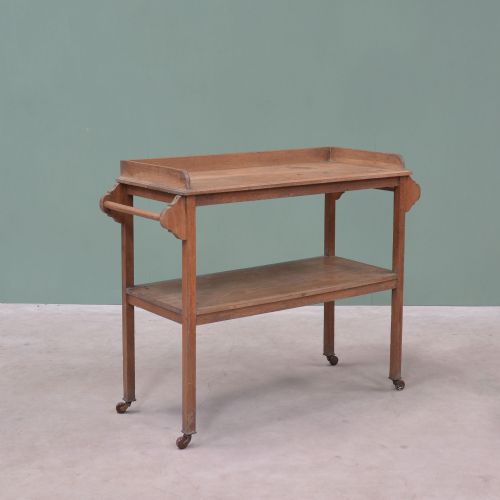
A tiered wooden cart serves as a movable surface for serving afternoon tea, drinks, or food, taking forms such as tea trolleys, drinks carts, and serving trolleys. You will encounter pieces ranging from Edwardian and Art Deco designs to Victorian and mid-century examples.
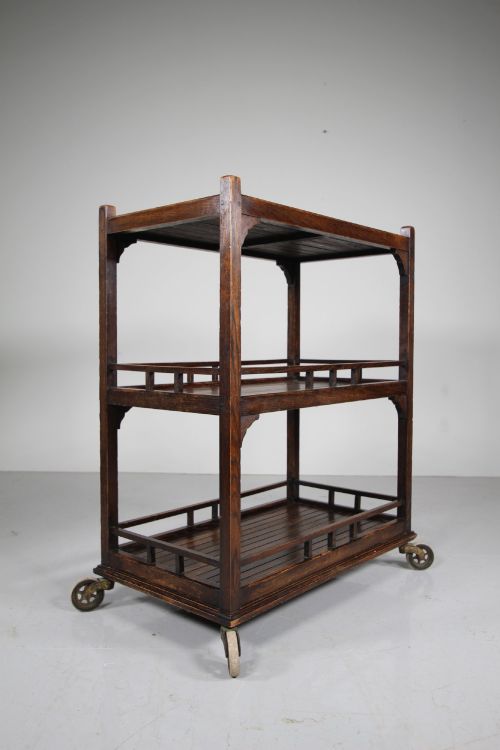
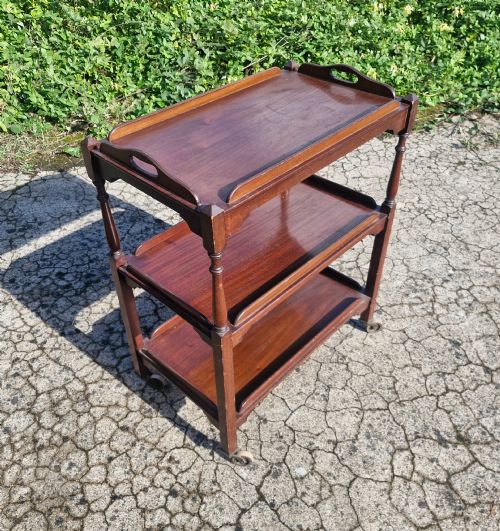
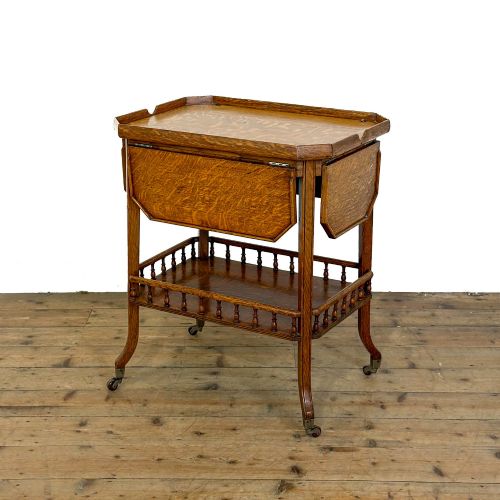
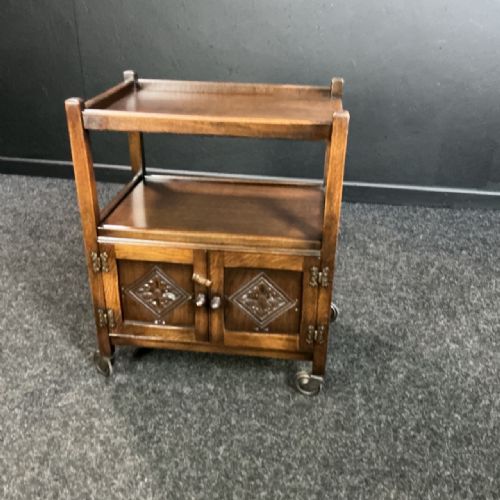
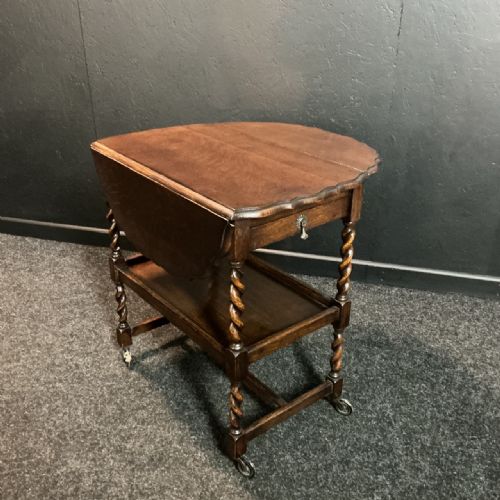
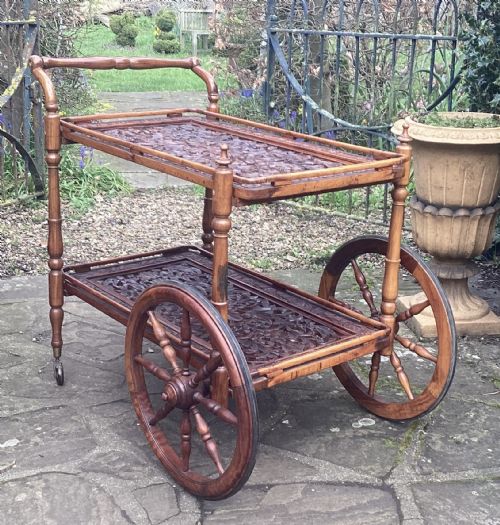
The construction typically involves two or three tiers supported by wheels or castors, sometimes featuring clever additions like removable carrying trays, folding tops, or dropleaves. Oak and mahogany are common woods, alongside walnut and carved Chinese or Indian hardwoods.
Makers and origins vary widely, from London retailers like Heal of London and Lusty of Leicester to Chinese Export and Anglo-Indian workshops. These carts bridge the gap between practical furniture and social history, reflecting the shifting dining habits of the nineteenth and twentieth centuries.
Materials and Construction
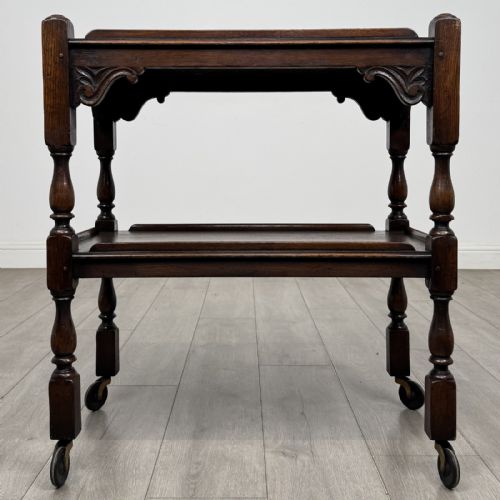
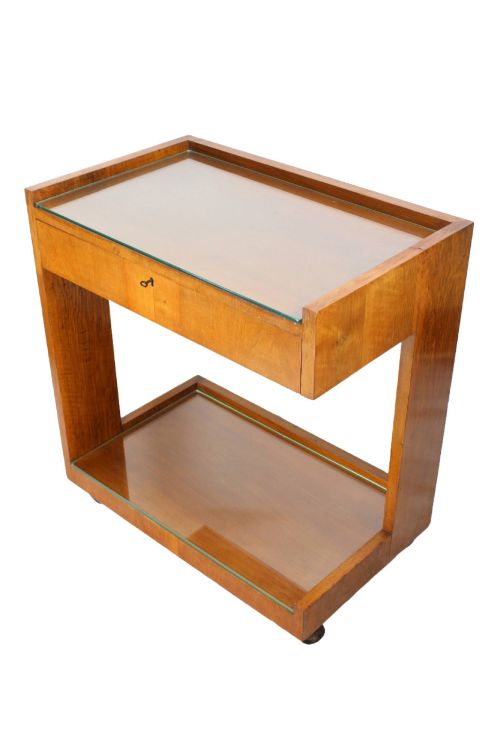
Carpenters utilised solid timbers such as oak, mahogany, and walnut, frequently selecting figured veneers for Art Deco surfaces. Structural elements often incorporate carved details, barley twist supports, and inlaid decoration.
Metal and brass components appear in the form of castors, wheels, hinges, and gallery rails that secure glassware during transit. Glass inserts and cane binding also add texture and utility to specific trolley designs.
Tiered Wooden Cart Retail Price Guide 2026
Typical asking prices for tiered wooden cart among the pieces listed under this phrase on Sellingantiques today, from the lower quarter to the upper quarter. They describe what is for sale here now, not the wider market.
Some carts double as card tables, proving that Victorians took their afternoon entertainment with absolute seriousness.
Distinguishing Quality
The standard of a cart is determined by the selection of timber, the crispness of carved ornamentation, and the integration of mechanical elements like dropleaves, folding mechanisms, and removable trays. Finer examples display thoughtful joinery and balanced proportions across multiple tiers.
The integrity of the wheels and castors relative to the heavy wood frame indicates the original intended utility and workshop standard. Pieces by documented makers or specific regional traditions carry distinct design execution that sets them apart from basic utility items.
Heals of London·Lusty of Leicester
The Tiered Wooden Cart Glossary
- Castor
- A small wheel mounted on a swivel assembly attached to the legs of a cart to allow smooth rolling. These are often made of brass or iron.
- Dropleaf
- A hinged section of a tabletop that can be folded down when not in use and supported by a swing bracket.
- Dumb Waiter
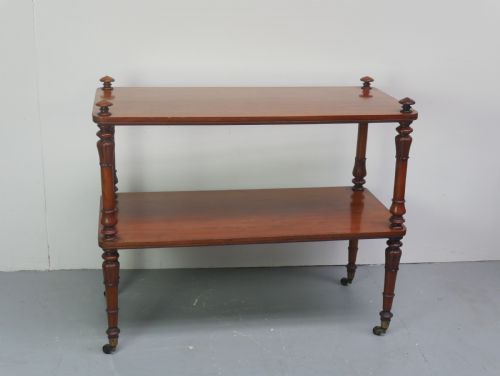
- A tiered freestanding piece of furniture used for holding food and tableware near a dining table, dating back to the nineteenth century and earlier.
- Metamorphic
- Describing a piece of furniture designed to transform into another form, such as a trolley that opens out into a serving or card table.
- Barley Twist
- A turning technique where wood is shaped into a spiral form, frequently seen on the upright supports of Edwardian and Jacobean revival tea trolleys.
Tiered Wooden Cart: Frequently Asked Questions
What was a tiered wooden cart used for?
These carts served primarily for the transport and presentation of afternoon tea, alcoholic drinks, and side dishes in domestic settings. They allowed hosts to move refreshments between rooms without relying constantly on domestic staff.
Over time, their roles expanded from formal dining rooms to drawing rooms and parlours, functioning as mobile cocktail bars and serving stations during social gatherings.
How do I date an antique wooden cart?
Dating relies on identifying stylistic markers, timber choices, and construction methods associated with specific decades. For instance, geometric walnut veneers and streamlined profiles point strongly to the nineteen-thirties, while barley twist legs and oak point to the Edwardian era or the nineteen-twenties.
Hardware such as castors and handles also offers clues, as does the presence of retailer stamps or workshop labels underneath the tiers or shelves.
What is the difference between a tea trolley and a bar cart?
Tea trolleys typically date from the Edwardian period or the nineteen-twenties, featuring conservative wooden designs with galleries, dropleaves, and wheels designed for afternoon tea service. Bar carts and drinks trolleys often emerge from the Art Deco period onward, incorporating circular tiers, mirrored glass, and polished walnut or metal frames.
While their forms overlap, bar carts lean towards beverage display and entertainment, whereas tea trolleys emphasise traditional domestic service.