
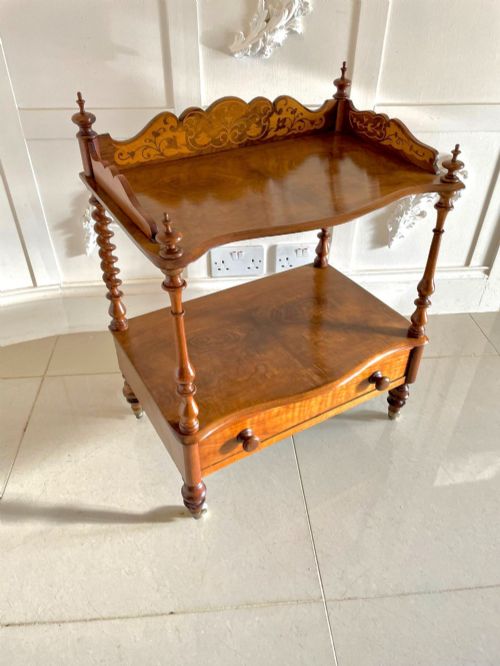
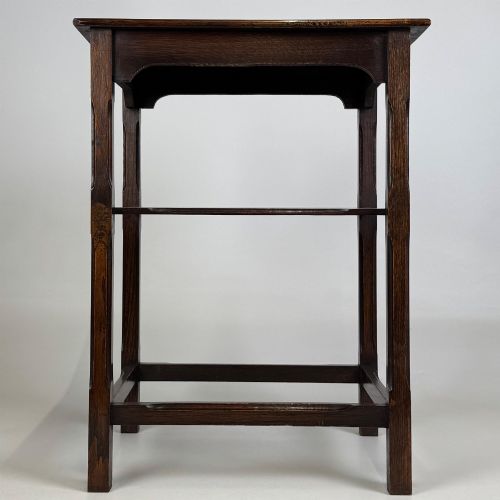

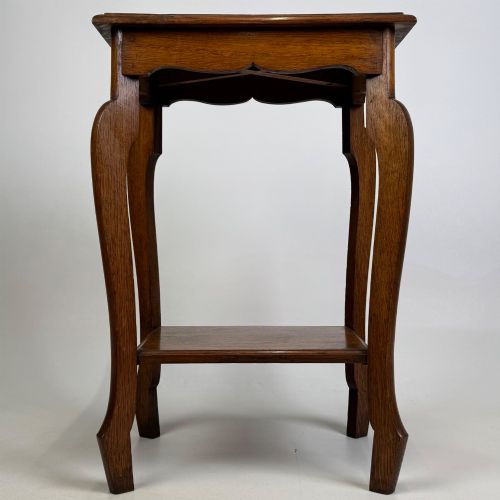
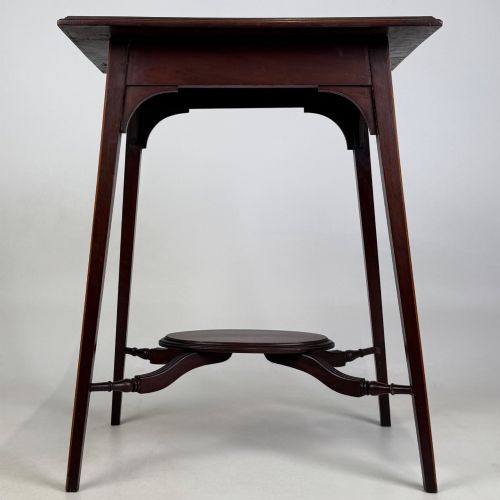
Tiered Wooden Accent Stand
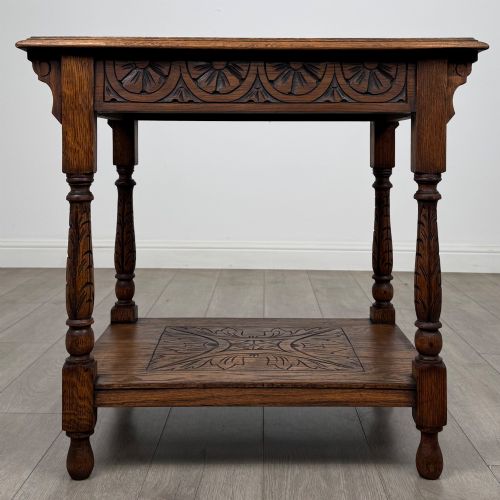
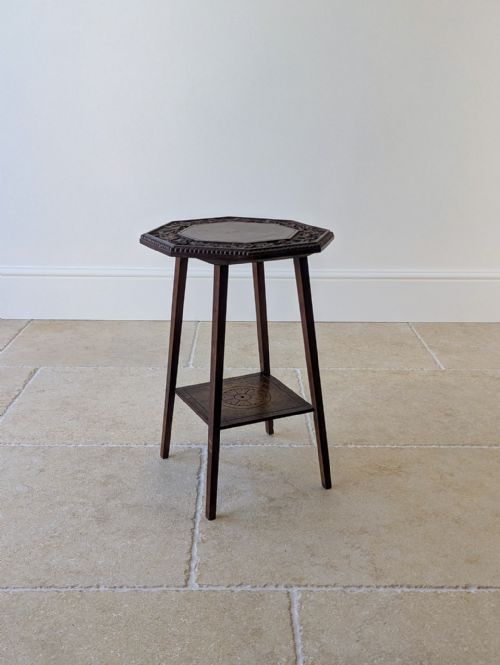
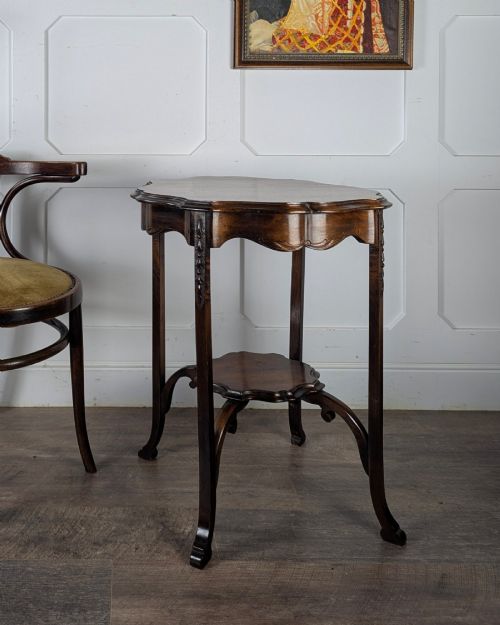
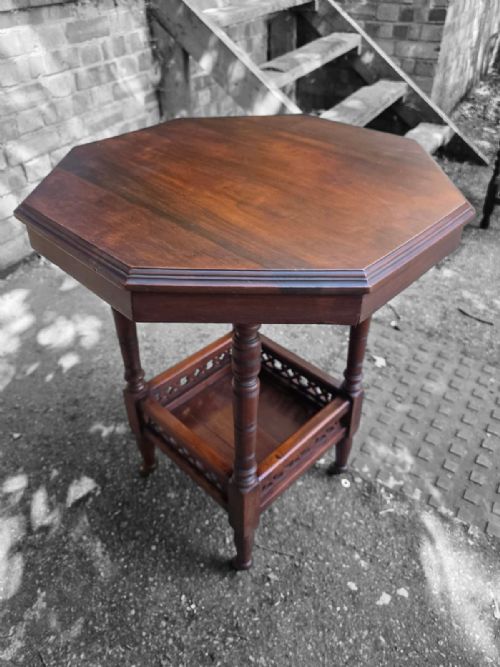
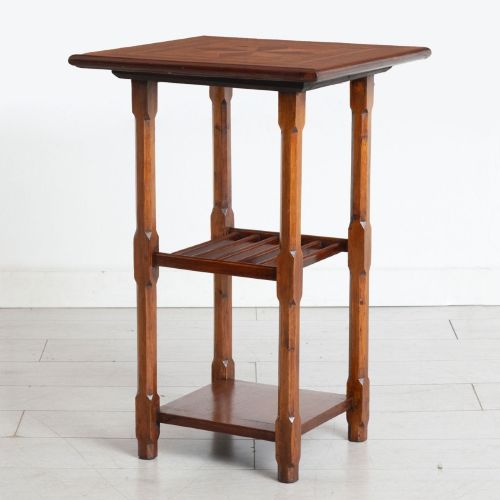
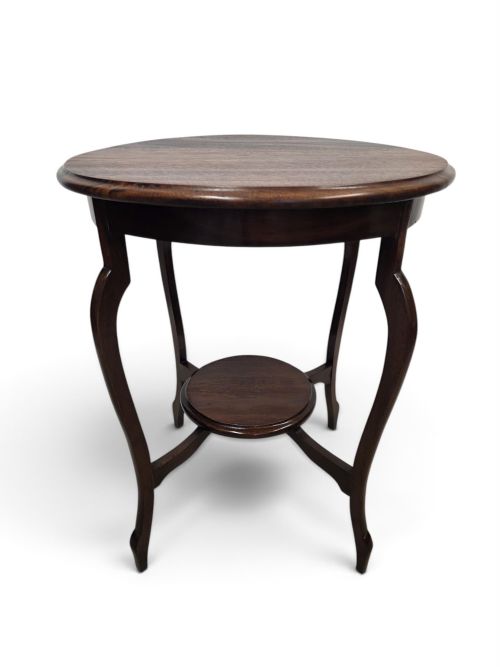
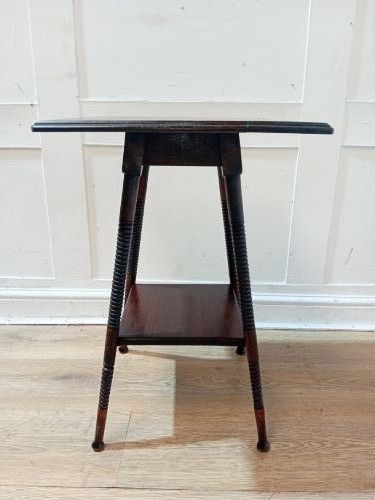
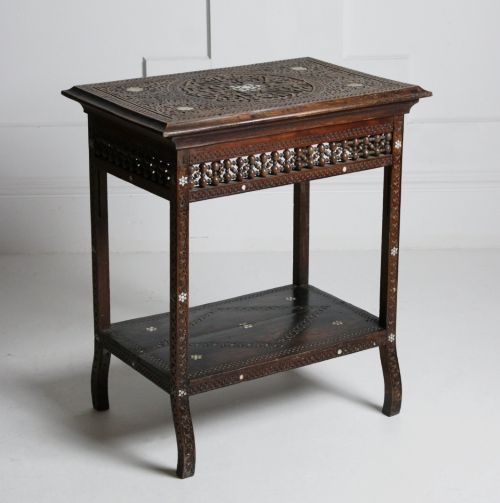
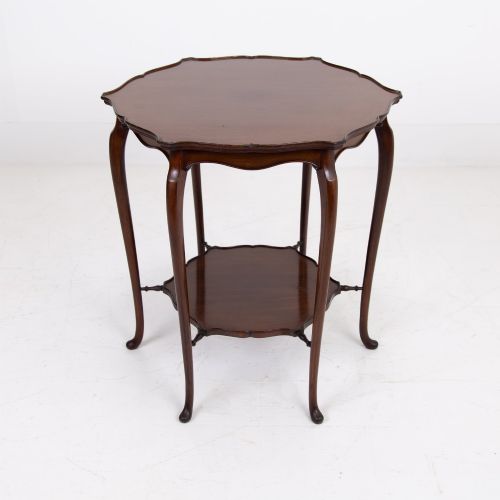
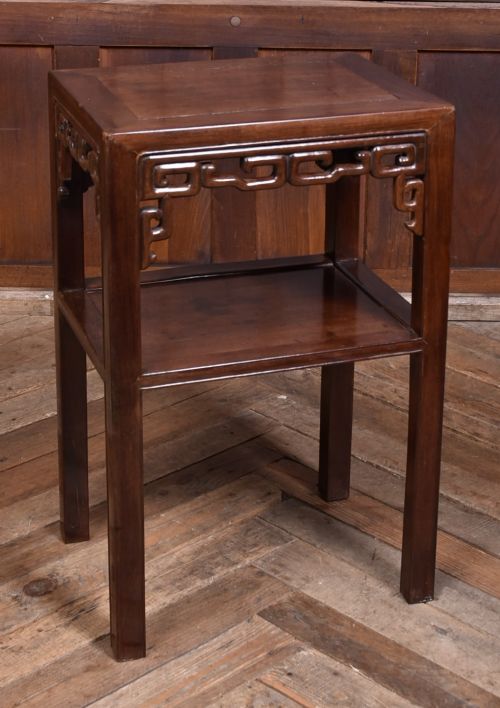
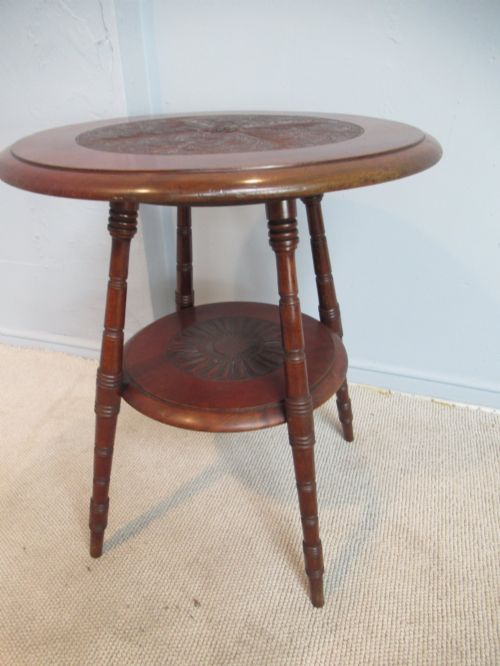
A tiered wooden accent stand brings useful display space to a room, offering multiple levels crafted in mahogany, walnut, and oak.
Tiered Wooden Accent Stand
A tiered wooden accent stand groups multi-level surfaces into compact forms designed for display and everyday utility. These pieces appear in varied formats such as occasional tables, etageres, plant stands, and whatnots across this selection.
Most examples hail from the Edwardian era and the Victorian period, alongside pieces from the 19th Century, Georgian times, and the 1920s. Buyers frequently encounter Edwardian mahogany two-tier occasional tables and Victorian walnut lamp tables on this page.
Forms range from simple square and round tops to six-sided tables, folding designs, and multi-tiered etageres with cupboard bases. They function effectively beside seating or in corners to hold lamps, plants, and decorative objects.
How they were made
Makers utilised solid hardwoods like mahogany, walnut, oak, beech, and rosewood to construct these stands. Timber selection dictated the structural integrity of multi-tiered surfaces and slender upright supports.
Decoration relied on traditional woodworking techniques including wood inlay, marquetry, and carved detailing. Brass elements and crossbanding frequently accent the primary timber bodies of Victorian and Edwardian examples.
Materials recorded across the inventory include mahogany, walnut, burr walnut, oak, beech, rosewood, and brass.
What varies in quality
Quality rests upon the choice of timber and the precision of the construction methods employed. Burr walnut and finely figured mahogany denote higher grade pieces compared to standard commercial hardwoods.
The sophistication of the ornamentation dictates distinction at the upper end of the range. Hand-carved details, complex wood inlay, and marquetry demand greater skill than plain turned legs and simple assembled tiers.
LIBERTY of LONDON·WILLIAM BIRCH·Liberty and Co·Gabriel Viardot
The Tiered Wooden Accent Stand Glossary
- Etagere
- A piece of furniture consisting of a set of open shelves for displaying small objects. These tiered stands often feature multiple levels supported by slender uprights.
- Whatnot
- An open set of shelves used for displaying ornaments or books. This form dates back to the Georgian and Victorian periods and frequently includes a cupboard base.
- Marquetry
- Decorative veneer work forming patterns or pictures on a wooden surface. Craftsmen applied this technique to the tops and tiers of finer occasional tables.
- Crossbanding
- A strip of veneer running border-wise around the edge of a table top, laid with the grain running at right angles to the centre. This decorative framing appears on many 19th-century and Edwardian pieces.
- Aesthetic Movement
- A late 19th-century style emphasising visual and material qualities over narrative content. Tables from this movement utilise rich woods and refined forms.
Tiered Wooden Accent Stand: Frequently Asked Questions
What is a tiered wooden accent stand used for?
These pieces provide elevated surfaces across multiple levels for holding lamps, decorative vases, and small household items. Their compact footprint makes them suitable for placement beside seating or in corners.
Historically, similar forms like whatnots and etageres served to display ornaments in principal rooms. Today, they function in domestic spaces to add display height and organizational space.
How do I identify an Edwardian tiered stand?
Edwardian pieces, dating from roughly the late 1890s through the 1910s, frequently feature lighter construction in mahogany or oak. They often incorporate inlaid banding, slender turned legs, and two or three distinct tiers.
Compared to heavier Victorian designs, Edwardian examples tend to display brighter wood tones and simpler, more restrained decorative carving.
Are these tables sturdy enough for daily use?
Solid hardwood construction in timbers like oak, mahogany, and walnut provides robust support for everyday items such as books and lamps. The multi-tiered design distributes weight across vertical supports.
Care should be taken with pieces featuring delicate inlay or slender legs to avoid excessive lateral force. Normal domestic placement ensures stability.
What is the difference between a whatnot and an etagere?
A whatnot traditionally refers to a multi-shelved stand originating in the Georgian and Victorian periods, sometimes incorporating a lower cupboard base. They were built for utility and display.
An etagere is typically lighter and more decorative, functioning primarily to showcase small art objects and curiosities. Both share the multi-tiered principle found in these listings.