
Tiered Revolving Bookcase
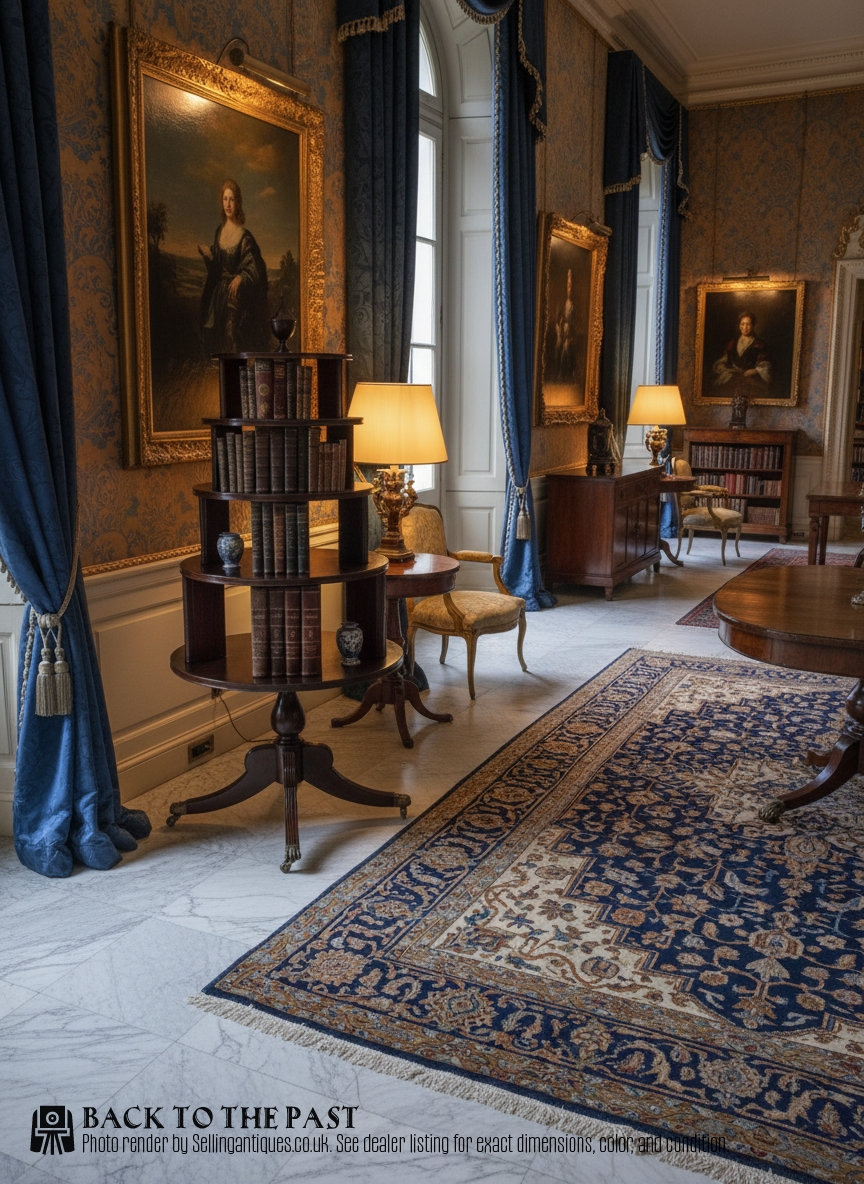
A tiered revolving bookcase brings books to hand with a simple spin, offering compact storage that sits neatly beside a chair or desk.
Tiered Revolving Bookcase
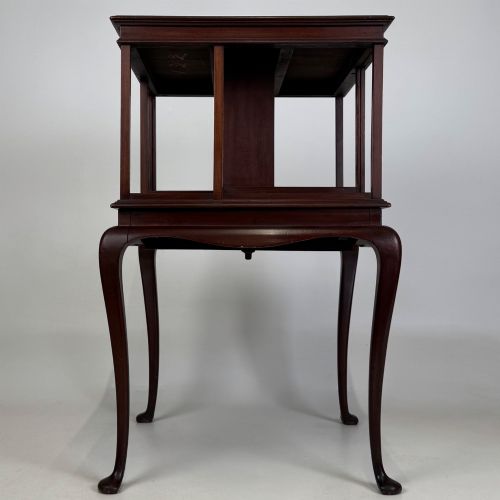
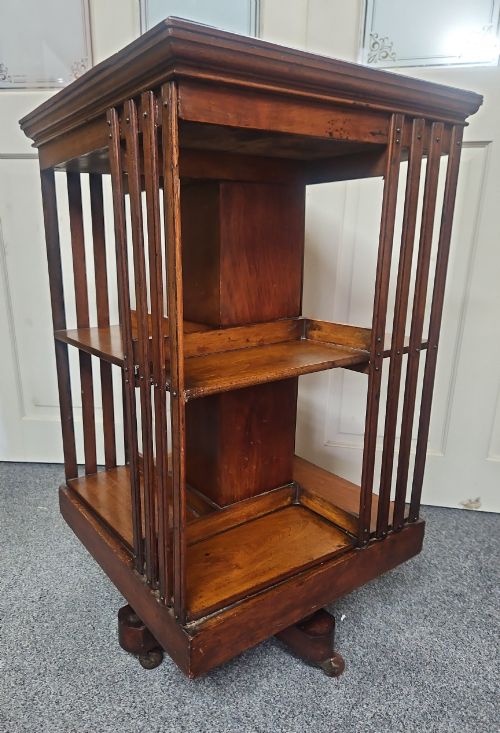
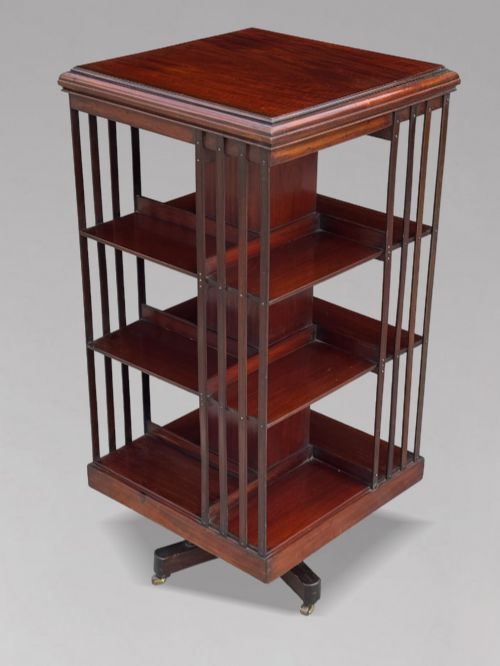
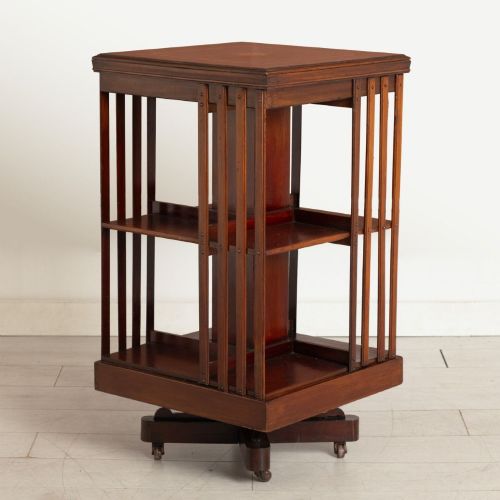
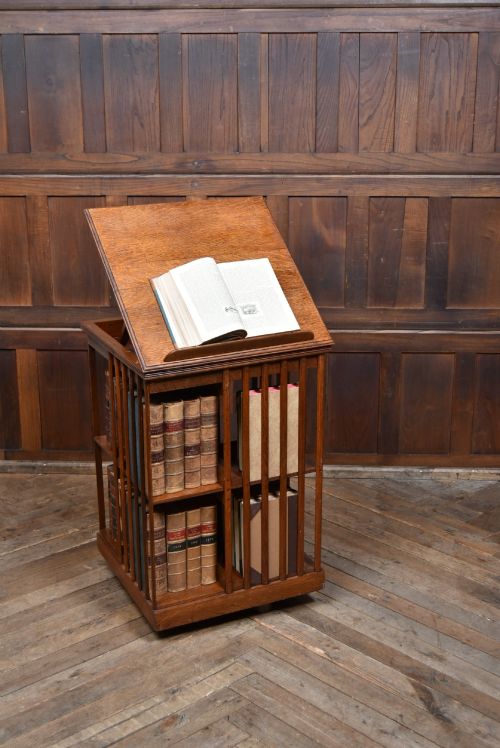
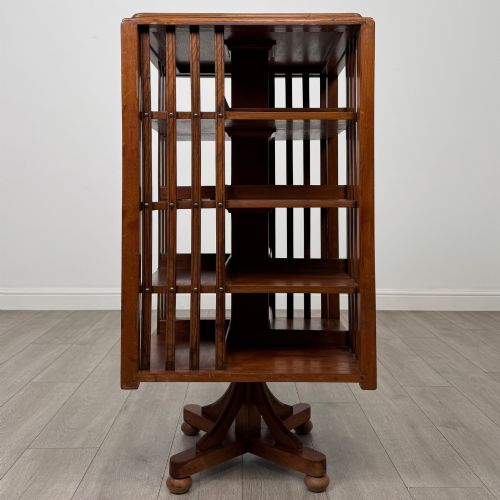
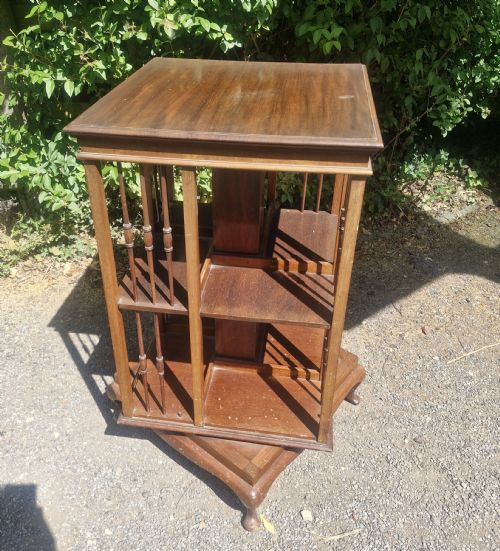
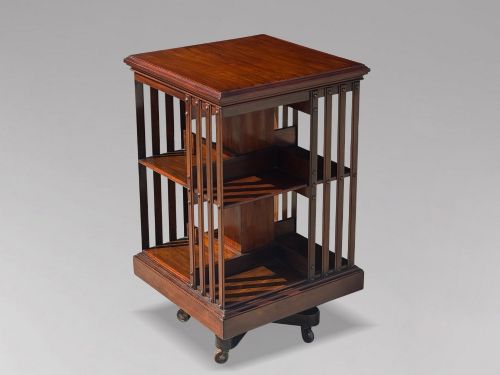
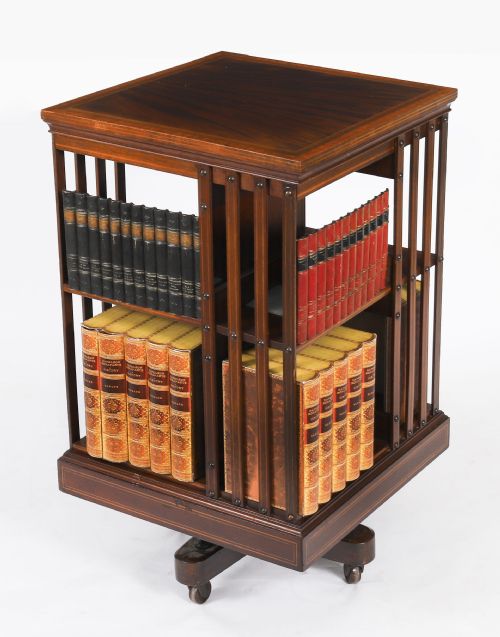
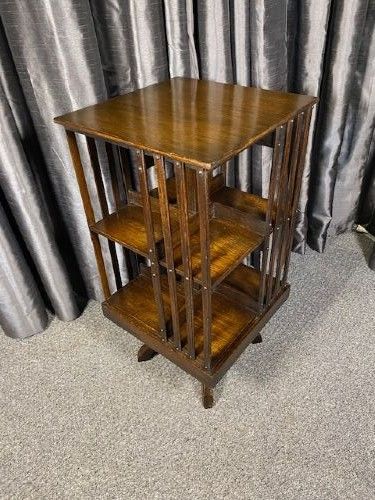
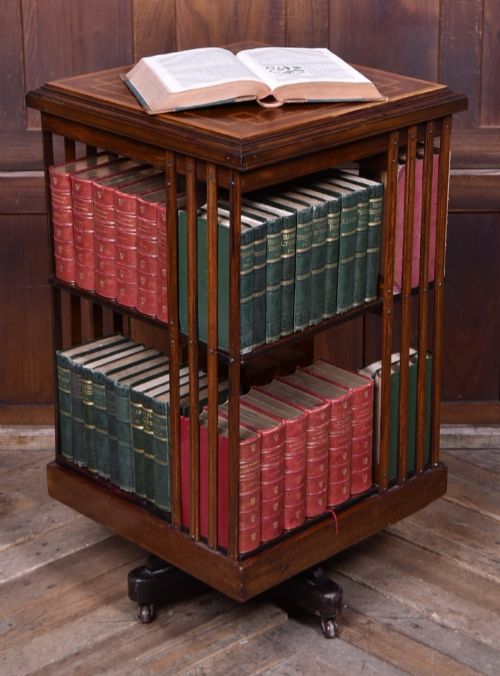
A tiered revolving bookcase stands as a practical piece of furniture designed to hold volumes upright while allowing the entire structure to turn smoothly on a hidden mechanism. When you search for a tiered revolving bookcase, you encounter forms that range from compact two-tier models to taller three-tier structures intended for heavier reading matter.
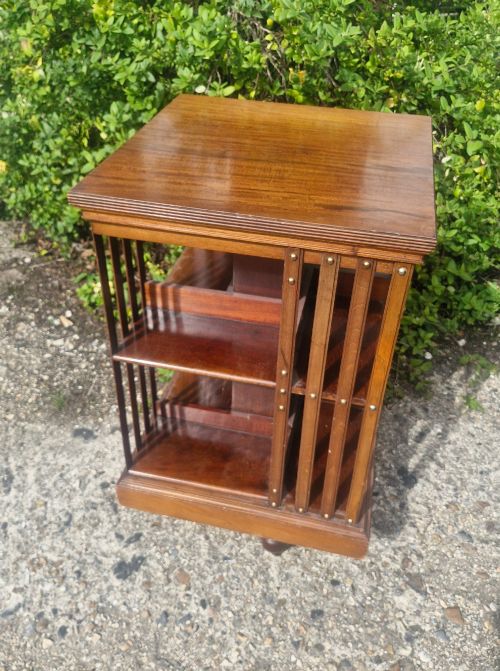
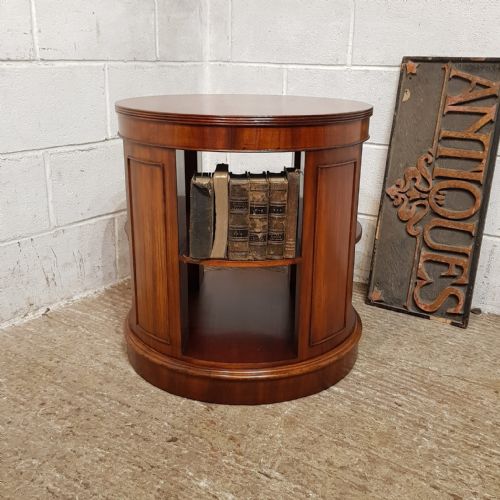
The pieces appearing on this page date primarily from the Victorian and Edwardian eras, with examples stretching from the late nineteenth century into the nineteen-thirties. Mahogany remains the dominant timber, accompanied by oak, walnut, satinwood, and rosewood, often shaped into square or circular formats.
Materials and construction
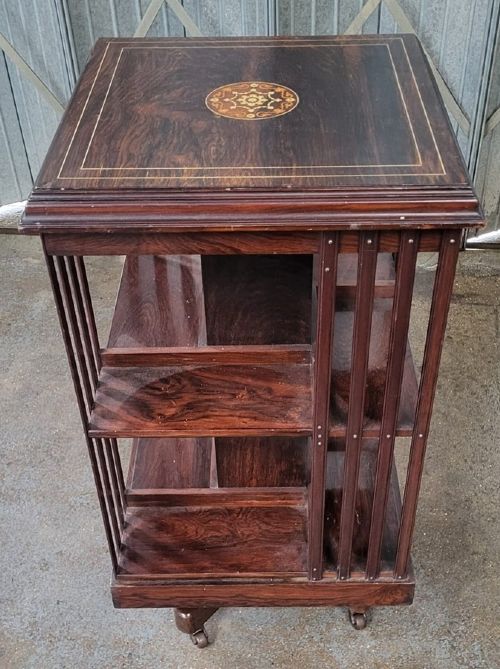
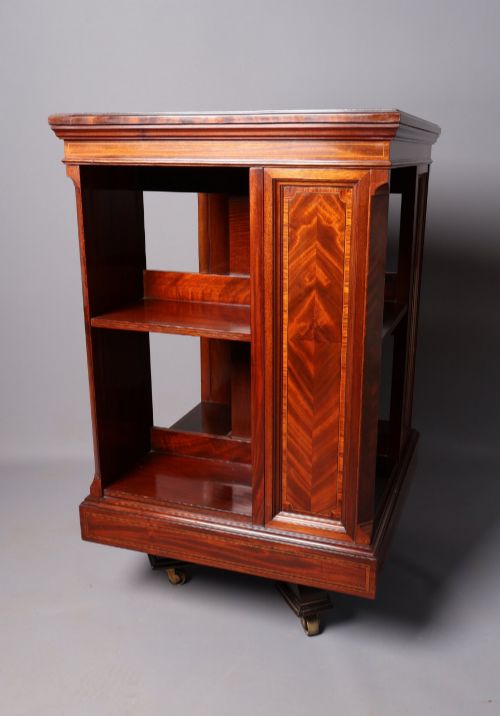
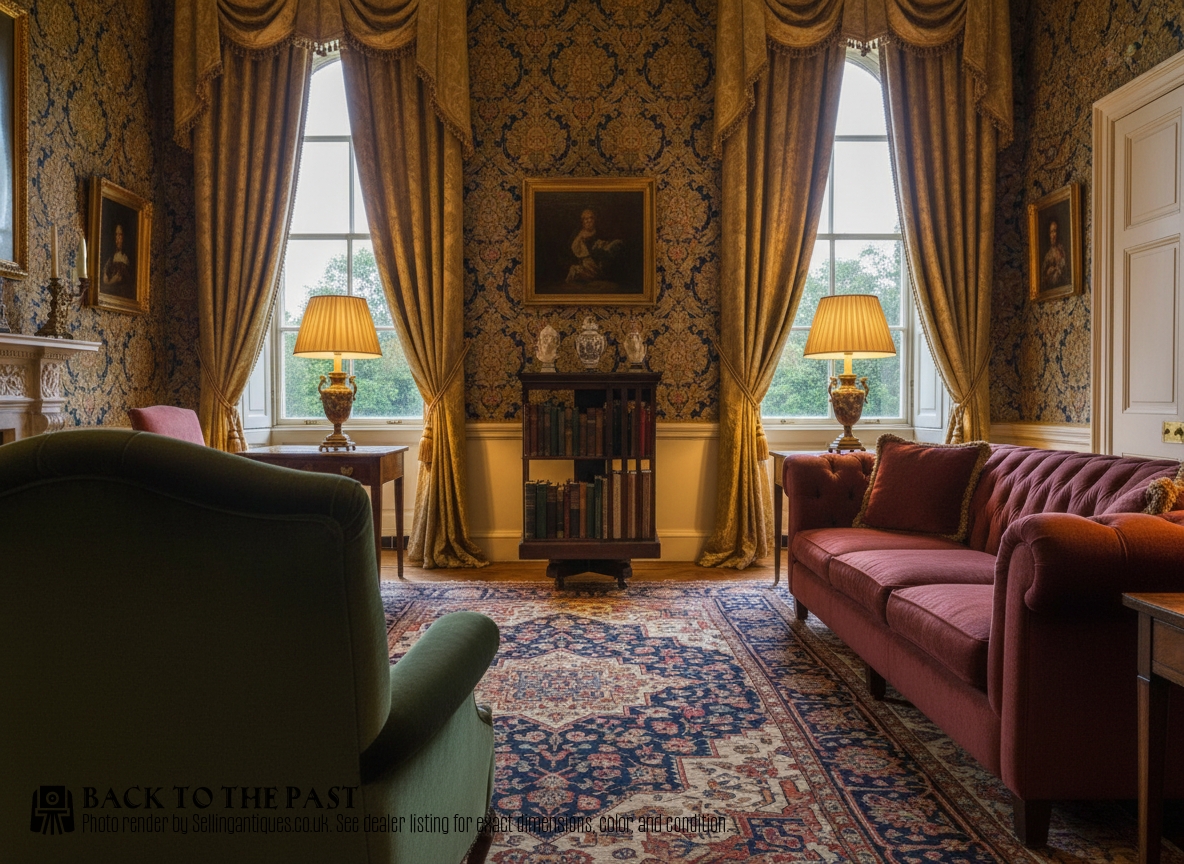
Cabinetmakers utilised solid timbers and selected veneers such as flame mahogany, walnut, and oak, applying inlay work in satinwood or brass to accentuate the shelves and top surfaces. Structural integrity depended on sturdy framing to support the weight of books on multiple tiers without impeding the central pivot.
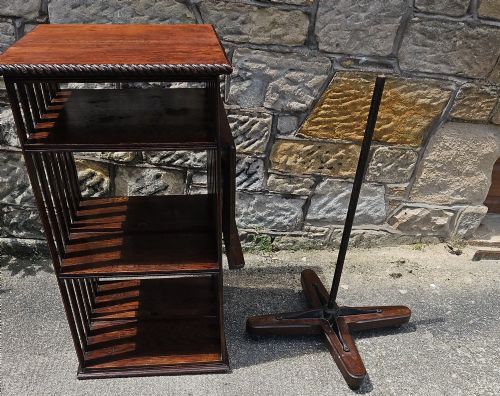
The spinning action relies upon a concealed iron or brass ball-bearing mechanism fixed beneath the lower tier, allowing the upper tiers to rotate with minimal friction. Joinery techniques from the period ensured that the vertical slats and dividers remained rigid under the daily strain of turning.
Listings feature mahogany as the primary timber, followed by oak, walnut, and satinwood across Victorian and Edwardian periods.
Factors of distinction
Quality rests upon the crispness of the cabinetwork, the choice of timber figuring, and the smoothness of the revolving mechanism. Fine examples display carefully matched flame mahogany veneers, delicate satinwood stringing, or precise brass inlays that elevate the piece beyond standard utility.
The weight and stability of the base dictate how well the bookcase functions in practice. Superior pieces maintain a balanced centre of gravity, ensuring that the tiers turn evenly without wobbling, regardless of how many volumes rest upon them.
Maple & Co
The Tiered Revolving Bookcase Glossary
- Revolving bookcase
- A freestanding piece of furniture with shelves arranged around a central axis that turns on a concealed pivot. It allows access to multiple books from a single seated position.
- Flame mahogany
- A decorative veneer cut from timber where the branch meets the trunk, producing a characteristic flame-like ripple pattern. Makers selected this figure for prominent surfaces.
- Inlay
- A technique where pieces of contrasting wood, brass, or shell are fitted into recessed cavities on the surface to form decorative patterns. Satinwood is frequently used for this purpose on dark timbers.
- Tier
- A single level of shelving within a stacked structure. Multiple tiers allow the bookcase to hold a larger volume of books within a compact footprint.
Tiered Revolving Bookcase: Frequently Asked Questions
How do I care for the wood surface?
Dust the mahogany or oak regularly with a soft cloth and apply a quality beeswax periodically to nourish the grain.
Avoid placing the bookcase near direct heat sources or strong sunlight to prevent the timber and veneers from drying out.
Are these bookcases sturdy enough for heavy books?
Most models are constructed from solid hardwoods designed to bear the weight of standard library volumes across multiple tiers.
Distributing heavier books on the lower levels helps maintain balance and ensures smooth rotation of the mechanism.
How do I distinguish Edwardian from Victorian pieces?
Victorian examples tend to feature darker, heavier timbers with robust carving, reflecting the formal tastes of the nineteenth century.
Edwardian pieces often appear lighter in scale, frequently incorporating satinwood inlay and refined proportions suited to smaller drawing rooms.
Can a revolving bookcase sit in the middle of a room?
Because the shelves are accessible from all sides and the timber is finished uniformly, these pieces function well away from walls.
They serve effectively as freestanding room dividers or alongside a central desk where access from multiple angles is useful.