


Tiered Dumbwaiter Table
A tiered dumbwaiter table is a multi-level serving piece built for dining rooms, offering graduated tiers that hold dishes or wine.
Tiered Dumbwaiter Table
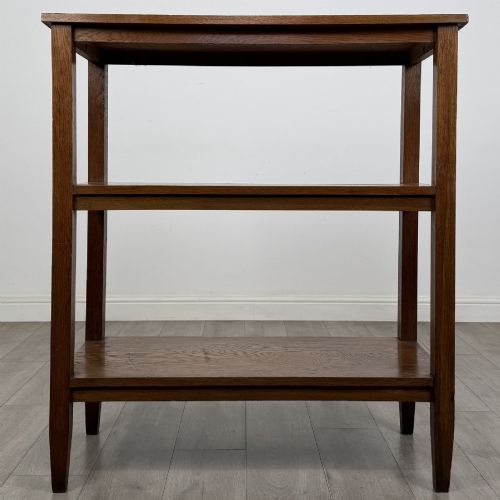
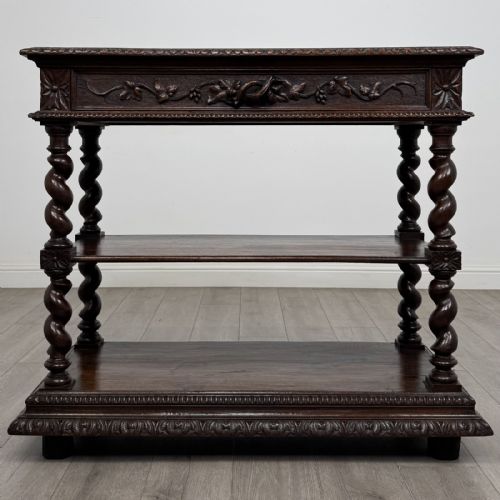
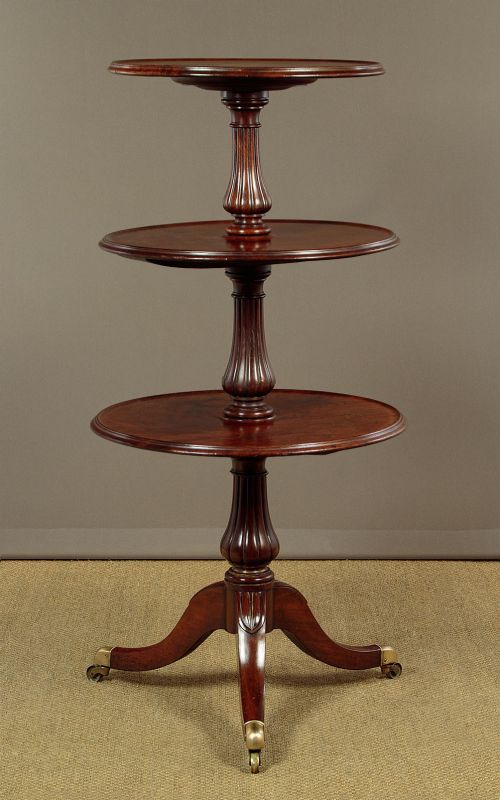
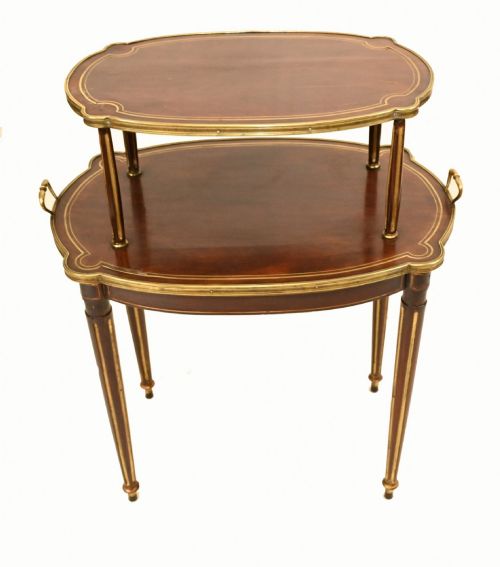
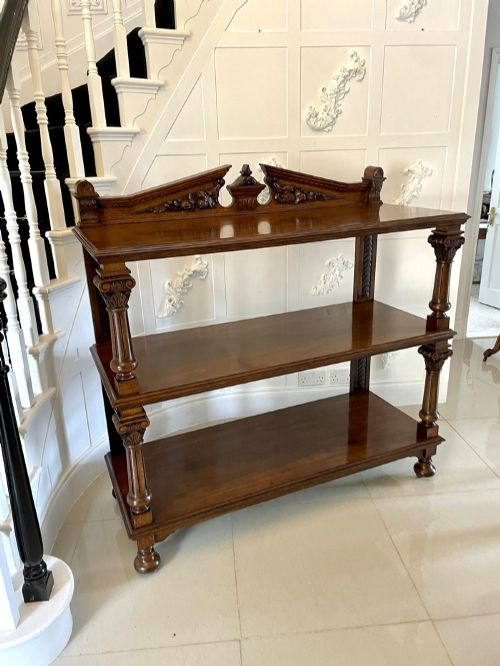
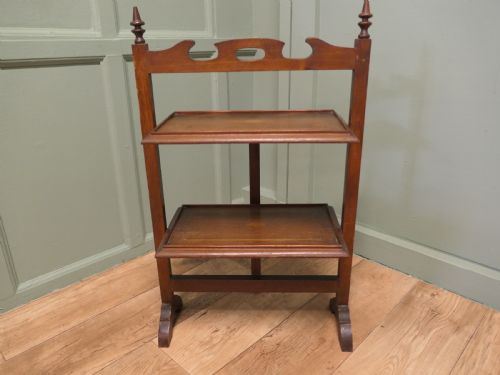
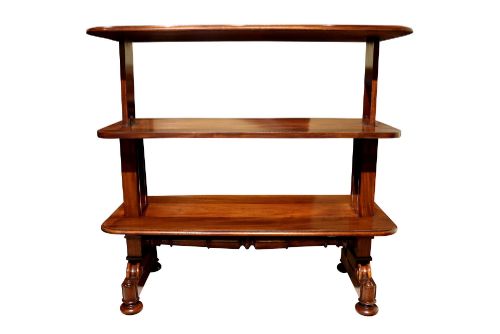
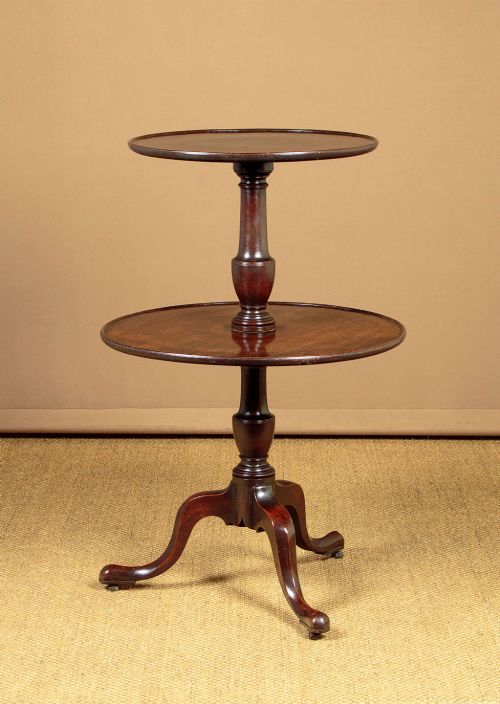
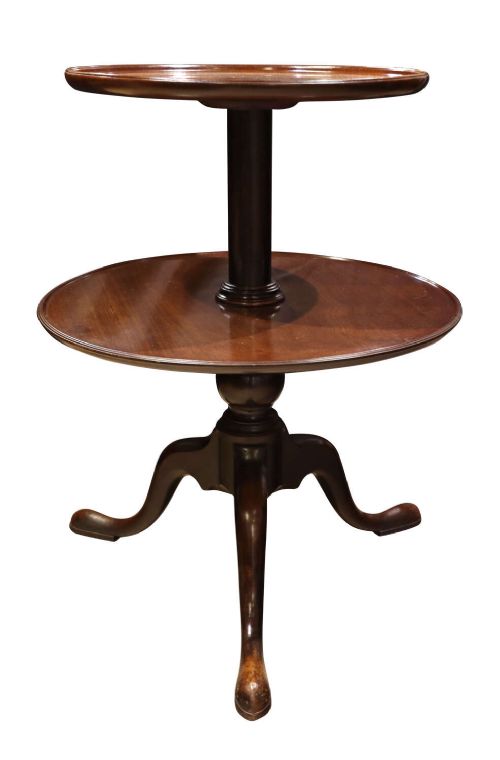
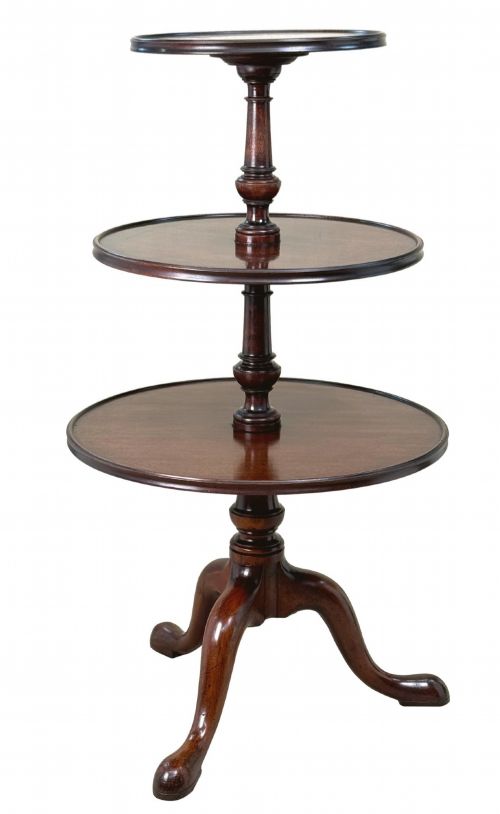
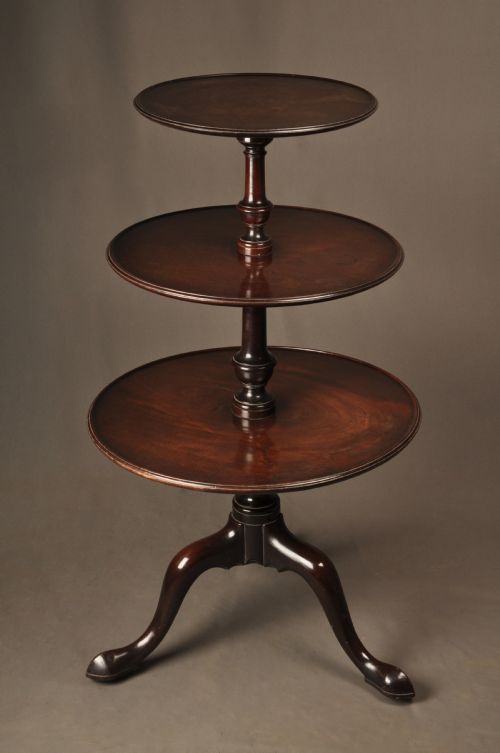
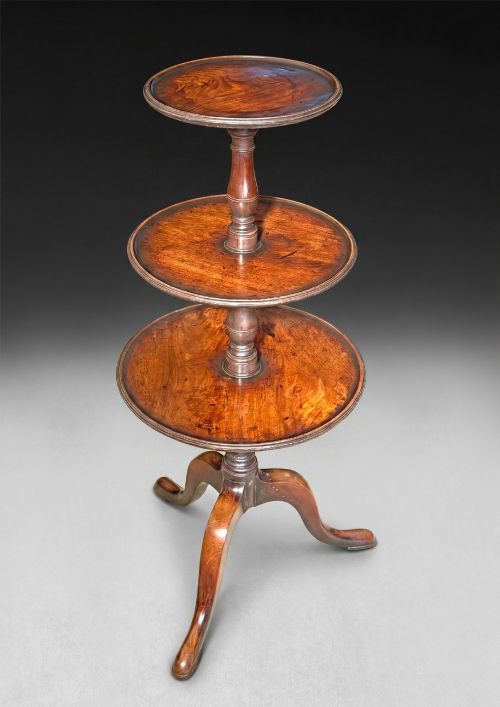
When you search for a tiered dumbwaiter table, you encounter multi-level serving stands designed to hold plates, dishes, and bottles during meals. The examples on this page span the 18th century, the 19th century, and the Victorian, Georgian, and Regency eras. Most pieces are constructed with two or three descending circular tiers supported by a central pillar or tripod base.
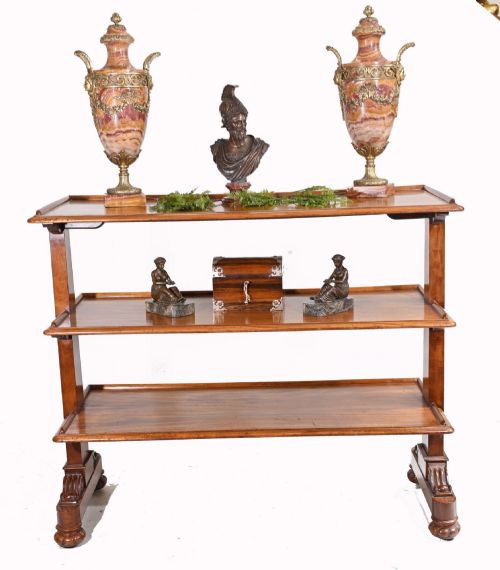
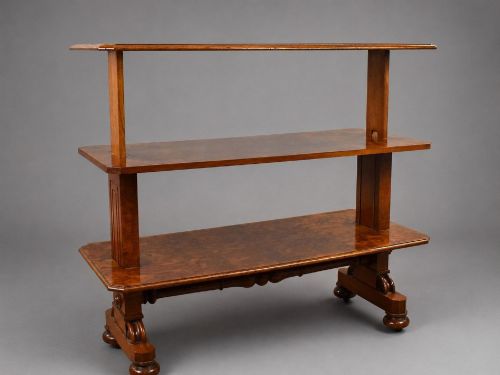
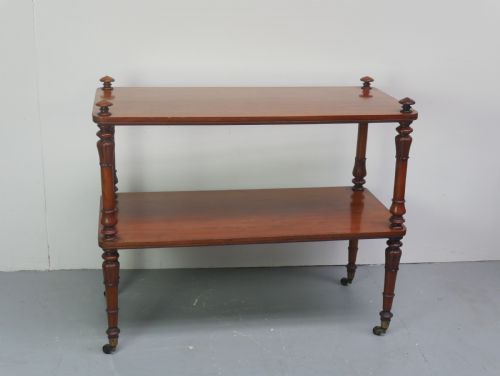
The forms range from revolving circular tiers and folding stands to larger bookcases, buffets, and rise-and-fall mechanisms. Mahogany is the predominant wood, accompanied by oak, walnut, rosewood, and teak. Alongside standard serving stands, the listings include occasional side tables, etageres, and metamorphic pieces that adapt into firescreens or butlers tables.
Materials and Construction
Makers built these pieces primarily using solid mahogany, oak, and walnut, often selecting figured grains such as fiddleback or burr walnut for decorative impact. Tiers were frequently turned on a lathe from solid timber or constructed with banded edges to prevent warping.
Support systems rely on robust central pedestals with tripod or quadruped legs, sometimes fitted with brass castors for mobility. Telescopic actions, rise-and-fall mechanisms, and folding hinges utilise brass hardware to allow mechanical adjustment without compromising structural stability.
Tiered Dumbwaiter Table Retail Price Guide 2026
Typical asking prices for tiered dumbwaiter table among the pieces listed under this phrase on Sellingantiques today, from the lower quarter to the upper quarter. They describe what is for sale here now, not the wider market.
Listings feature woods including mahogany, oak, walnut, rosewood, and teak, spanning the Georgian, Regency, and Victorian periods.
Craftsmanship and Proportion
The distinction between standard examples and the finest pieces lies in the weight of the timber and the precision of the turning on the central column. Superior pieces maintain balanced proportions across graduating tiers, ensuring that the heavy base securely anchors the upper levels without perceptible sway.
Hardware choice and joinery execution also separate grades of work, with high-quality iterations utilising original brass castors, subtle cockbeading, and neatly fitted mechanical joints for telescopic or revolving actions.
Gillows and Co
The Tiered Dumbwaiter Table Glossary
- Dumbwaiter
- A multi-tiered freestanding piece of dining room furniture used for holding food and tableware without servant assistance.
- Tripod base
- A three-legged support structure beneath a central pedestal column, providing stable ground contact on uneven floors.
- Etagere
- A set of open shelves or tiers designed for displaying small objects or serving afternoon tea.
- Metamorphic
- Furniture engineered to transform from one functional form into another, such as shifting between a table and a firescreen.
- Tripod pedestal
- A central vertical shaft resting on three spreading feet, typical of circular serving tables and wine stands.
Tiered Dumbwaiter Table: Frequently Asked Questions
What were tiered dumbwaiter tables used for?
These tables served dining rooms by holding extra plates, dishes, and wine bottles so diners could help themselves during meals.
They allowed households to dine without constant service from attendants by keeping necessary provisions close to the table.
How do I tell a Georgian piece from a Victorian one?
Georgian examples often feature restrained classical lines, tripod pillar supports, and solid mahogany construction dating from the late 18th century.
Victorian pieces introduce heavier proportions, burr walnut veneers, telescopic mechanisms, and functional additions like castors or revolving tiers.
Are all dumbwaiter tiers revolving?
Not all tiers rotate, as many standard serving tables and buffets feature fixed shelves secured to the central support.
Revolving versions were specifically engineered to let diners spin individual tiers to reach dishes without stretching across the table.
How do I live with a multi-tier table?
These tables fit well as corner display stands, side tables in living rooms, or bedside surfaces where multiple tiers provide practical storage.
Their narrow footprints allow them to occupy minimal floor space while offering substantial surface area across the graduating shelves.