

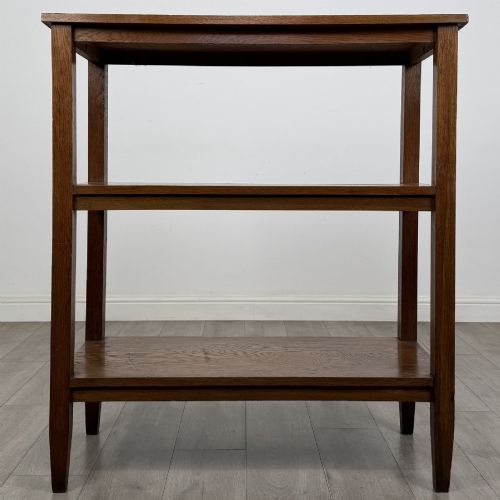
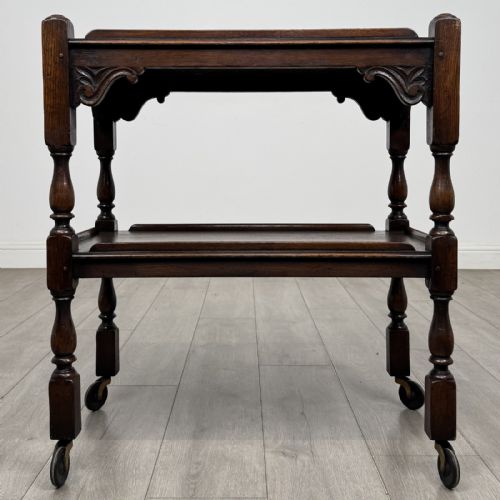
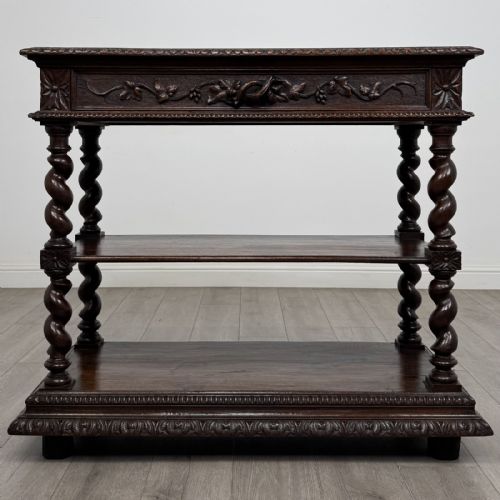
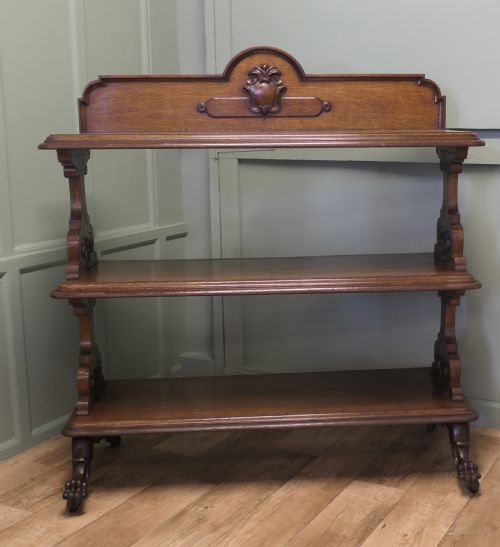
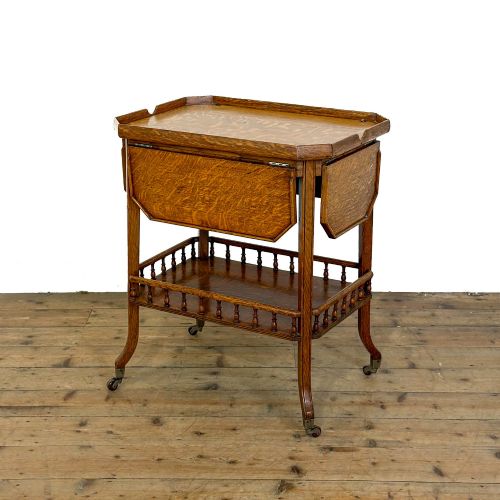
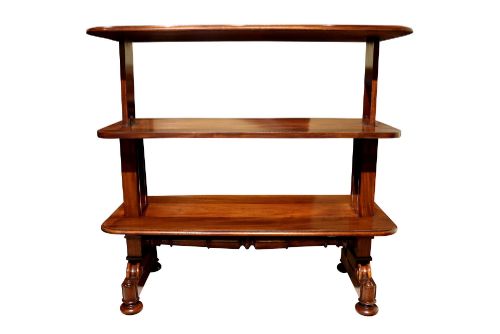
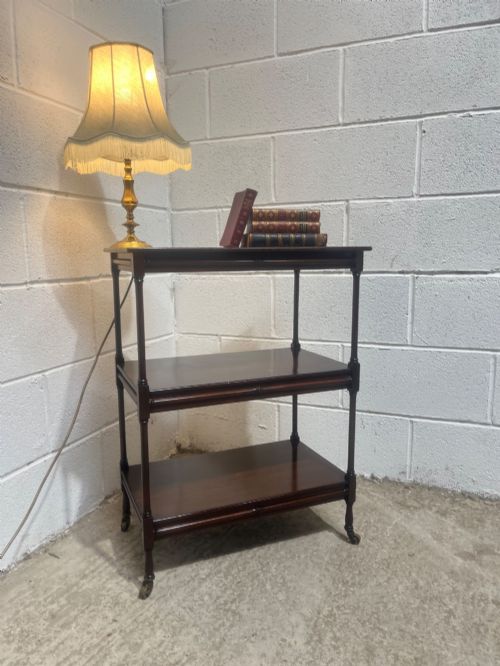
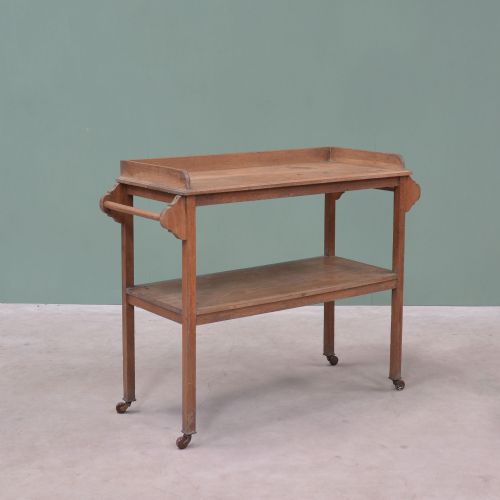
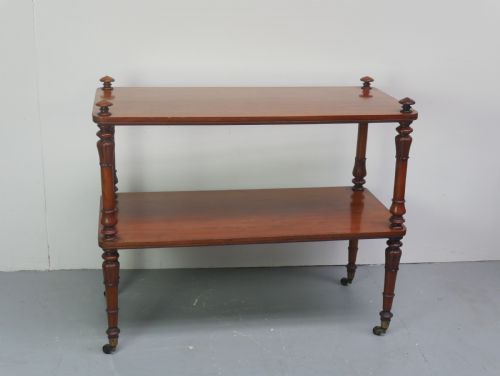
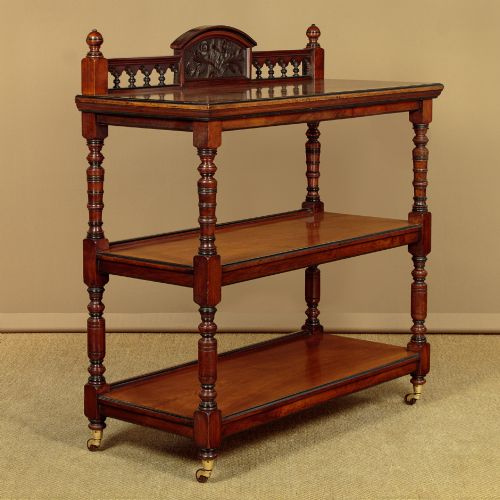


Tiered Dinner Wagon
These tiered dinner wagon examples are sturdy, multi-level servers built to move food and drink across a room with ease.
Tiered Dinner Wagon
A tiered dinner wagon offers several stacked surfaces designed to hold plates, dishes, or bottles during service. When searching for a tiered dinner wagon, you encounter sturdy timber structures originating primarily from the nineteenth and early twentieth centuries.
The pieces on this page span the Victorian and Edwardian eras, alongside William IV, Jacobean Revival, and Aesthetic Movement designs. You will frequently find forms categorised as buffets, servers, tea trolleys, and dumb waiters.
Mahogany and oak dominate the selection, often accompanied by walnut, pollard oak, brass fittings, and ceramic elements. These items function equally well as practical side tables or decorative shelving units in a modern interior.
Assessing Quality
Quality in these multi-tiered serving pieces rests on the selection of timber and the crispness of any carved detailing. Finer examples display carefully figured mahogany or pollard oak veneers alongside deep, well-defined carving on the uprights and edges.
The integration of original hardware, such as solid brass castors and turning mechanisms, separates standard utility pieces from higher-end workshop production. Robust structural stability across every shelf indicates superior original joinery.
Tiered Dinner Wagon Retail Price Guide 2026
Typical asking prices for tiered dinner wagon among the pieces listed under this phrase on Sellingantiques today, from the lower quarter to the upper quarter. They describe what is for sale here now, not the wider market.
Listings span the nineteenth and early twentieth centuries, featuring oak, mahogany, and walnut woods across various tiered serving formats.
The Tiered Dinner Wagon Glossary
- Dumb waiter
- A multi-tiered piece of dining furniture designed to hold food and tableware without the need for a servant. These stands typically feature two or three graduating shelves on a central pillar or corner supports.
- Barley twist
- A type of decorative turning resembling a spiral rope, frequently seen on the upright supports of nineteenth-century tables and trolleys. This carved detail adds visual movement to heavy oak or walnut furniture.
- Castor
- A small wheel mounted on a swivel attached to the legs of movable furniture. Original brass or metal castors allow a heavy serving trolley to glide across floor surfaces.
- Aesthetic Movement
- A late nineteenth-century design style that emphasised visual beauty over narrative subject matter. Pieces from this movement often showcase dark walnut timbers and clean, refined lines.
- Pollard oak
- Oak timber obtained from pollarded trees, which yields a highly figured, mottled grain pattern. Cabinet makers used this wood for decorative veneer panels on high-status nineteenth-century servers.
Tiered Dinner Wagon: Frequently Asked Questions
How do I clean a wooden tiered server?
Dust the tiers regularly with a soft, dry cloth to prevent dirt accumulation on the timber surface. Apply a quality beeswax periodically to nourish the wood and maintain its natural lustre.
Avoid placing wet glasses directly on antique polished surfaces by using coasters or mats. Keep the furniture away from direct heat sources to prevent the wood from drying out or warping.
Can I use a tea trolley as a bar cart?
The sturdy multi-level shelves of an antique trolley provide an ideal platform for holding bottles, glassware, and bar accessories. Many surviving examples include original castors that allow you to wheel the setup between rooms.
Ensure the weight of heavier decanters is distributed evenly across the main shelf. Check that the castor wheels move freely before loading the structure.
What is the difference between a buffet and a dumb waiter?
A buffet generally provides a broad surface for serving food alongside lower shelves or enclosed cabinet space. These heavier sideboard-style units often stay stationary against a dining room wall.
A dumb waiter typically relies on stacked circular or rectangular tiers supported by a central pillar or slender uprights. Many dumb waiter designs incorporate castors for mobility during meals.