



Tiered Corner Etagere
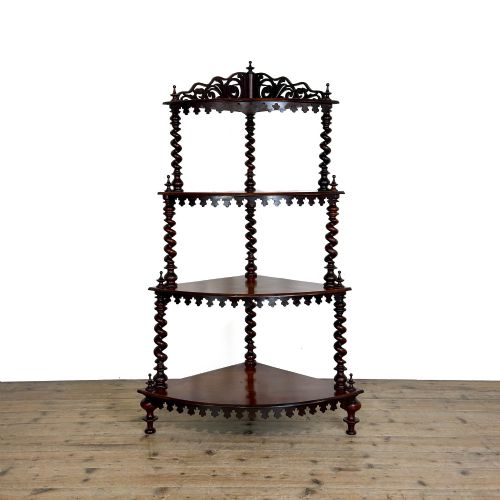
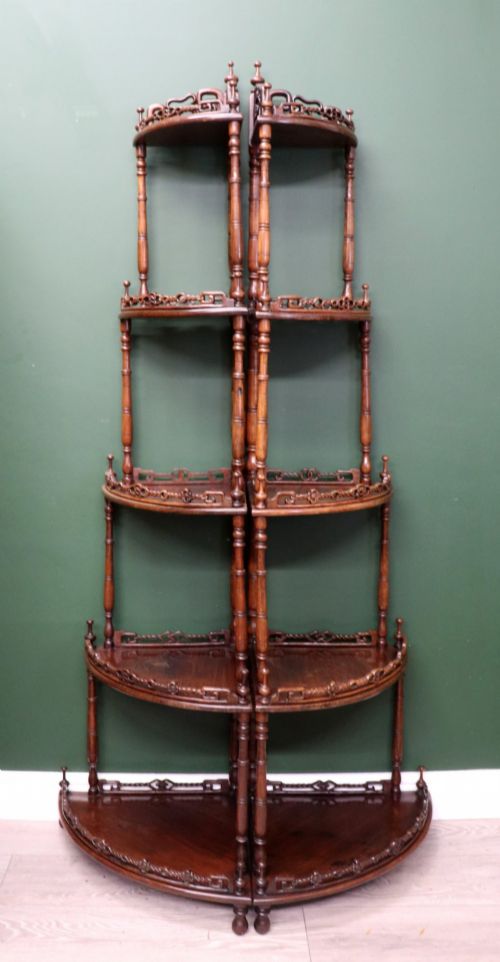
The tiered corner etagere is a multi-level display stand designed to fit domestic angles, offering surface space in mahogany, walnut, and rosewood.
Tiered Corner Etagere
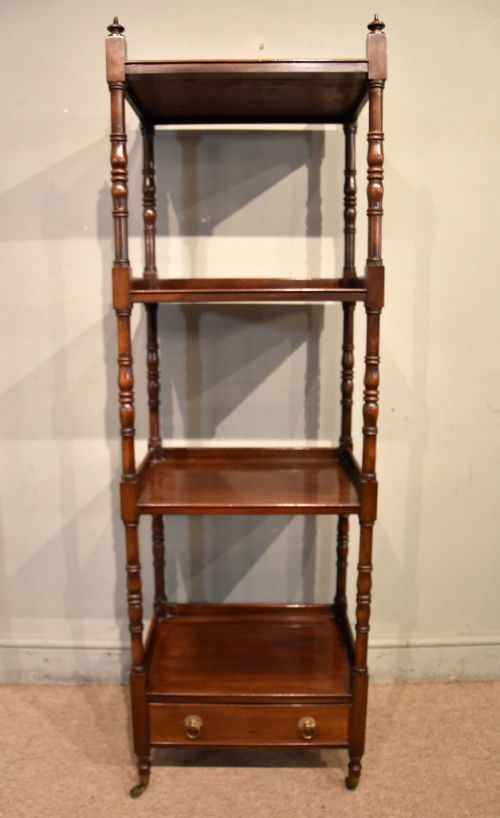
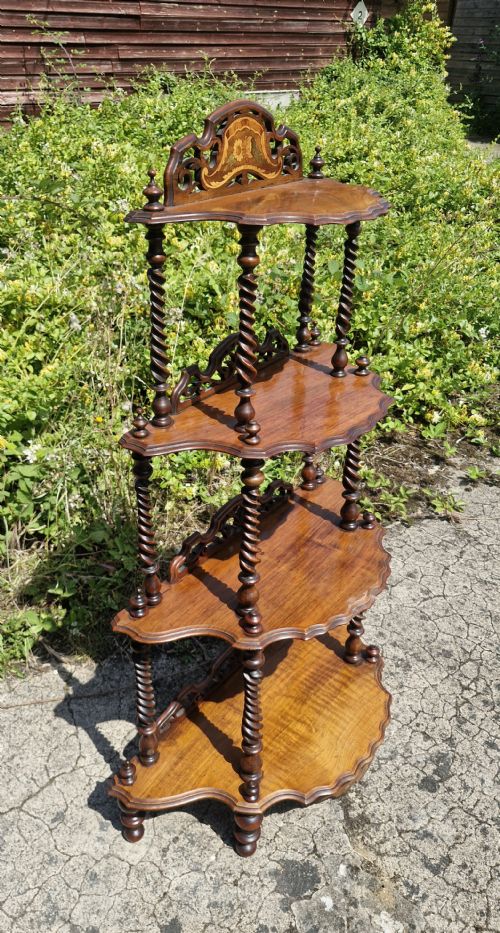
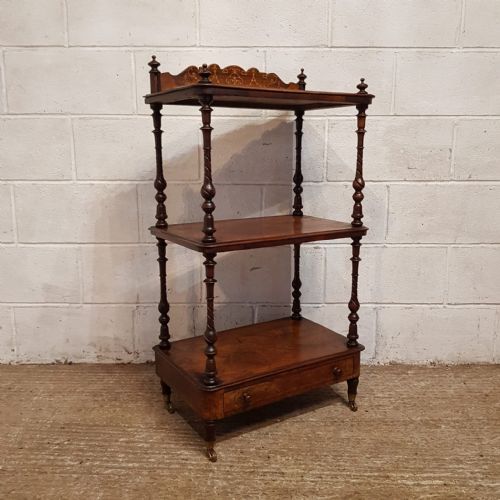
A tiered corner etagere is typically encountered as a multi-shelved whatnot or corner stand designed for display. These pieces originate across the Georgian, Regency, and Victorian periods, utilising vertical space efficiently in domestic rooms.
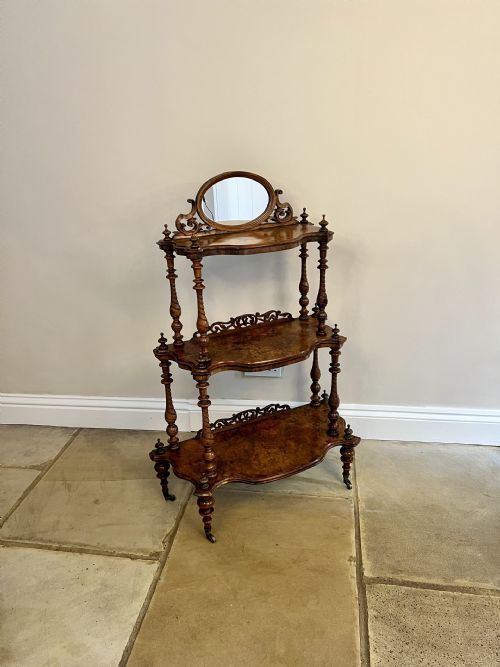
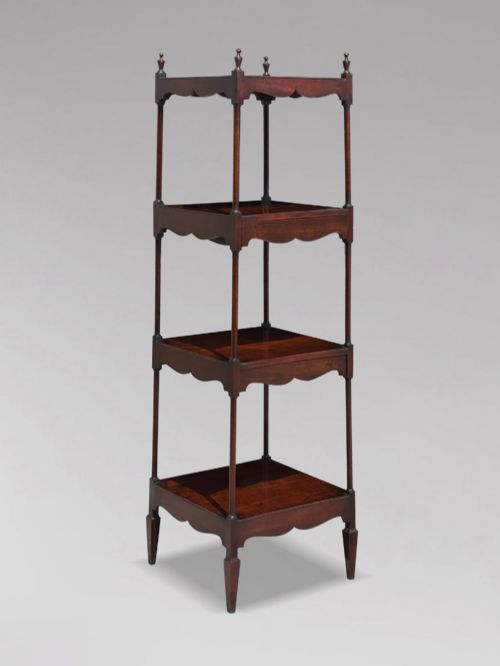
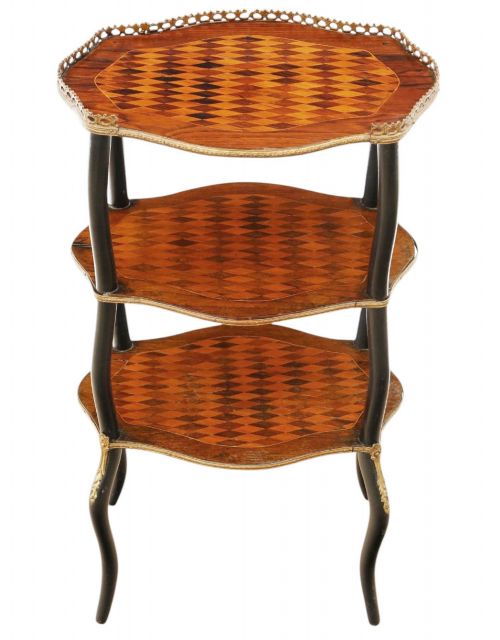
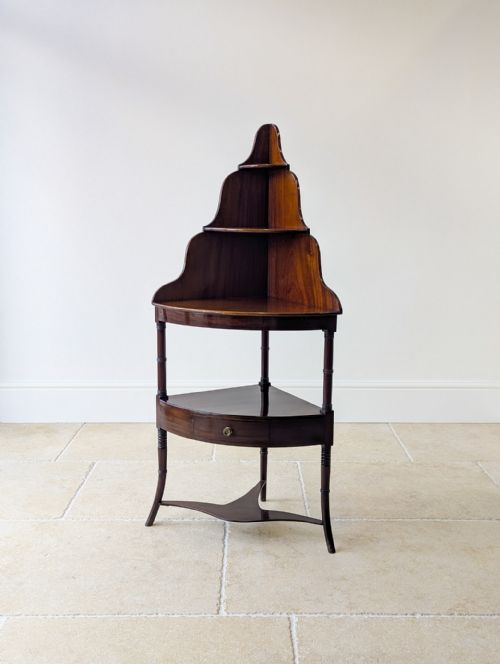
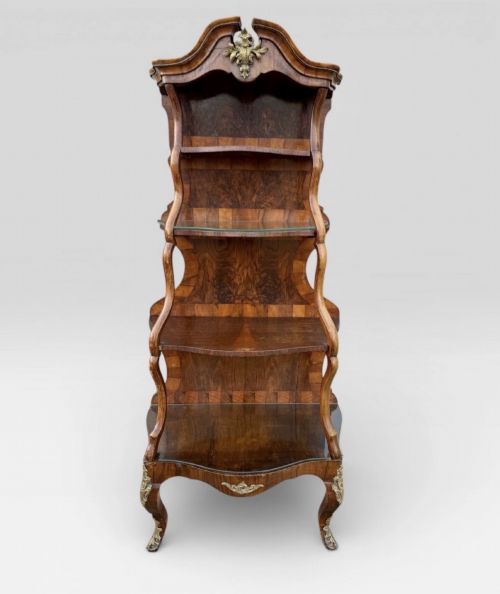
The form appears in various configurations including three, four, or six tiers, alongside demi-lune and serpentine display consoles. Makers constructed these units primarily for corners, though freestanding and wall-facing variants also exist in the record.
Materials and construction
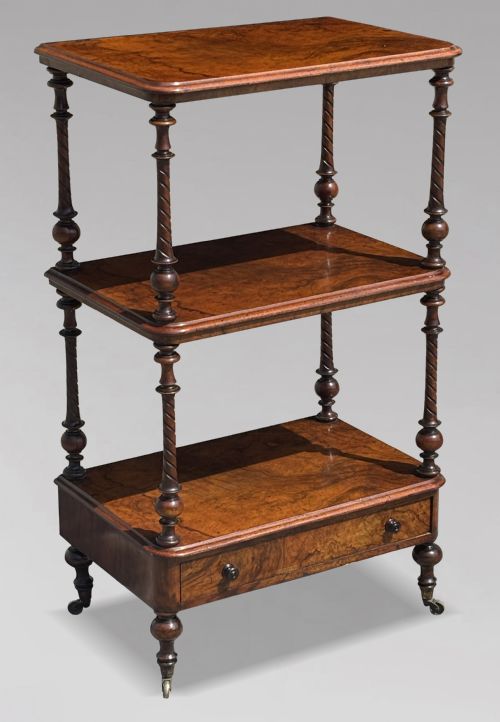
Timbers such as mahogany, walnut, burr walnut, and rosewood form the structural foundation of these pieces, often enhanced by wood inlay, parquetry, and ebonised wood. Secondary materials include brass, glass, gilt metal, wrought iron, and bamboo.
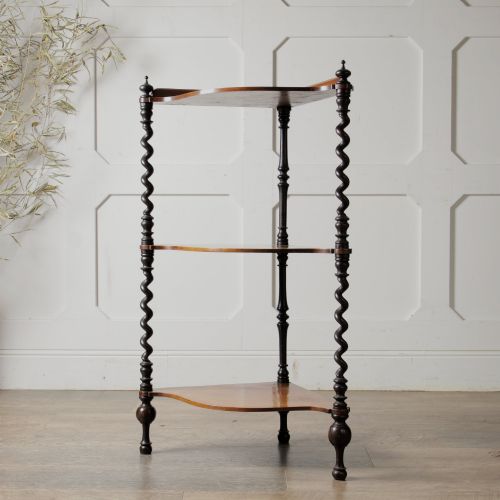
Joinery methods support multi-tiered shelving units and barley twist supports, whilst specific examples incorporate turned columns and riveted iron framing for structural integrity across multiple tiers.
Listings span the Georgian, Regency, and Victorian periods, showcasing woods from mahogany and rosewood to burr walnut and birdseye maple.
Assessing quality
Quality rests on the selection of timber veneers, such as burr walnut or figured mahogany, and the crispness of turned or carved uprights. Finer examples display meticulous parquetry, delicate inlay, and well-executed joinery across each tier.
Proportion and stability separate standard utility pieces from exhibition quality items. Superior construction ensures that multiple stacked shelves remain rigid and balanced within the designated room corner.
Gillows
The Tiered Corner Etagere Glossary
- Etagere
- A piece of furniture consisting of a set of open shelves for displaying small objects or ornaments. These tiered stands developed in France before becoming popular in British interiors.
- Whatnot
- A freestanding piece of furniture with multiple shelves used for displaying ornaments or books. It gained widespread popularity during the Victorian period.
- Parquetry
- Geometric mosaic woodwork used for decorative floors and furniture surfaces. It appears on late nineteenth century tables and display shelves.
- Demi-lune
- Having a half-moon or semicircular shape. This profile allows console tables and etageres to sit flush against a flat wall.
Tiered Corner Etagere: Frequently Asked Questions
What is a tiered corner etagere used for?
These corner units provide stacked shelving to display decorative objects, ceramics, and small books without consuming excessive floor space.
Historically placed in reception rooms and parlours, they utilise awkward wall junctions effectively while keeping collections visible.
How do I identify a Victorian etagere?
Victorian examples frequently employ dense timbers like burr walnut, rosewood, and mahogany, often featuring barley twist supports or elaborate turned columns.
Earlier Georgian and Regency pieces tend to show cleaner architectural lines in figured mahogany or oak.
Are these stands stable on uneven floors?
Multi-tiered etageres distribute weight across several upright supports, but taller units benefit from careful positioning against a wall corner.
Most corner designs rely on structural fixings and tight joints to maintain balance across their multiple shelves.
What materials are common in these pieces?
Solid hardwoods and decorative veneers dominate the selection, with mahogany, walnut, and rosewood appearing most frequently across the listed periods.
Alternative materials like wrought iron, bamboo, and ebonised wood also occur, particularly in late nineteenth century plant stands and occasional units.