
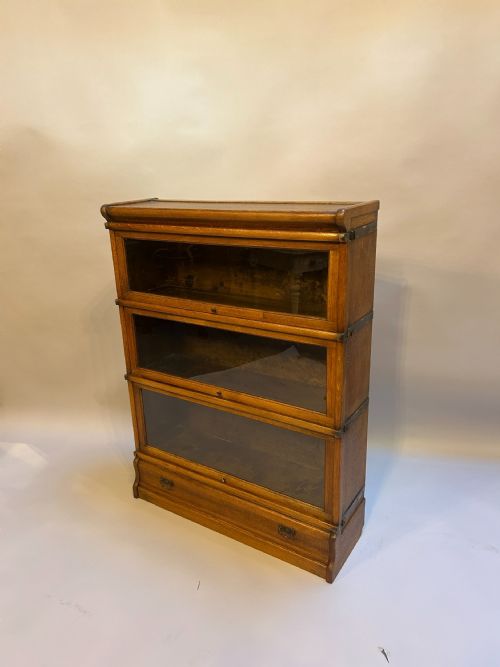
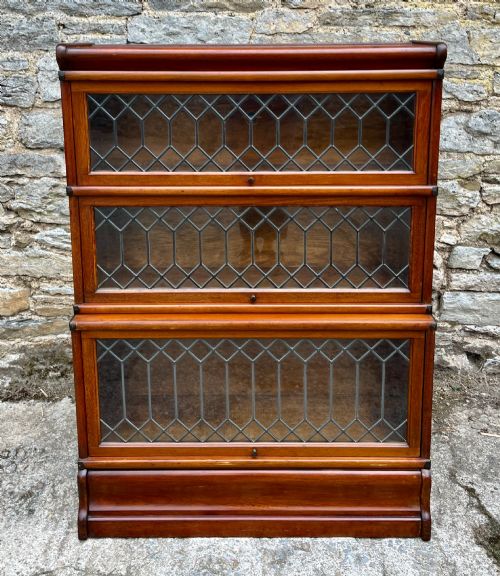
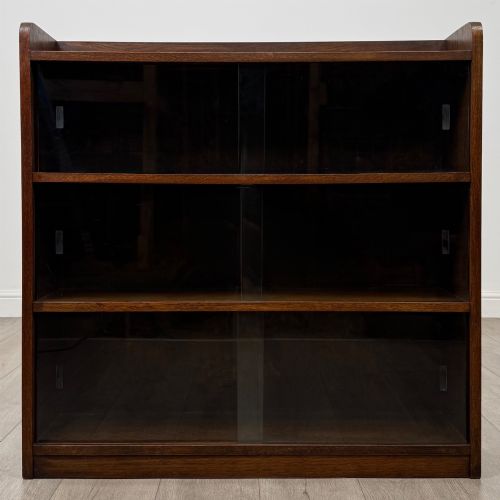
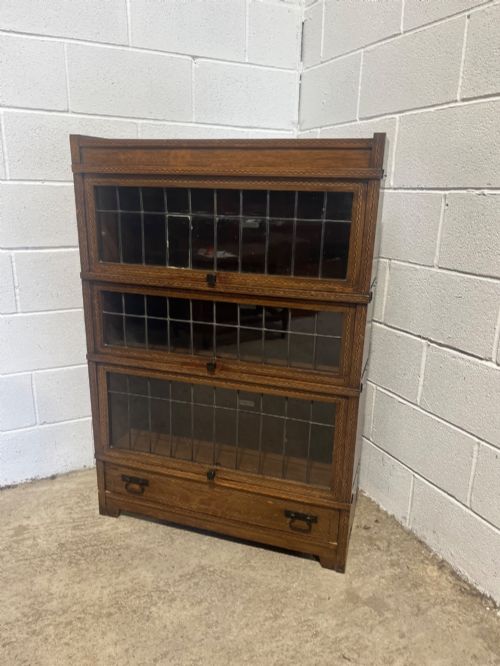
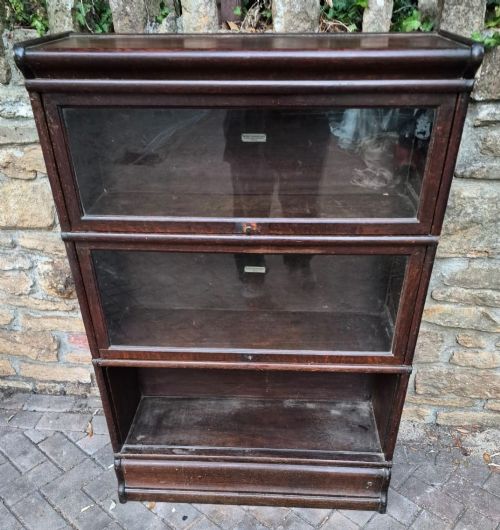
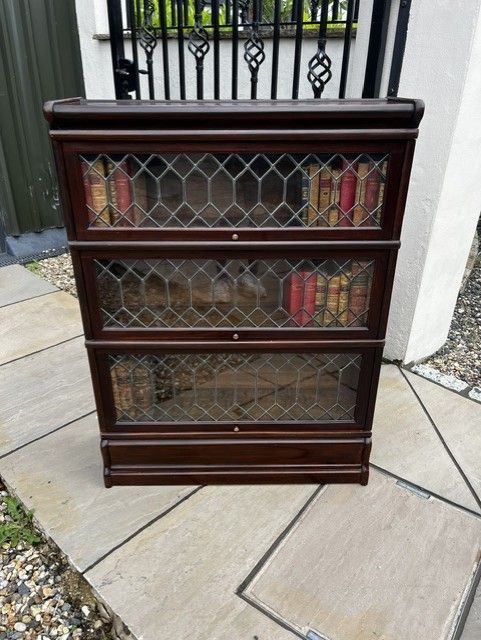
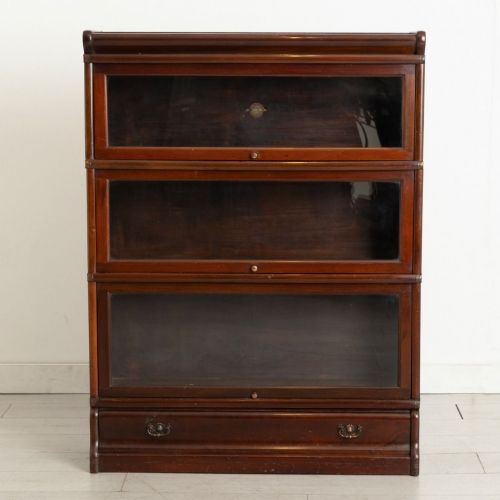
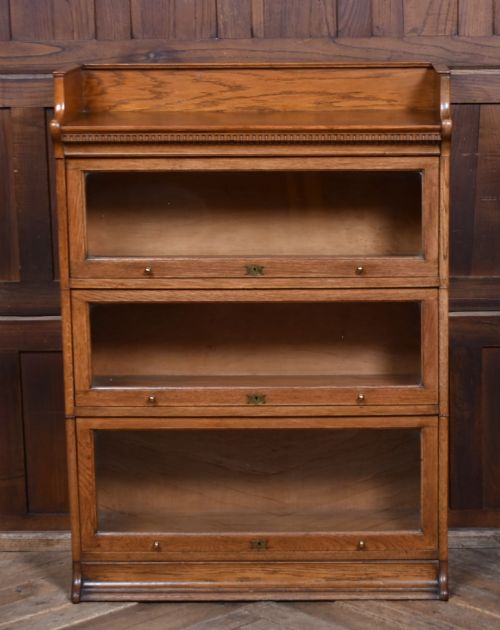


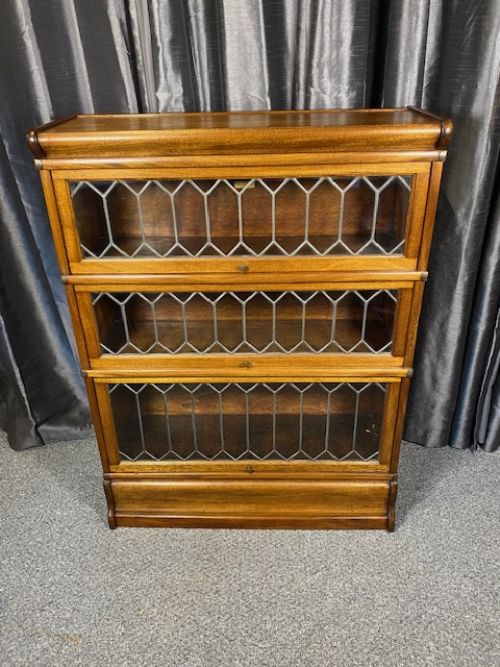


Three Tier Glass Bookcase
A three tier glass bookcase gives you modular height with clear protection for your volumes, combining practical utility with period character.
Three Tier Glass Bookcase
When you search for a three tier glass bookcase, you encounter sectional units designed to house books behind glazed lifting doors. These pieces emerge from the early twentieth century, spanning Edwardian workshop output through to Art Deco designs.
The format relies on modular stacking tiers that allow owners to build upwards while keeping individual compartments dust-free. Oak and mahogany dominate the forms, frequently styled within Arts & Crafts or Edwardian traditions.
How they were made
Carpenters constructed these sectional carcases primarily from solid oak or mahogany, occasionally incorporating decorative wood inlay and brass hardware. Lead also appears in specialised leaded glass configurations.
Each tier functions independently with mechanical glass lifting mechanisms that slide smoothly into the recess above the books. The joinery utilises sturdy framing to support the stacked weight without warping the glazed frames.
Early twentieth-century lawyers relied on these clever stacking boxes so their heavy case reports could move house without unpacking a single shelf.
What varies in quality
Quality rests upon the precision of the stacking mechanism and the crispness of the timber grain used in the carcase. Superior examples exhibit refined quarter-sawn oak figure or rich mahogany surfaces.
Makers stamp their authority on the hardware and interior brackets, distinguishing workshop-built sectional items from standard production pieces. The clarity and thickness of the original glass panels also elevate the overall standard.
Globe Wernicke·Lebus·Heal's·Minty
The Three Tier Glass Bookcase Glossary
- Barrister's bookcase
- A specialised office or library cabinet equipped with glass doors that lift and slide inward above the shelf. This format protected heavy law books from dust and moisture.
- Leaded glass
- Small panes of glass held together by strips of lead came to form geometric or decorative patterns. This technique appears in specialised cabinet doors.
- Quarter-sawn oak
- Timber cut at right angles to the annual rings to produce a distinctive ray-figure pattern. Cabinetmakers utilised this cut for durability and aesthetic appeal.
Three Tier Glass Bookcase: Frequently Asked Questions
How do the glass doors open?
The doors use a balancing mechanism with metal arms on each side that allow the glass panel to lift smoothly upwards. Once raised, the door pushes backward into the recess directly above the books.
This action keeps the front profile clean while providing immediate access to the shelf interior without swinging outward into the room.
Can the tiers be separated?
Yes, these sectional units consist of individual modular tiers that sit one on top of another without permanent fixings. A base section and a top cornice complete the vertical stack.
This modular construction made transport straightforward and allowed owners to expand their shelving capacity by adding another tier later.
What woods were used?
Makers predominantly worked with oak and mahogany to build these sectional cabinets, often selecting figured timber for prominent exterior surfaces. Oak examples frequently display quarter-sawn grain patterns.
Alternative finishes include limed oak and occasional decorative wood inlay work found on Edwardian and Art Deco pieces.
Are these pieces from the Edwardian era?
Many examples date from the Edwardian period, alongside pieces produced across the early twentieth century up to the 1930s. Stylistic cues such as Arts & Crafts simplicity or Art Deco lines help indicate the decade of manufacture.
Maker stamps and patent dates found inside the sections provide further chronological context.