
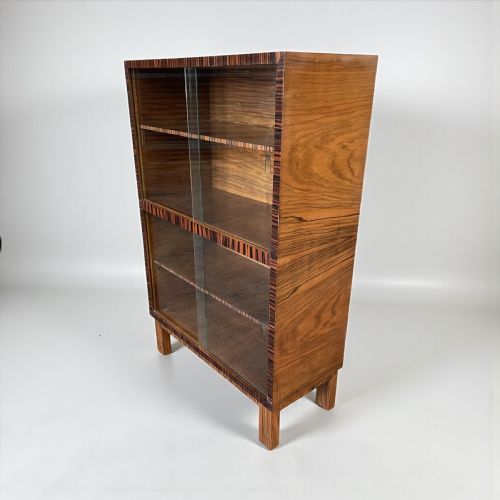


Sliding Door Bookcase
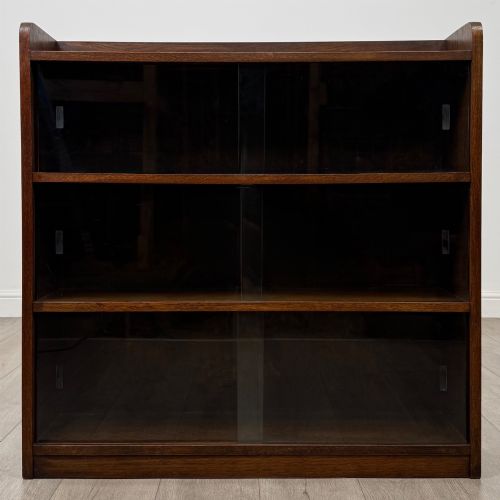
A sliding door bookcase offers practical storage for books without the swing space of traditional hinged doors.
Sliding Door Bookcase
A sliding door bookcase serves as a functional storage piece designed to keep books accessible while saving space in domestic and office settings. These pieces appear across multiple periods, including the Victorian era, Edwardian period, and the 1930s.
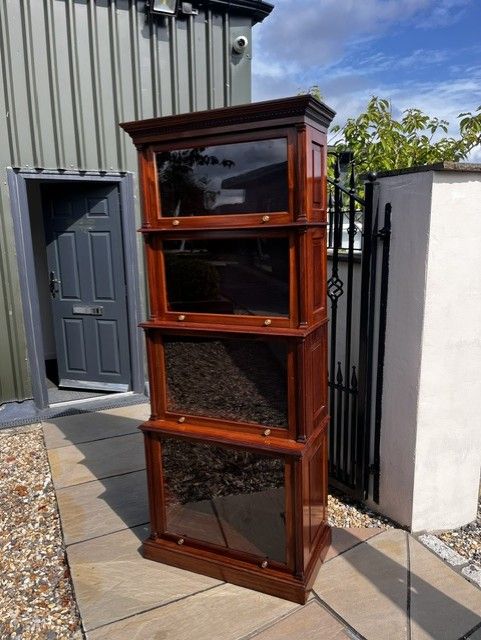
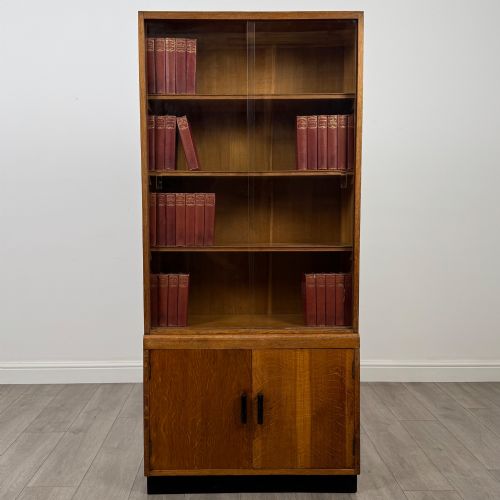
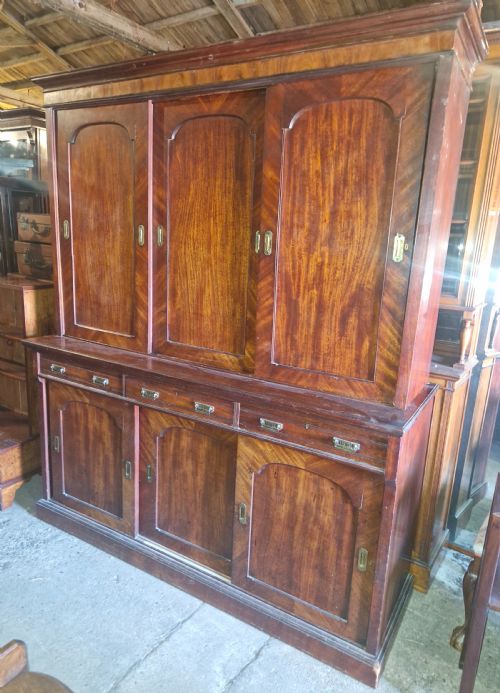
The versions most commonly met on this page range from solid mahogany barrister styles to light oak 1930s examples and large country house estate office cabinets. Buyers encounter various forms, from glazed display cabinets to multi-tiered office shelves.
Origins span British workshops alongside 19th-century Danish kitchen cupboards and campaign furniture. Each form reflects the specific filing, display, or domestic storage needs of its respective decade.
How they were made
Construction relies heavily on timber selections such as oak, solid mahogany, and walnut, often enhanced with veneer surfaces. Workshops frequently paired these woods with glass panels and brass hardware.
Makers integrated lead details and specialised tracks to allow smooth movement for glazed doors. Carpenters utilised traditional joinery methods to build multi-tier frames capable of supporting heavy volumes.
Listings feature oak, mahogany, and walnut woods, alongside brass fittings and glass panels across Edwardian and 1930s periods.
What varies in quality
Quality differentiates through the selection of timber and the precision of the door tracks. Fine examples demonstrate careful matching of veneers and solid woods across the panels and shelves.
The refinement of the glazing bars and the weight of the brass fittings indicate the standard of the workshop. Superior pieces maintain smooth sliding action alongside robust structural integrity in the main carcass.
AMYL·Heals·Phoenix Gallery
The Sliding Door Bookcase Glossary
- Barrister stacking bookcase
- A modular bookcase featuring upward-lifting or sliding glass doors designed to protect law books. These sectional pieces could be stacked vertically to suit changing library sizes.
- Campaign cabinet
- Portable furniture constructed for travel during military campaigns, typically featuring recessed brass handles and sturdy timber. These pieces dismantle or fold for ease of transport.
- Glazed bookcase
- A cabinet enclosed by glass doors that protects volumes from dust while allowing visibility of the spines. This format bridges the function of a bookcase and a display cabinet.
- Veneer
- A thin layer of choice hardwood applied to a secondary timber base to create decorative grain patterns. This technique allowed makers to utilise expensive woods efficiently on large surfaces.
Sliding Door Bookcase: Frequently Asked Questions
How do sliding doors work on antique bookcases?
Sliding doors operate on wooden or brass tracks integrated into the top and bottom of the bookcase frame. Glass panels glide smoothly past one another within these recessed channels.
This mechanism allows access to the interior shelves without requiring clearance space in front of the unit.
What periods do these bookcases come from?
The listings span from the 19th century through the Victorian and Edwardian eras up to the 1930s and 1950s. Mid-century modern and Art Deco styles also appear.
Each period brings distinct timber choices and aesthetic details, from heavy mahogany estate pieces to light oak modernist forms.
Are the glass doors original?
Many bookcases retain their original glass panes, which often show subtle surface variations and bubbles typical of older manufacturing methods. Lead or timber glazing bars hold these panes securely within the sliding frames.
Examining the fit and the condition of the glass helps determine whether the components match the age of the main carcass.
How should I care for an oak bookcase?
Oak furniture benefits from regular dusting with a soft, dry cloth to prevent particulate buildup on the timber and glass. Keeping the piece away from direct heat sources protects the wood and veneer from drying out.
Applying a light, appropriate wax periodically helps maintain the finish and natural sheen of the timber.