
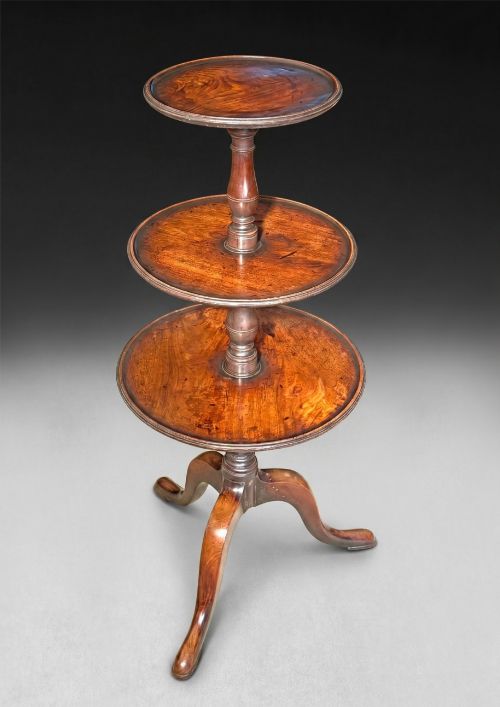
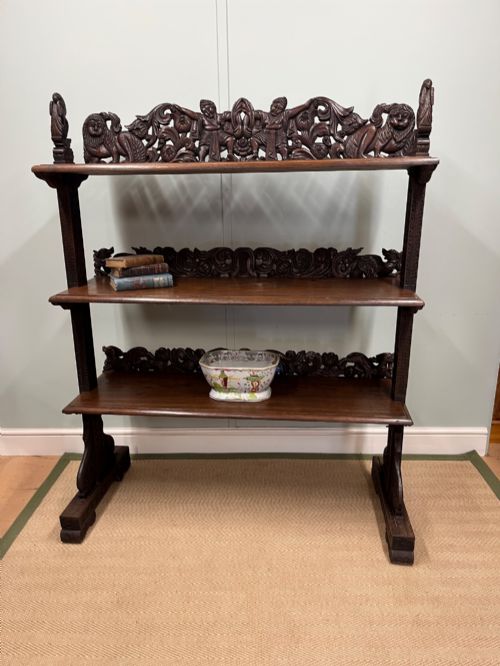

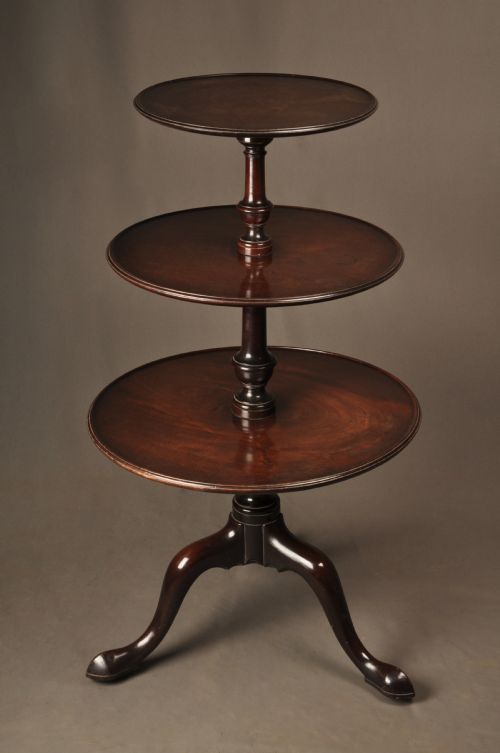


Three Tier Buffet Stand
A three tier buffet stand provides tiered serving space for dining rooms and reception rooms, prized for historic utility and timber character.
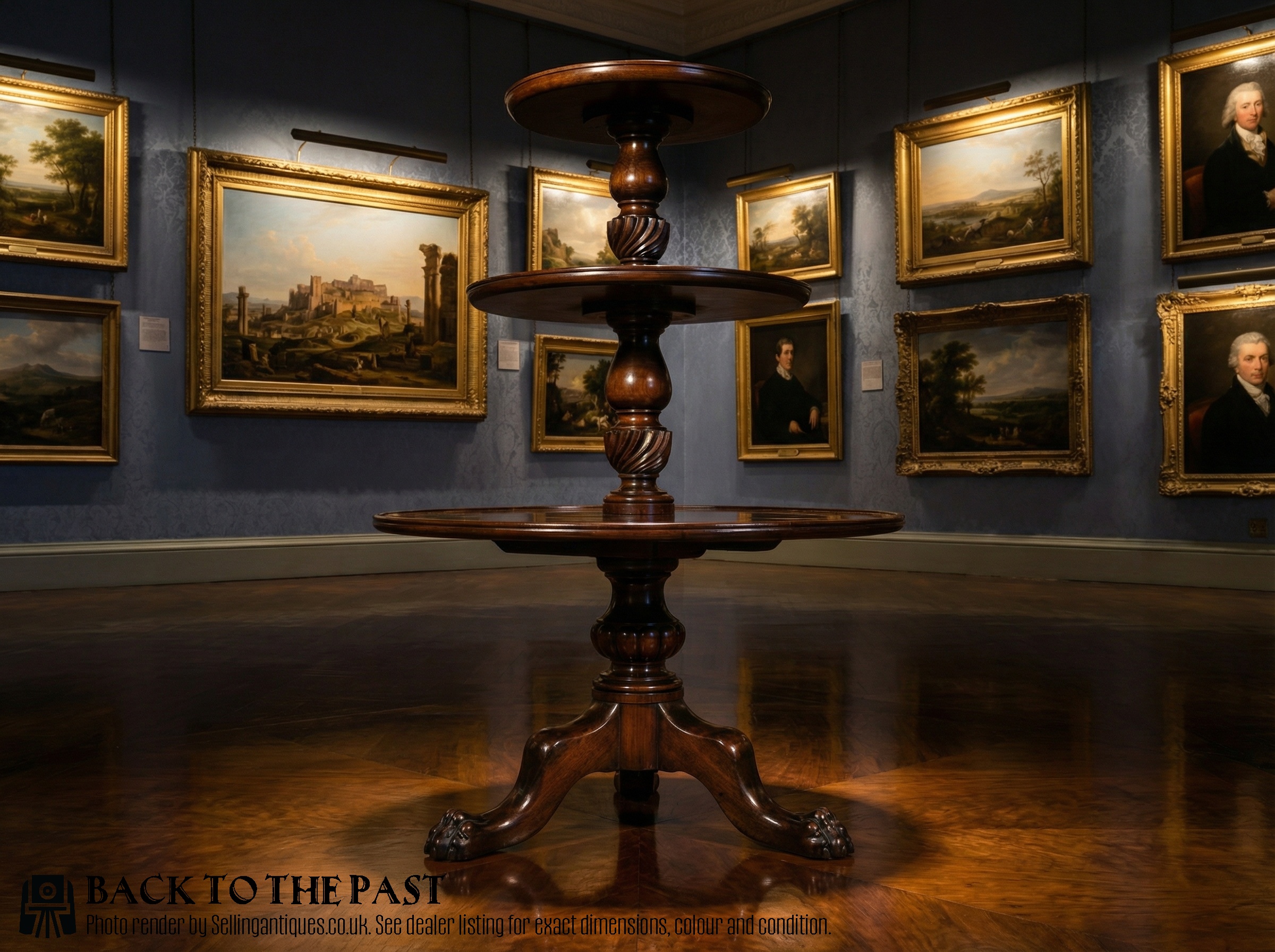
Three Tier Buffet Stand
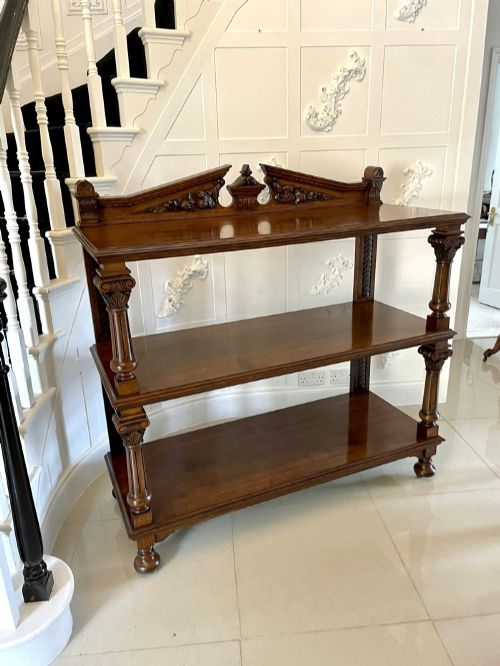
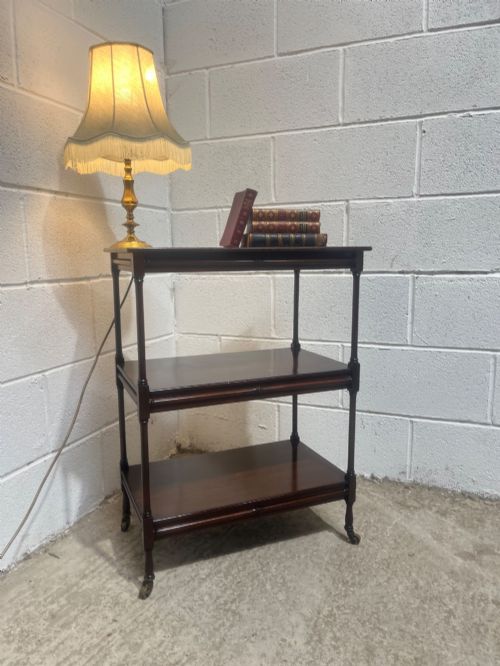
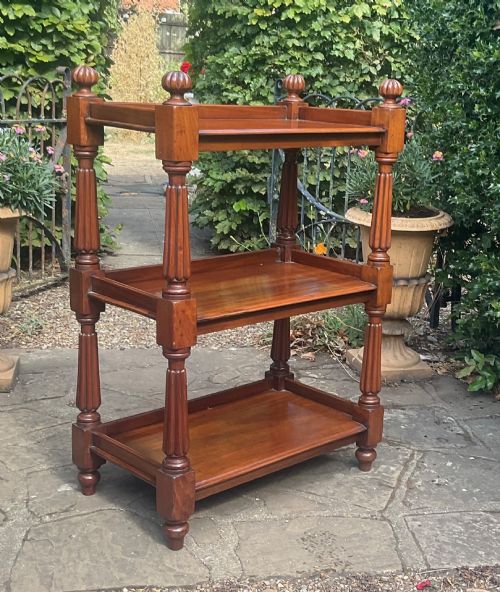
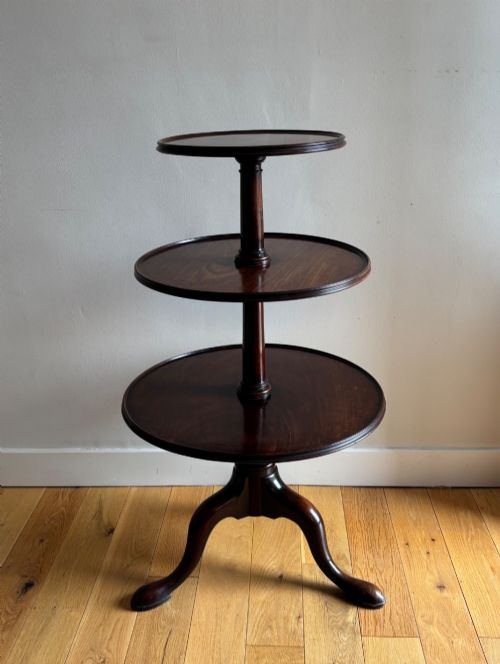
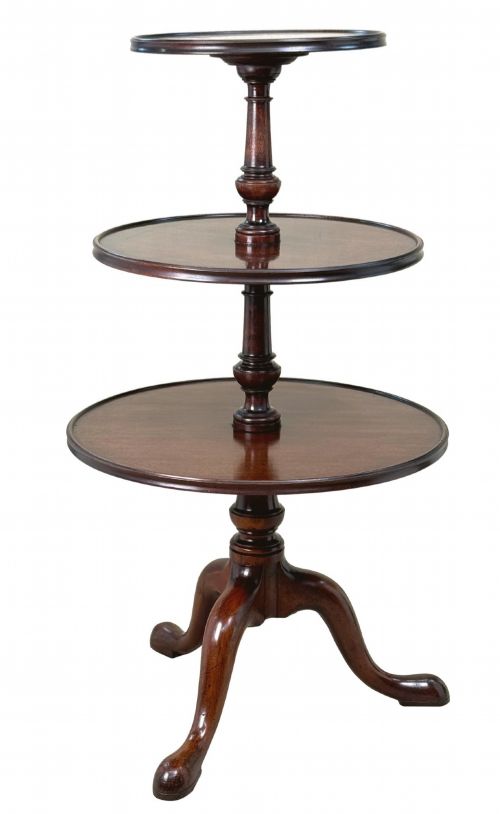
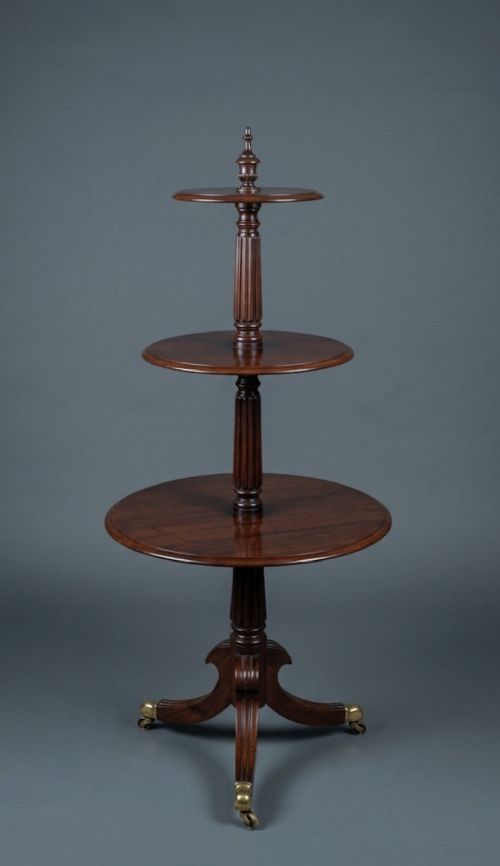
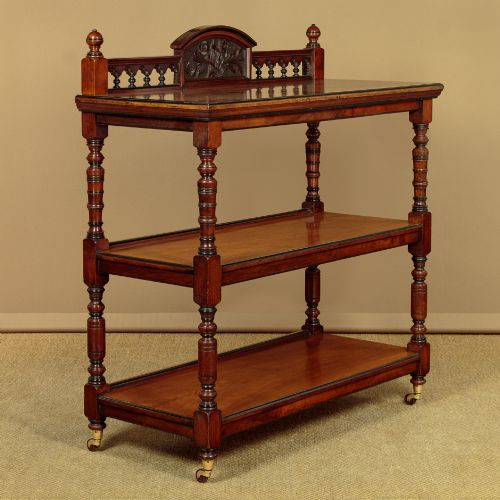
A three tier buffet stand primarily encompasses antique dumb waiters, etageres, and tiered serving tables spanning the eighteenth and nineteenth centuries.
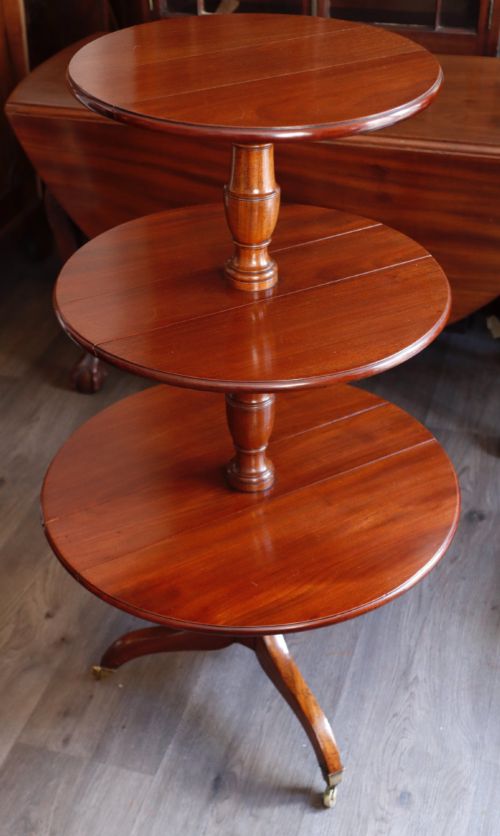
The pieces appearing most frequently on this page date from the Georgian and Victorian periods, often taking circular, drop-leaf, or rectangular forms.
Originating in British and Anglo-Indian workshops, these multi-level pieces served dining rooms by holding dishes and silverware near the table.
Gradations of Quality
The refinement of timber grain and the depth of natural polish distinguish superior items from standard utility pieces.
Complexity of movement, such as smoothly revolving tiers or fully adjustable mechanisms, sets high-tier examples apart.
Some nineteenth-century diners relied on revolving tiers so guests could help themselves to port without interrupting political arguments.
The Three Tier Buffet Stand Glossary
- Dumb Waiter
- A tiered freestanding piece of dining room furniture designed to hold food and utensils without servant attendance. They often feature graduating circular trays mounted on a central column.
- Etagere
- A piece of furniture consisting of a set of open shelves for displaying small objects or serving items. These tiered stands bring vertical display space to sitting rooms.
- Drop-leaf
- A table top design featuring hinged flaps that fold down to save space when not in use. This mechanism allowed dining furniture to tuck away compactly.
- Pollard oak
- Timber taken from trees that were cut back to encourage a dense cluster of branches, producing a heavily figured grain. Cabinetmakers prized this wood for decorative veneering.
- Marquetry
- The art and craft of applying pieces of veneer to a structure to form decorative designs. Historic artisans used contrasting timbers to create complex geometric or floral patterns.
Three Tier Buffet Stand: Frequently Asked Questions
What is a three tier buffet stand used for?
These tiered stands served dining rooms by holding extra dishes, wine bottles, and silverware close to the main table. In modern rooms, they function well as display surfaces for books or decorative objects.
Their vertical design maximises floor space while providing three distinct levels for placement.
How do I date a three tier buffet stand?
Dating relies on timber choice, turning styles on central columns, and construction methods. Georgian pieces often show simpler mahogany turning, while Victorian examples introduce adjustable brass mechanisms and denser rosewood.
Examining secondary woods underneath and drawer linings helps confirm the period of manufacture.
Are these stands stable enough for daily use?
Solid mahogany and oak versions possess robust framing designed to bear the weight of heavy tableware. Central pillar designs distribute weight evenly across tripod or quadruped base legs.
Checking the tightness of the central column joint ensures safe everyday placement in busy rooms.
How do I distinguish between a dumb waiter and an etagere?
Dumb waiters traditionally feature circular rotating tiers stacked on a single central pedestal with tripod feet. Etageres more commonly present square or rectangular shelving units built for display rather than serving.
Both fall under the broader category of tiered buffet furniture seen across this era.