







Three Stone Gypsy Band
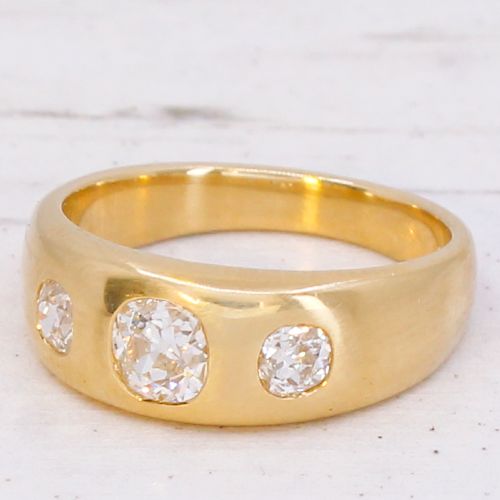
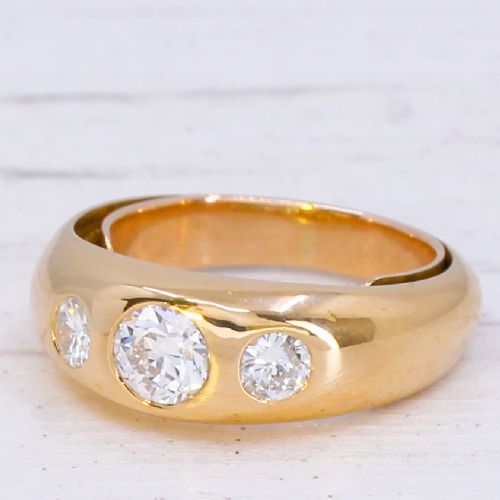
A three stone gypsy band sits flush to the hand, offering secure gemstone settings and everyday comfort.
Three Stone Gypsy Band
How they were made
Goldsmiths constructed these bands from 18ct yellow gold or 9 carat gold, hammering and shaping the metal to form the solid tapered hoop characteristic of gypsy rings. Gems were then inserted directly into the thick metal surface, secured by hand-burnished bezels that protected the girdle of each stone.
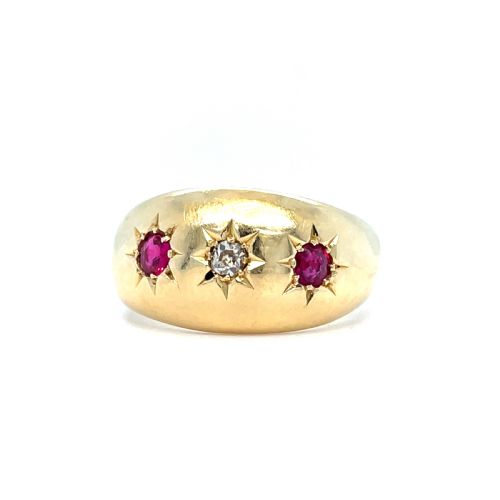
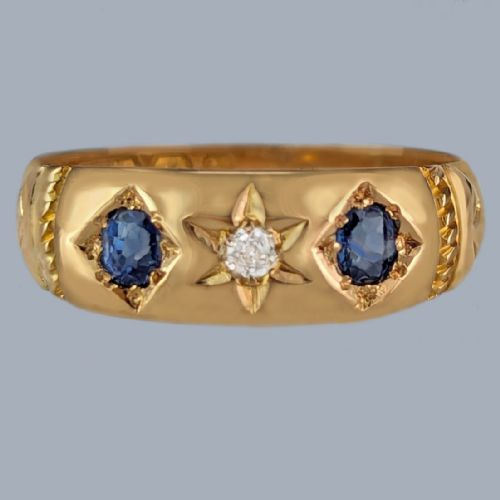
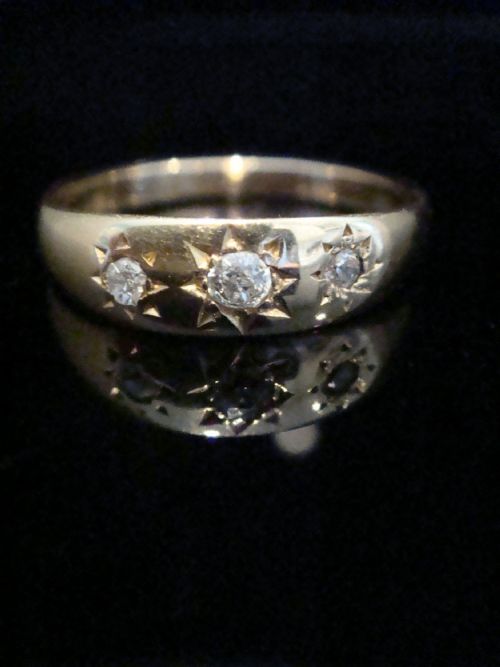
Makers often embellished the metal surrounding the flush-set stones with starburst or celestial engravings, pushing tiny triangles of gold over the diamond or coloured gemstone to create radiating points of light.
Listings feature 18ct yellow gold alongside 9 carat gold, spanning Victorian, Edwardian, and mid-century periods.
What varies in quality
Quality rests in the crispness of the hand-engraved starburst motifs and the precision with which the stones sit flush against the surrounding gold. Finer examples maintain thick, unthinned band shoulders and sharp hallmark stamps despite decades of wear.
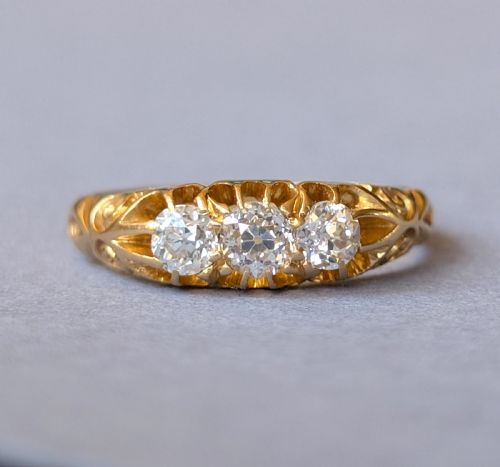
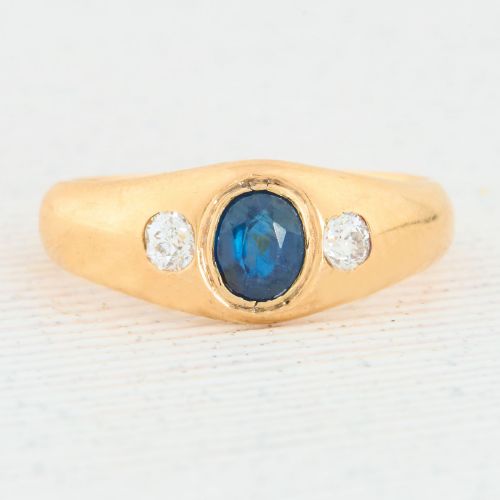
The choice and cut of the gemstones further distinguish the pieces, with old cut diamonds showing distinct hand-faceting that contrasts with simpler secondary stones like rubies, sapphires, or emeralds.
The Three Stone Gypsy Band Glossary
- Gypsy ring
- A ring style featuring a band that tapers toward the back and thickens at the front, where gemstones are set flush into the metal. This design gained immense popularity during the Victorian era for its snag-free profile.
- Old cut
- A vintage diamond cutting style characterised by a small table, high crown, and open culet, hand-faceted before modern brilliant cutting standards were established. These stones display chunky facets that catch candlelight warmly.
- Trilogy ring
- A ring featuring three principal gemstones, often interpreted symbolically to represent the past, present, and future. In gypsy bands, these three stones sit horizontally in a row across the finger.
- Star set
- A gemstone setting technique where hand-engraved star or celestial rays surround a flush-set stone, making the gem appear larger and more luminous against the gold background.
- Hallmark
- An official stamp or series of marks applied to precious metals indicating the purity of the gold, the assay office of origin, and the year of manufacture.
Three Stone Gypsy Band: Frequently Asked Questions
What is a gypsy band?
A gypsy band is a ring style characterised by a solid metal hoop that tapers toward the back and widens at the front, where stones are set level with the surface.
This flush setting style was developed in the nineteenth century to protect the stones during daily wear, preventing them from catching on clothing.
How do I date a ring?
Dating relies heavily on official hallmarks stamped inside the band, which reveal the assay office and year of manufacture. Stylistic clues such as starburst engravings and the use of old cut diamonds also point toward Victorian and Edwardian periods.
Changes in gold carat marks and regional assay symbols help narrow the creation window to specific decades in the nineteenth and twentieth centuries.
Can I wear mine daily?
These rings were originally built for everyday wear, featuring flush-set stones embedded directly into thick gold bands. This robust construction protects the girdle of each diamond or coloured gemstone.
Regular checks by a jeweller ensure the gold surrounding the stones remains secure and thick enough to hold the gems firmly in place.
What stones are used?
Traditional gypsy bands frequently pair old cut diamonds with rich coloured gemstones such as rubies, sapphires, and emeralds. These three-stone combinations often arrange a central gem between two matching side stones.
The metals supporting these gems are predominantly 18ct yellow gold, though some examples utilise 9 carat gold or incorporate platinum details.