

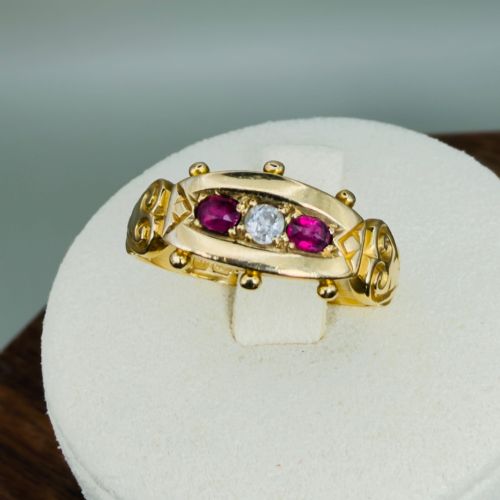
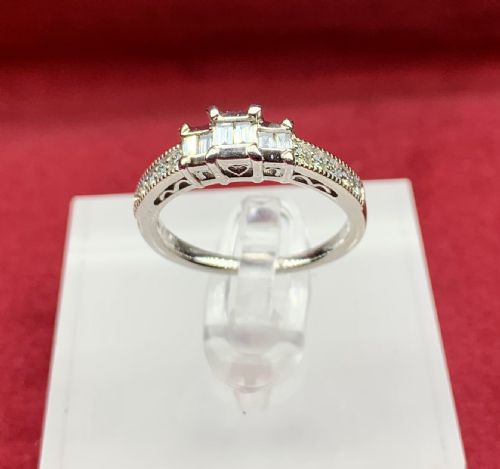
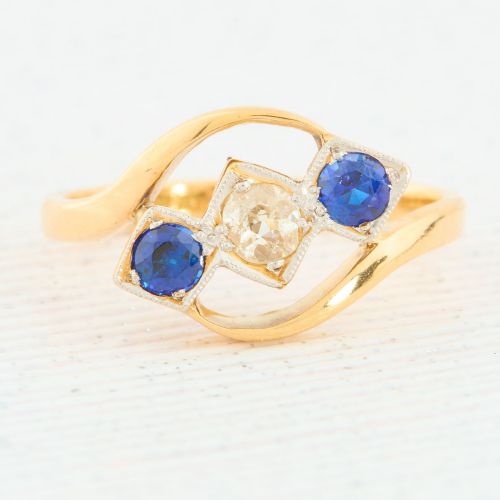
Three Stone Gold Band
A three stone gold band brings together three gems on a precious metal foundation, offering a classic ring style found across Victorian, Edwardian, and Art Deco periods.
Three Stone Gold Band
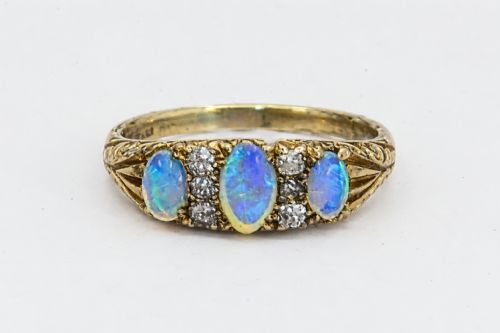
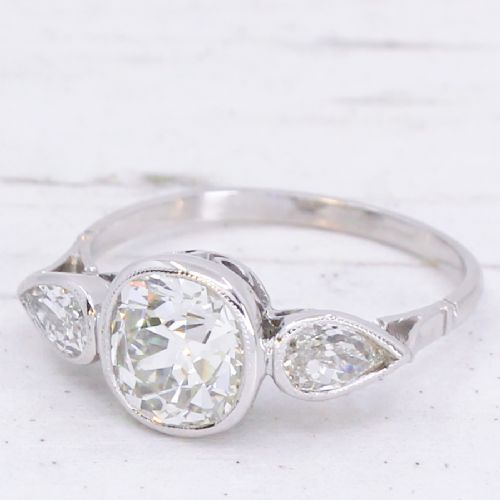
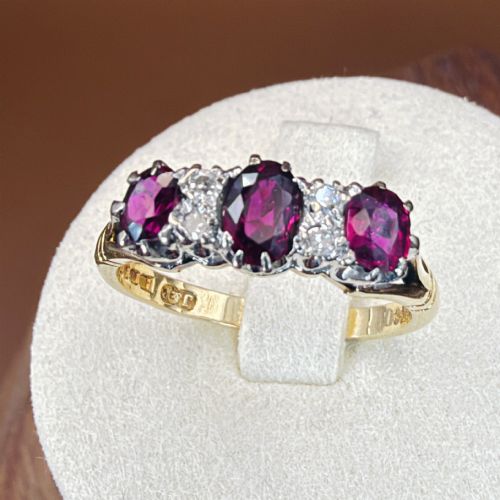
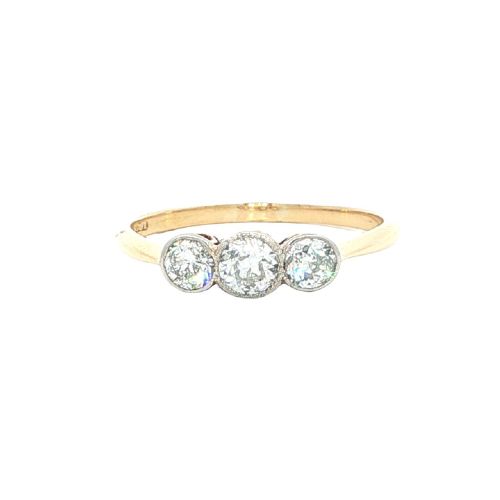
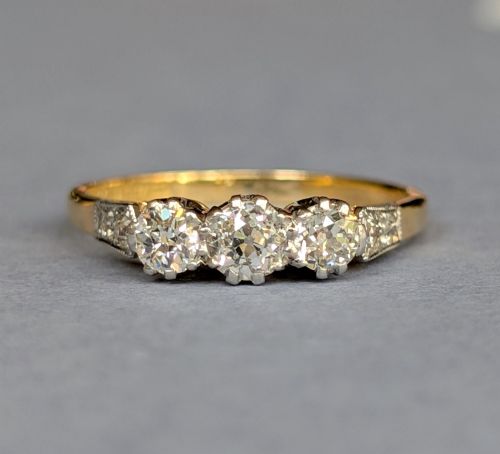
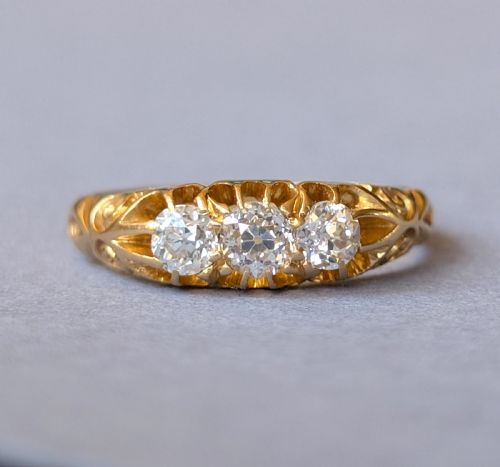
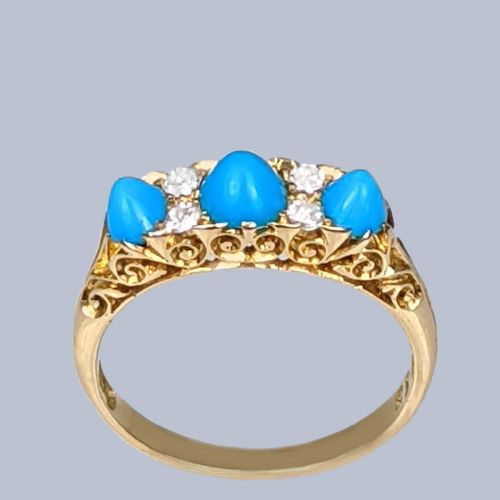
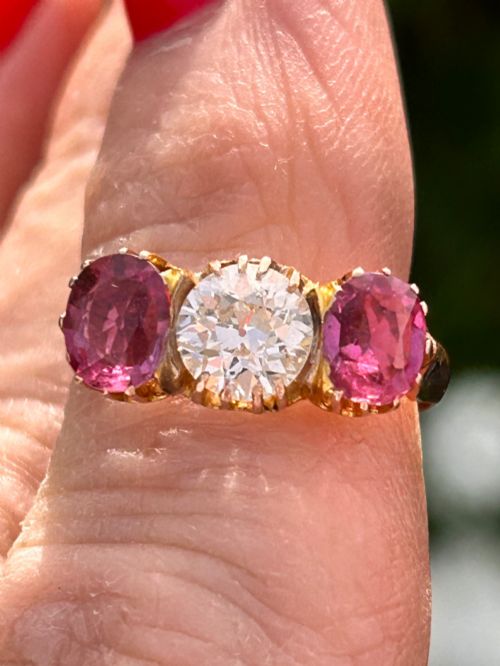
A three stone gold band centres on three distinct gems arranged in a row, often referred to as a trilogy ring. Buyers searching for a three stone gold band encounter pieces spanning the nineteenth century through the mid-twentieth century, with Victorian and Edwardian examples appearing frequently.
The central stones typically combine diamonds with rubies, sapphires, emeralds, or opals, mounted on bands of yellow gold, white gold, or platinum. These rings serve historically as engagement pieces or commemorative jewellery, reflecting changing stylistic preferences from heavy starburst settings to geometric Art Deco designs.
Materials and Technique
Goldsmiths constructed these rings primarily using 18ct gold, 9ct gold, and platinum, frequently combining yellow gold bands with white metal settings to enhance the appearance of the stones. Old cut diamonds, cushion cuts, and pear cuts dominate the inventory, accompanied by heat-treated or natural coloured gems.
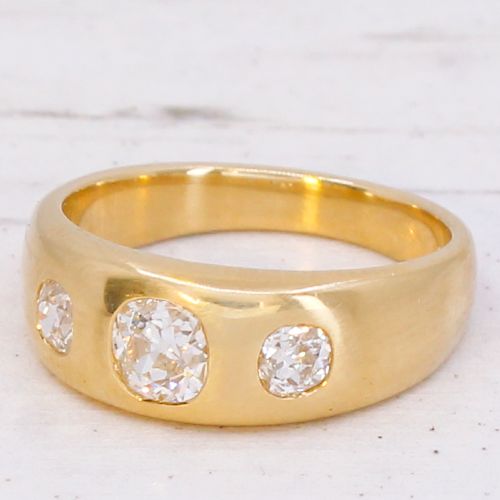
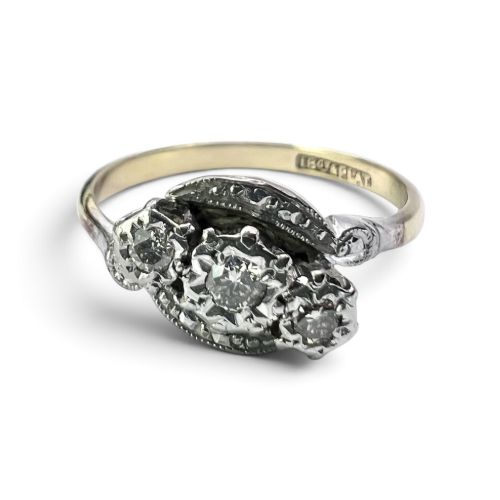
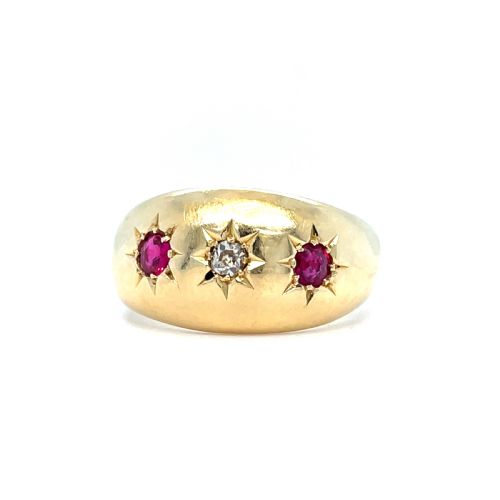
Techniques range from traditional gypsy settings, where stones sit flush into the thick gold band, to delicate claw and trilogy mounts that elevate the gems to catch the light. Hallmarks stamped into the metal often reveal assay office origins in cities like Birmingham and Chester alongside specific date letters.
Listings feature 18ct yellow gold, 9ct gold, and platinum alongside gemstones including old cut diamonds, rubies, sapphires, and opals.
Assessing Quality
Quality in a three stone gold band depends heavily on the matching and carat weight of the primary gems, alongside the integrity of the original metalwork. Finer examples display well-proportioned old cut stones with minimal natural inclusions that sit securely within robust, unthinned shanks.
The finesse of the hand-engraving or millegrain detailing around the settings distinguishes standard production pieces from higher-tier goldsmith work. Preserved hallmarks and crisp maker stamps also contribute to a piece retaining its historical integrity.
The Three Stone Gold Band Glossary
- Trilogy ring
- A ring featuring three distinct gemstones set in a row. This design traditionally represents the past, present, and future.
- Gypsy ring
- A style where stones are embedded flush directly into the thick band of the ring rather than held in raised prongs. This technique gained popularity during the late Victorian era for daily wear.
- Old cut diamond
- A hand-faceted diamond cut before modern machine standards were established in the early twentieth century. These stones typically feature smaller tables and larger culets, producing a softer candlelight sparkle.
- Millegrain
- A decorative jewellery technique consisting of a border of tiny raised metal beads along the edge of a setting. It adds a refined texture typical of Edwardian and Art Deco pieces.
- Hallmark
- An official stamp or marks pressed into precious metal indicating the purity of the gold or platinum, the assay office, and the year of manufacture.
Three Stone Gold Band: Frequently Asked Questions
What is a three stone gold band?
A three stone gold band is a ring featuring a trio of gems, such as diamonds, rubies, or sapphires, mounted on a gold metal shank. These pieces date across multiple historical periods including the Victorian and Edwardian eras.
They were frequently utilised as engagement rings or sentimental gifts, carrying symbolic meaning through their three-gem arrangement.
How do I care for my antique ring?
Antique rings require gentle handling due to their age and delicate settings. Clean them using warm soapy water and a soft brush, avoiding harsh chemical dips that can damage softer stones like opals or pearls.
Remove the ring during heavy manual work to protect the claws, gypsy settings, and the underlying gold band from excessive wear.
Can these rings be resized easily?
Resizing depends on the construction of the band and the presence of intricate engravings or hallmarks around the back of the shank. A skilled jeweller can usually alter 18ct or 9ct gold bands up or down a few sizes.
Care must be taken during the process to preserve any historical assay marks stamped into the interior of the metal.
How do I identify the era of my ring?
Dating relies on examining the gemstone cuts, the mounting style, and any official hallmarks stamped inside the band. Victorian pieces often feature gypsy settings or starburst designs, whilst Edwardian examples tend towards lighter platinum and gold wirework.
Consulting assay office records for specific town marks and date letters provides a precise year of manufacture.