

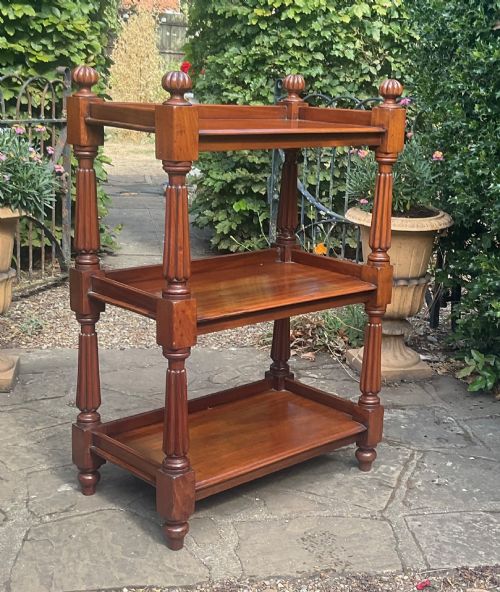
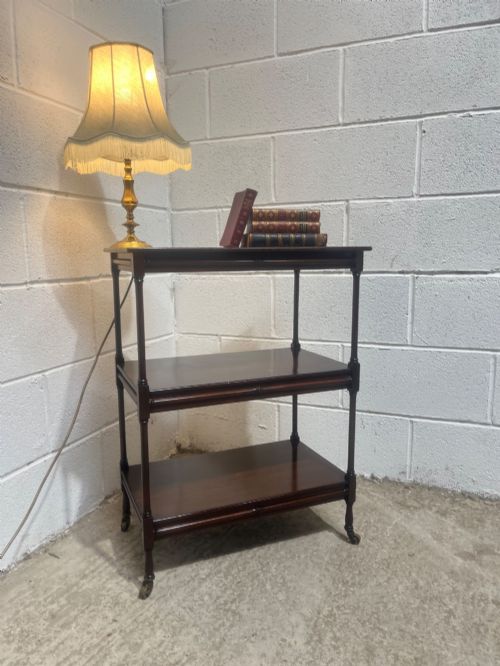
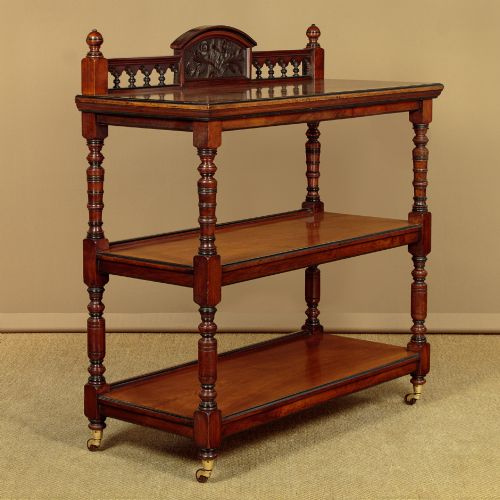
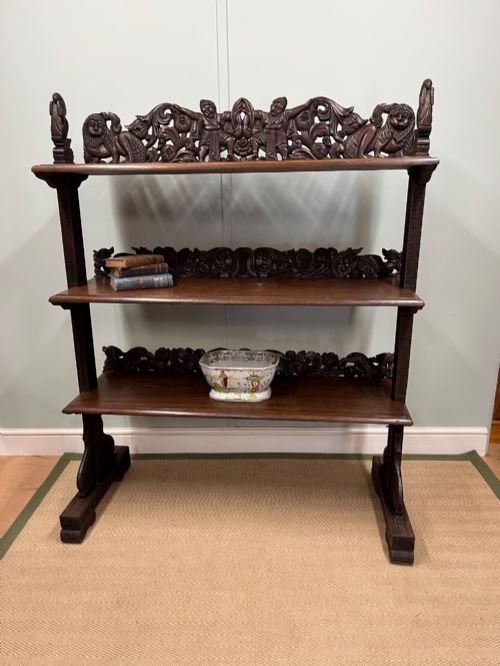


Three Shelf Buffet Table
A three shelf buffet table brings tiered timber storage into a room, offering practical surface space rooted in nineteenth-century utility.
Three Shelf Buffet Table
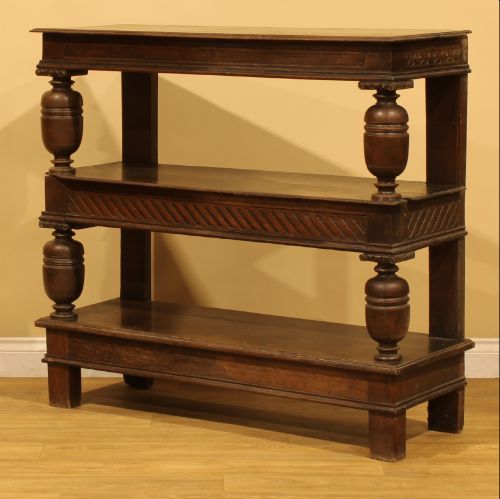
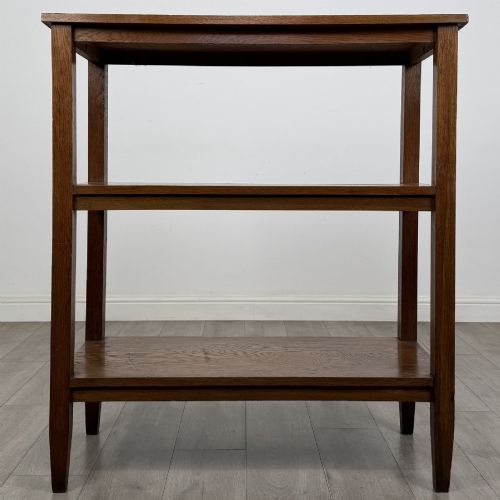
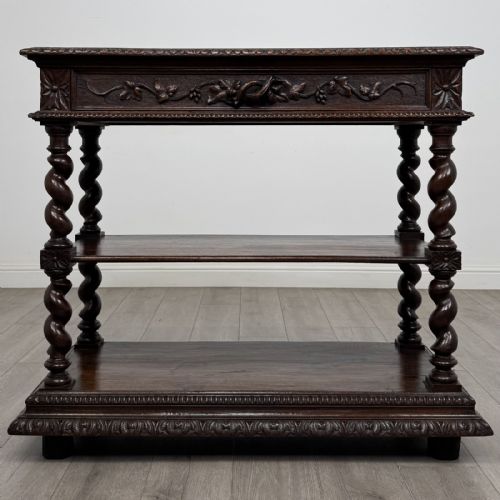
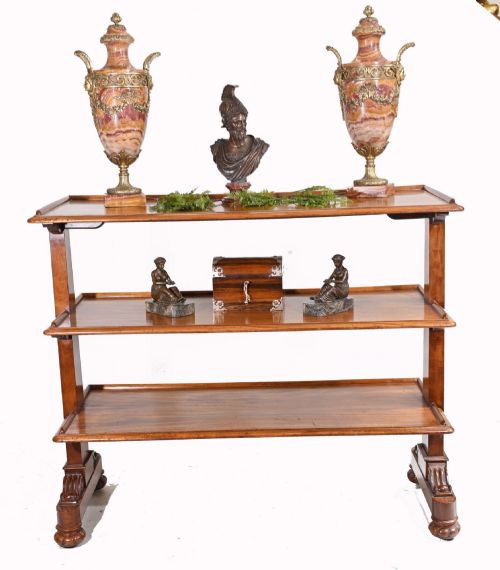
When you search for a three shelf buffet table, you encounter tiered serving stands, etageres, and dumb waiters designed for display and service. These pieces originate predominantly from the nineteenth century, spanning George III, Victorian, and Edwardian periods.
The form typically comprises three distinct tiers supported by turned columns or uprights, often fitted with original castors for mobility. Mahogany and walnut dominate the selection, accompanied by oak, teak, pollard oak, and rosewood examples.
You meet variations ranging from slim etageres to fully adjustable shelving units and sideboard combinations with top shelves. The construction reflects formal dining rooms and domestic service spaces of the past, adapted today for flexible interior use.
How they were made
Cabinet makers utilised dense hardwoods such as mahogany, walnut, and oak to construct the tiered platforms and vertical supports. Timber selection prioritised rich grain figures, particularly in burr walnut and pollard oak variations.
Finishes were polished to accentuate the natural warmth of the wood, whether finished in clear polish or ebonised for a dramatic dark surface. Structural ingenuity allowed certain shelves to adjust in height via mechanical ratchets or screw stems.
Three Shelf Buffet Table Retail Price Guide 2026
Typical asking prices for three shelf buffet table among the pieces listed under this phrase on Sellingantiques today, from the lower quarter to the upper quarter. They describe what is for sale here now, not the wider market.
Listings feature nineteenth-century woods including mahogany, walnut, oak, teak, pollard oak, rosewood, and ebonised timber.
What varies in quality
The calibre of timber selection dictates the visual impact, with figured veneers and solid mahogany standing above standard utility pieces. Finer examples display meticulous turning on the uprights and crisp joinery connecting the tiers.
Originality of components marks the distinction between ordinary and superior items, particularly regarding brass castors and adjustable mechanisms. Maker attribution also elevates certain pieces, distinguishing standard workshop output from documented cabinet maker production.
James Shoolbred & Co
The Three Shelf Buffet Table Glossary
- Etagere
- A set of open shelves for displaying small objects or serving. This form provides multiple tiers supported by slender columns.
- Dumb waiter
- A tiered piece of furniture used for holding food and tableware during meals. It allows service without the constant presence of attendants.
- Castor
- A small wheel mounted on a swivel attached to the legs of furniture. This permits easy movement of heavy tiered buffets across floors.
- Potboard
- A lower open shelf on a dresser or buffet designed for storing pottery. It forms the lowest tier in traditional open storage bases.
- Padauk
- A heavy tropical hardwood valued for its durability and deep reddish brown colour. It appears in intricately carved nineteenth-century pieces.
Three Shelf Buffet Table: Frequently Asked Questions
What is a three shelf buffet table?
A three shelf buffet table is a tiered wooden stand used historically for serving food, holding dishes, or displaying ornaments.
These pieces feature stacked horizontal platforms connected by vertical columns, often mounted on castors for easy relocation around a dining room.
How were these buffets used originally?
In nineteenth-century dining rooms, these tiers held extra plates, glassware, and serving dishes during large meals.
They served as auxiliary tables so servants could manage courses without crowding the main dining table.
How do I style a three shelf buffet table?
You can use the tiers to display collections of ceramics, books, or glassware in a living room or hallway.
The open structure keeps rooms feeling light while offering significant surface space for decorative arrangements.
How do I identify the period?
Dating relies on timber choices, turnings, and hardware styles associated with George III, Victorian, or Edwardian eras.
Hand-cut joints, mahogany grain patterns, and specific castor designs help narrow down the decade of manufacture.