



Three Light Silver Centrepiece
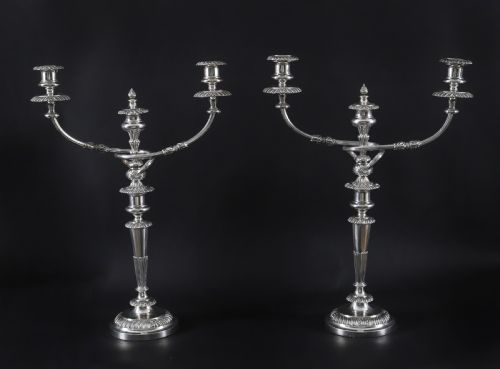
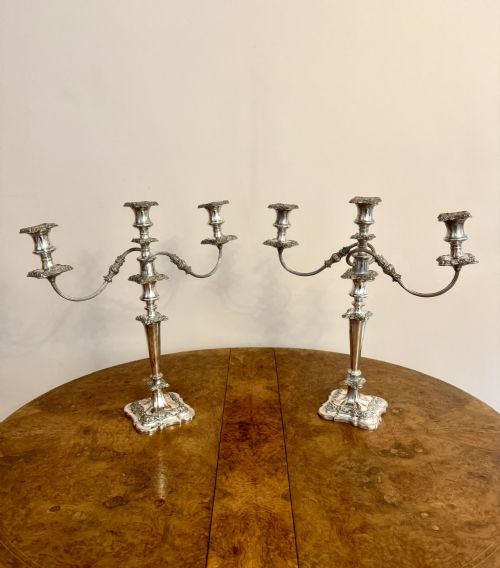
A three light silver centrepiece brings grandeur to a dining table, combining candleholders with a central display surface in silver plate, Old Sheffield plate, or sterling silver.
Three Light Silver Centrepiece
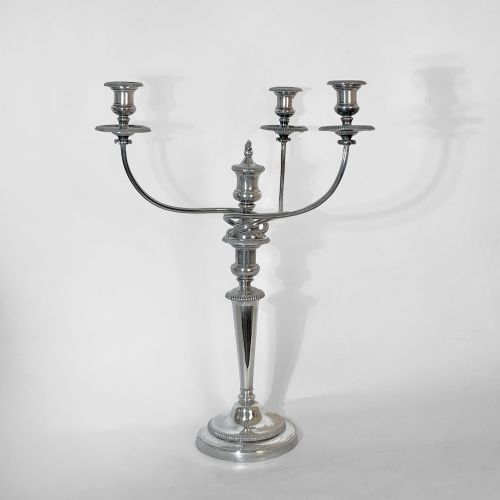
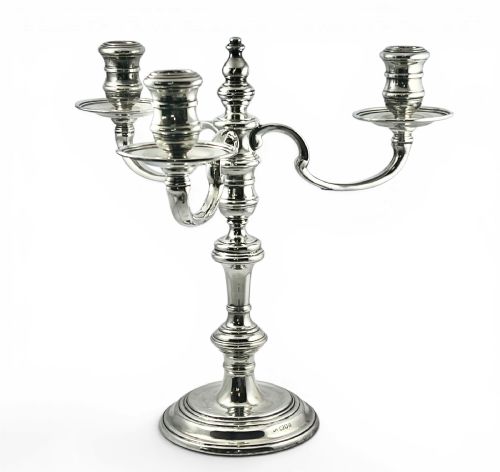
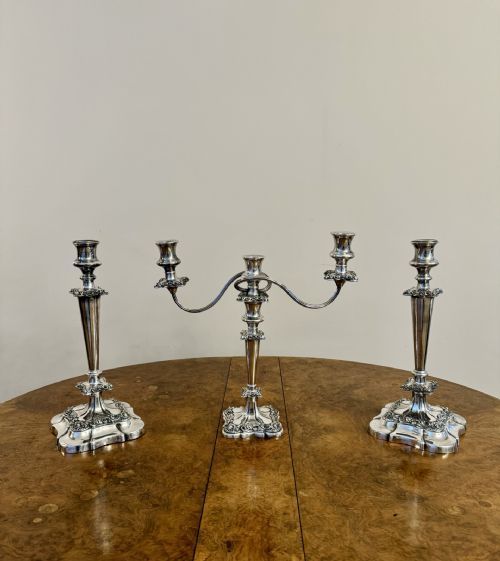
A three light silver centrepiece takes the form of a candelabrum or candle-branch assembly designed to illuminate a table while often incorporating a bowl or dish component. These objects appear across multiple periods, including the Georgian, Regency, and Victorian eras, alongside mid-twentieth-century examples.
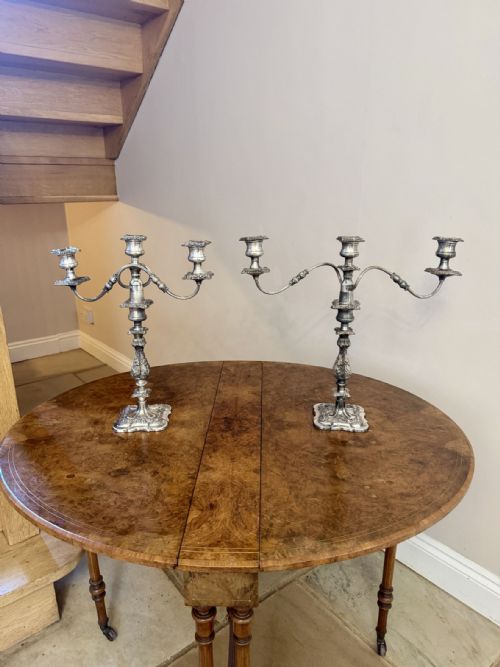
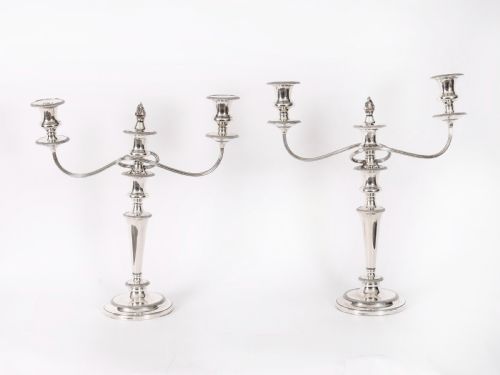
You are most likely to encounter Victorian and Edwardian silver plated or Sheffield plated versions on this page. These pieces frequently manifest as pairs or single branched candelabras holding three candles.
The materials span from solid sterling silver and continental silver to silver plate, electroplated nickel silver, Old Sheffield plate, and copper. Makers adopted styles ranging from Rococo Revival and Victorian Naturalism to Georgian Revival.
Materials and construction methods
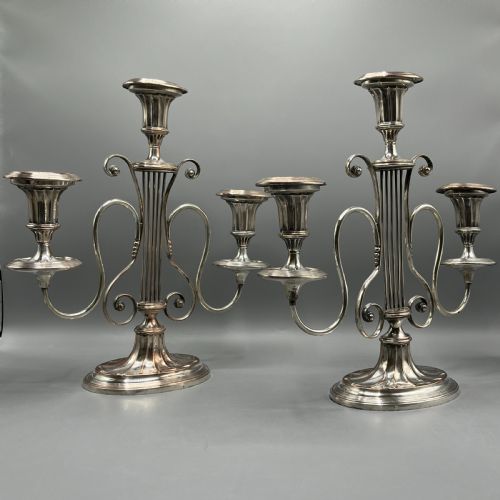
Makers utilised solid sterling silver, copper cores fused with silver in Old Sheffield plate, and later electroplated nickel silver or standard silver plate over base metals. Heavy gauge casting allowed for ornate figural elements such as cherubs, palm trees, and lyre shapes.
Silversmiths employed techniques like hand-raising, stamping, and applied chased or embossed ornamentation. Many period pieces incorporate weighted bases or internal copper supports to stabilise the branched upper sections.
Some Victorian dining tables gained extra charm from cherubs holding up the candlelight.
Factors of quality and execution
Quality rests upon the crispness of the chased or cast ornament, whether in floral motifs, rococo scrolls, or figural details. Superior examples retain their original heavy gauge metal without excessive base metal exposure through worn plating.
The structural integrity of the detachable branches and drip pans indicates superior workshop production. Maker attribution to notable makers or silversmiths elevates the standing of an individual piece.
Garrard & Co·Matthew Boulton·Barker Ellis·Blagden Hodgson And Co
The Three Light Silver Centrepiece Glossary
- Old Sheffield plate
- A composite material made by fusing a thin sheet of silver to a thicker copper core, common in eighteenth and nineteenth-century items. It is identifiable by a subtle copper bleed along exposed edges.
- Electroplated nickel silver
- A base metal alloy of copper, nickel, and zinc coated with a layer of pure silver via an electrical current. This process largely replaced older fusion plating methods in the nineteenth century.
- Candelabra
- A branched candlestick holder designed to support multiple candles from a single stem. Three-light variants carry one central nozzle and two flanking arms.
- Centrepiece
- A decorative table object intended as the visual focal point of a dining setting, sometimes combining a dish or bowl with candle arms.
- Rococo Revival
- A nineteenth-century design style drawing on mid-eighteenth-century French aesthetics, marked by asymmetrical scrolls, floral abundance, and C-scrolls.
Three Light Silver Centrepiece: Frequently Asked Questions
What is a three light silver centrepiece used for?
These pieces served as formal table illumination and decorative displays during dinner parties and evening gatherings. The branched arms held three candles to light the dining surface.
They also functioned as ornamental centrepieces, occasionally featuring bowls or dishes to hold fruit or floral arrangements between meals.
How do I distinguish Old Sheffield plate from silver plate?
Old Sheffield plate involves a mechanical fusion of silver over copper, often revealing a thin reddish copper line where the outer silver layer has worn away along high points or edges.
Later silver plate utilises an electroplating method over a nickel silver or base metal foundation, wearing down to a dull grey or yellowish base metal rather than warm copper.
Are these candelabras weighted at the base?
Many candelabras and centrepieces contain weighted bases filled with resin, pitch, or other dense materials to support the heavy branched upper assemblies.
This internal weighting prevents the tall pieces from tipping over when the arms carry lit candles.
How do I care for silver plated and sterling items?
Maintenance requires occasional cleaning with a specialist silver polish and a soft cloth to remove tarnish without abrading the thin plating on plated wares.
Avoid abrasive cleaners and harsh chemical dips that strip away the remaining silver layer or damage copper cores.