



Three Light Silver Candlestick
A three light silver candlestick brings formal symmetry and warm illumination to a dining table.
Three Light Silver Candlestick
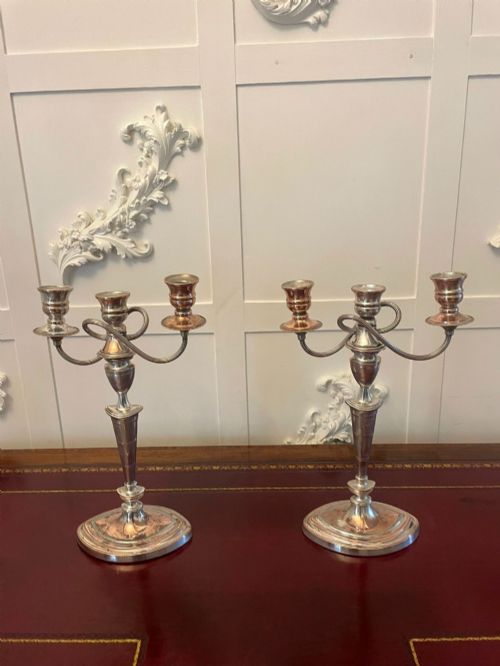
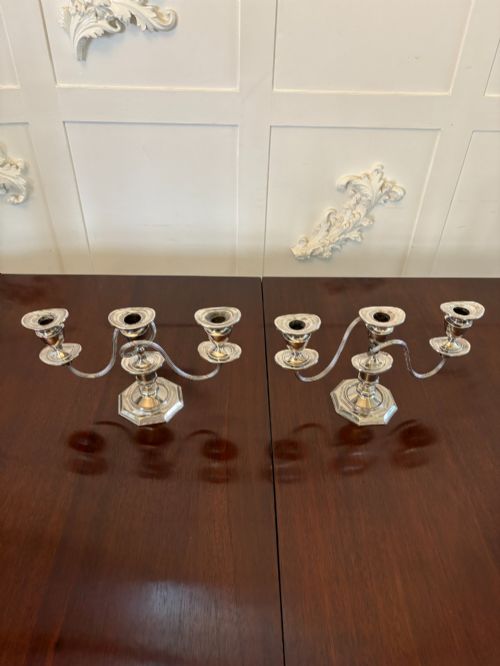
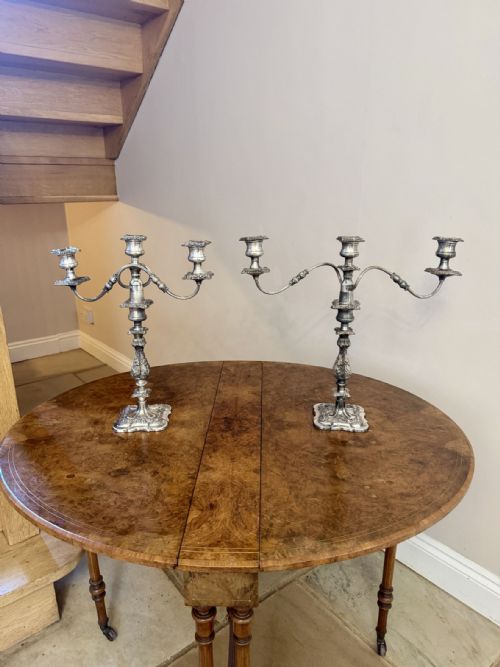
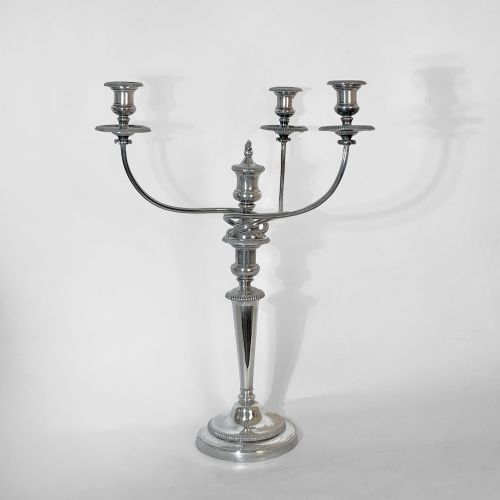
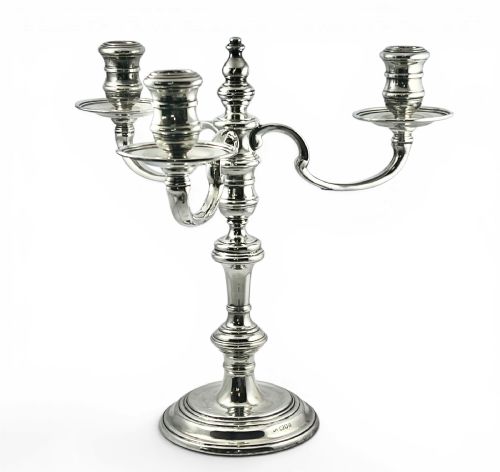
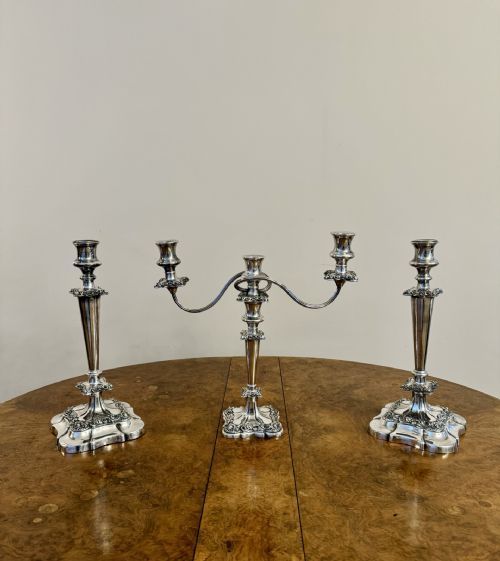
A three light silver candlestick typically takes the form of a branched candelabrum designed to hold three candles simultaneously. The pieces found on this page span several centuries, reaching from the Georgian and Regency periods through the Victorian and Edwardian eras up to the mid-twentieth century.
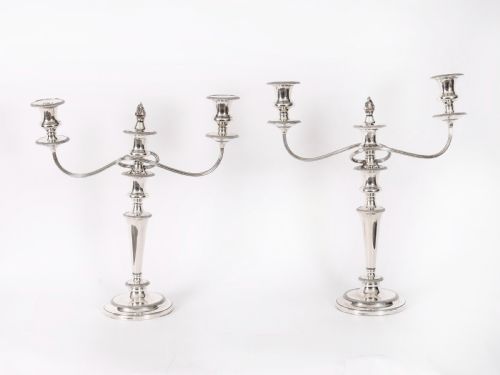
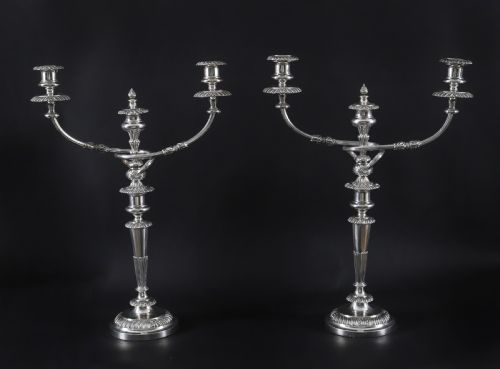
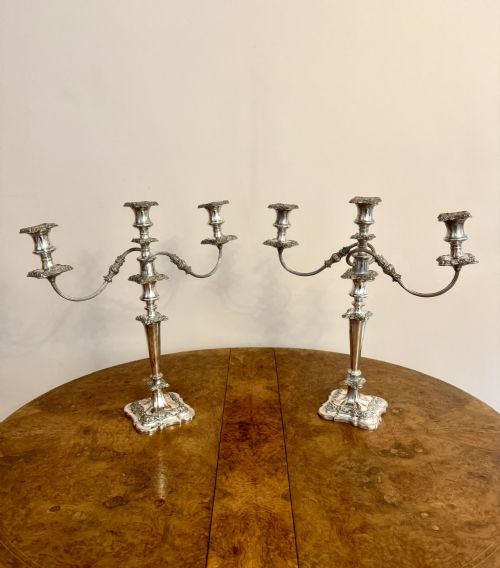
The most common form on this page is the silver plated or Old Sheffield Plate three-light candelabrum, often appearing as a matched pair. Makers also produced sterling silver versions alongside pieces combining silver plate with copper or bronze elements.
Materials and Construction
These pieces utilise sterling silver, silver plate, Old Sheffield Plate, and electroplated nickel silver over base metals like copper and metal. Techniques range from traditional fused plate methods to later electroplating processes developed during the nineteenth century.
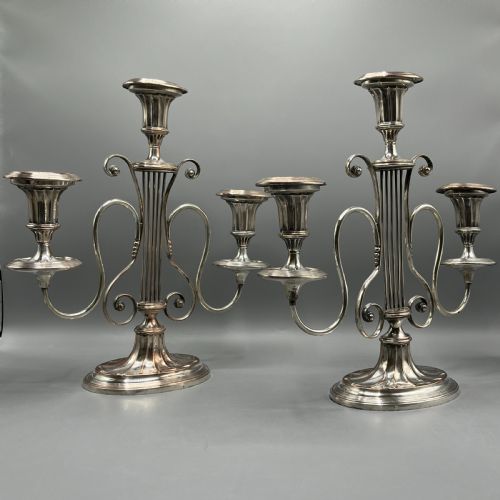
Craftsmen shaped the branches and bases through casting and smithing, frequently incorporating applied ornamentation such as rococo revival scrolls or classical lyre shapes.
Judging Quality and Craftsmanship
Quality rests in the crispness of the chased or cast detail on the branches and drip pans, where superior examples retain sharp relief rather than smoothed plating. The weight and balance of the central shaft also indicate the standard of manufacture.
Substantial gauge metal and intact plating layers distinguish finer workshop output from simpler commercial production.
Garrard & Co·Matthew Boulton·Barker Ellis·Blagden Hodgson And Co
The Three Light Silver Candlestick Glossary
- Old Sheffield Plate
- A material created by fusing a thin sheet of silver to a thicker copper core. This technique predates modern electroplating and produces a characteristic warm tone.
- Candelabrum
- A branched candlestick holding multiple candles on a single base. The plural form is candelabra.
- Electroplated Nickel Silver
- A base alloy of copper, nickel, and zinc coated with a layer of pure silver using an electrical current. This method became widespread in the Victorian period.
- Drip Pan
- A small disc or saucer fitted beneath the nozzle to catch molten wax. It protects the lower portions of the candlestick.
- Regency
- An English design period spanning the early nineteenth century. It is noted for classical restraint and Greco-Roman motifs.
Three Light Silver Candlestick: Frequently Asked Questions
How do I polish a silver plated candelabrum safely?
Use a soft cloth and a dedicated silver polish designed for plated items. Avoid aggressive scrubbing that might wear through the thin silver layer to the base metal underneath.
Work gently around engraved details and rinse with lukewarm water before drying thoroughly with a clean lint-free cloth.
Can I use standard taper candles in these sockets?
Most antique sockets accommodate standard dinner tapers, though older variations sometimes require slight trimming at the base. Ensure the candle sits straight and firm to prevent drips.
Use flame extinguishers rather than blowing out candles to avoid splashing hot wax onto the surrounding silver.
How do I tell Old Sheffield Plate from later silver plate?
Old Sheffield Plate often reveals a faint hint of copper showing through along high friction edges where the fused silver layer has thinned over generations of use.
Later electroplated items display a uniform silver surface and frequently carry nineteenth or twentieth-century manufacturer marks.
Where should I place a three light candelabrum?
These pieces suit the centre of a dining table or the top of a sideboard where their height provides balanced vertical interest. Keep them away from draughts to ensure even burning.
Position them where the reflective metal surface can catch natural daylight or evening illumination.