
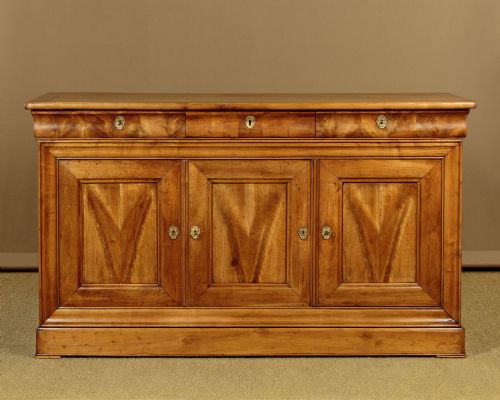


Three Door Credenza
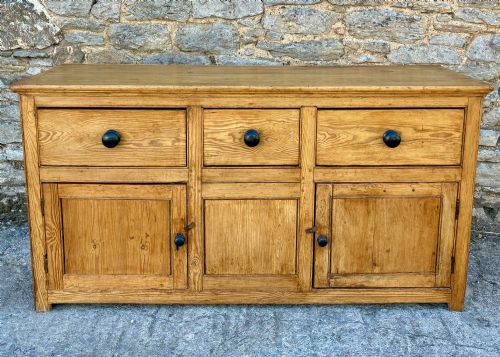
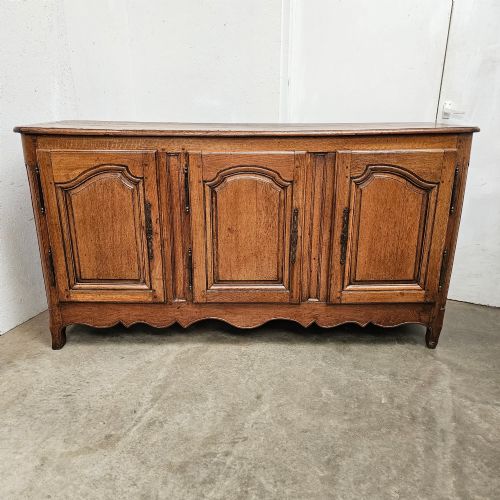
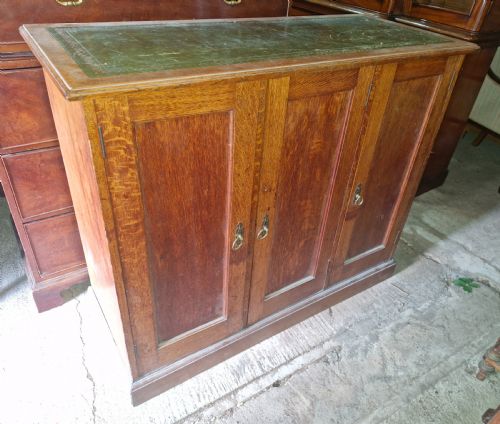
A three door credenza provides substantial low storage with distinct cabinet bays, spanning periods from the eighteenth century to the twentieth.
Three Door Credenza
A three door credenza groups sideboards, side cabinets, and enfilades that share a triple-bay format for organising dining rooms and living spaces. Buyers search for this specific layout to secure extended linear surface room combined with ample compartmentalised interior capacity.
The versions most common on this page emerge from the Victorian era and the nineteenth century, alongside continental enfilades and twentieth-century interpretations. These pieces appear under various designations such as side cabinets, buffets, and breakfront bookcases.
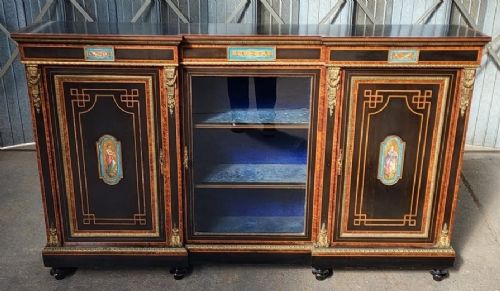
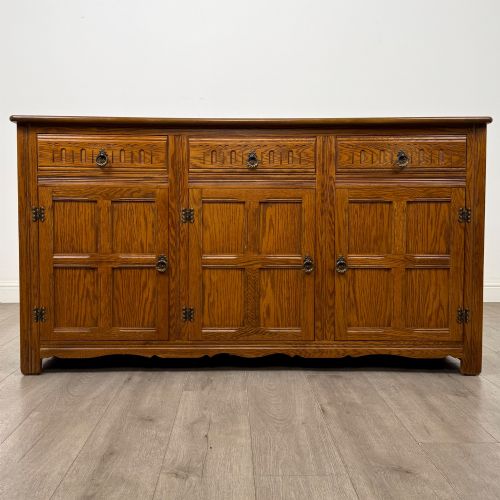
Construction formats range from formal English breakfronts with central glazed or panelled doors to lower French enfilades in cherrywood and oak. Each variation maintains the characteristic three-segment facade designed to anchor a principal wall.
Materials and construction
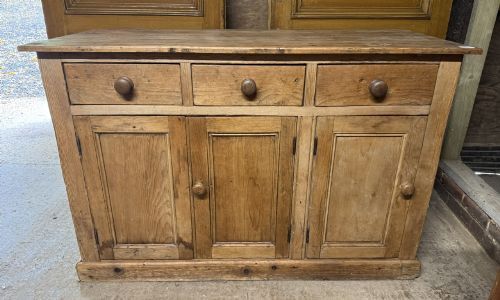
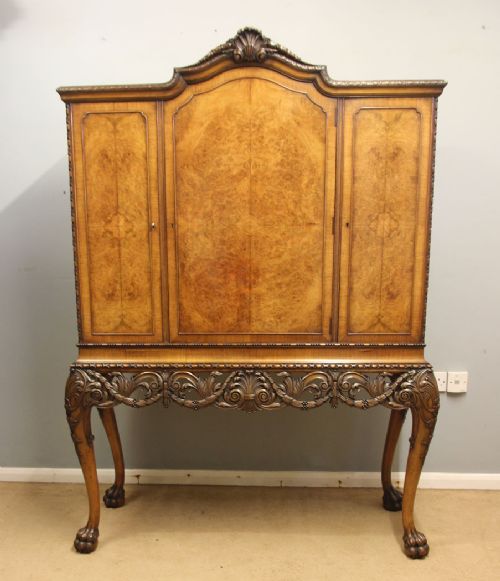
Cabinetmakers utilised robust timber carcasses of oak, mahogany, and walnut, often enhanced with decorative veneers including burr walnut, amboyna, and birds eye maple. Secondary woods such as pine appear on internal shelving and backing boards.
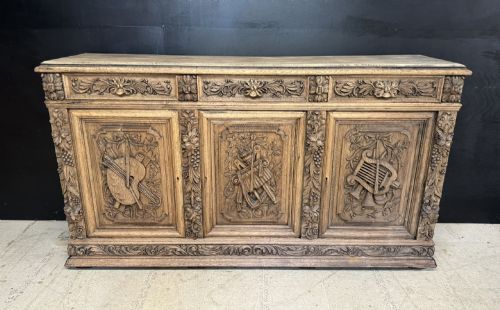
Surface enrichment relied on brass mounts, ormolu details, and intricate marquetry or parquetry patterns set into the timber tops and doors. French and English workshops also incorporated marble inserts and hand-carved Gothic or revival motifs.
Listings feature pieces spanning from the eighteenth century through the Victorian era up to the 1930s.
Distinctions in craftsmanship
The upper tier of pieces displays superior selection of figured veneers, such as pollard oak or burr ash, matched symmetrically across the three doors. Lesser examples rely on plain solid timbers with simpler joinery and minimal decorative hardware.
Execution of internal fittings, door alignment, and the crispness of carved mouldings or applied ormolu mounts separate standard workshop production from finer cabinet work bearing maker attribution.
James Shoolbred and Co
The Three Door Credenza Glossary
- Enfilade
- A long sideboard or cabinet with multiple doors, originating in France and typically housing three or more bays for storage.
- Breakfront
- A cabinet design where the central section projects forward from the flanking outer sections, creating depth across the three doors.
- Ormolu
- Gilt-bronze mounts applied as decorative ornaments to the corners, panels, and feet of nineteenth-century cabinets.
- Parquetry
- Geometric wood mosaic work used to pattern tabletops and cabinet doors, often seen in twentieth-century French pieces.
- Chiffonier
- A low sideboard or cabinet, frequently fitted with doors and sometimes surmounted by a shelf or display structure.
Three Door Credenza: Frequently Asked Questions
What is a three door credenza?
A three door credenza is a low storage cabinet divided into three distinct vertical sections, offering balanced proportions for living areas and dining rooms.
These pieces encompass sideboards, enfilades, and low bookcases drawn from English and continental traditions across several centuries.
How do I style a three door credenza?
Position the cabinet against a primary wall where its linear surface can support lamps, ceramics, or books without crowding the room.
Utilise the internal shelving to store tableware or media equipment while keeping the top surface uncluttered for balanced decorative displays.
How do I date a three door credenza?
Examine the primary timber species, construction joints, and decorative hardware, noting that Georgian and Victorian pieces often feature heavier mouldings.
Twentieth-century examples and continental enfilades display distinct surface treatments like parquetry or marble tops that reflect their specific decade of origin.
Are these cabinets suitable for modern homes?
The generous width and low height make these cabinets practical for contemporary living spaces requiring functional storage and surface display room.
Their varied finishes, from golden oak to dark mahogany and painted surfaces, integrate easily into both traditional and modern interior schemes.