





Three Branch Candlestick Pair
A three branch candlestick pair brings formal symmetry and warm tiered illumination to a dining table or mantelpiece.
Three Branch Candlestick Pair
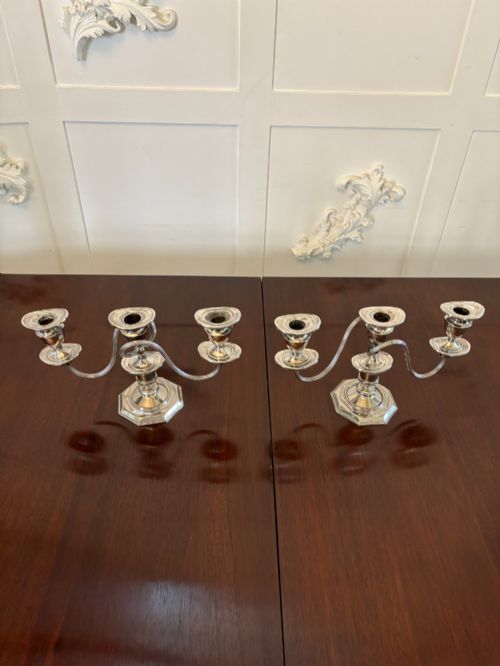
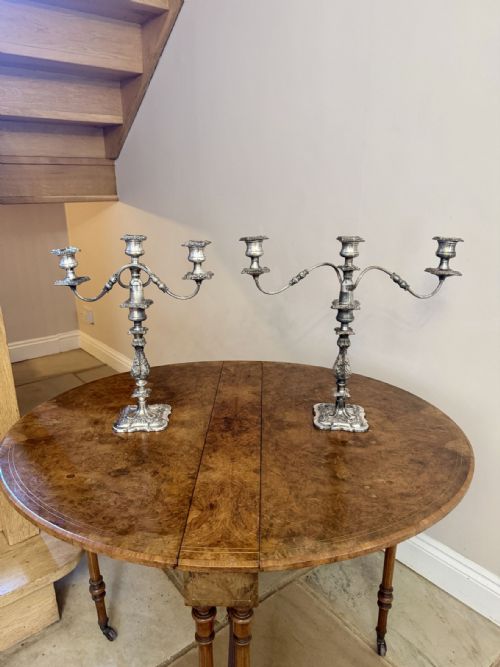
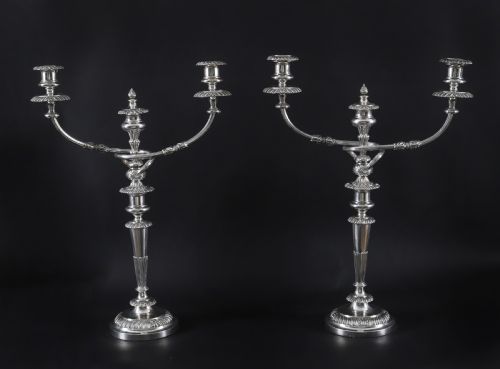
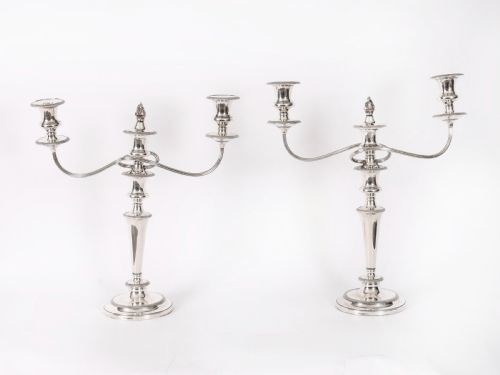
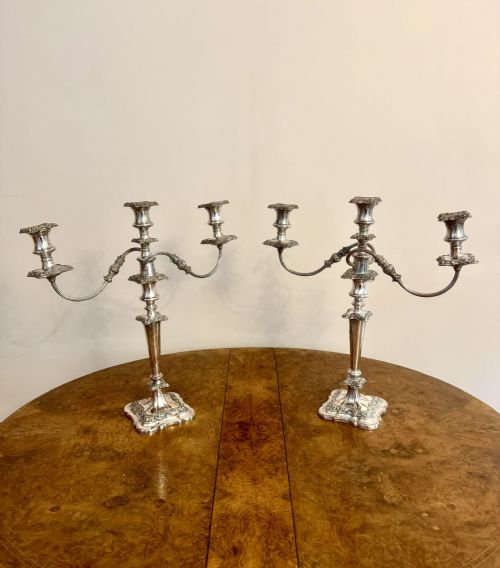
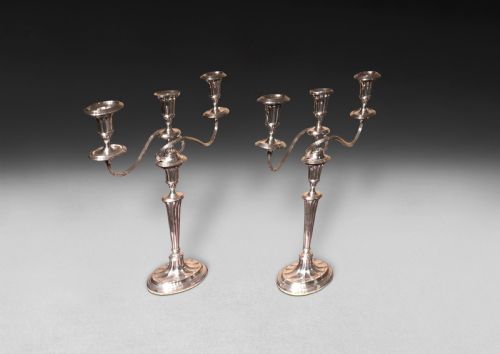
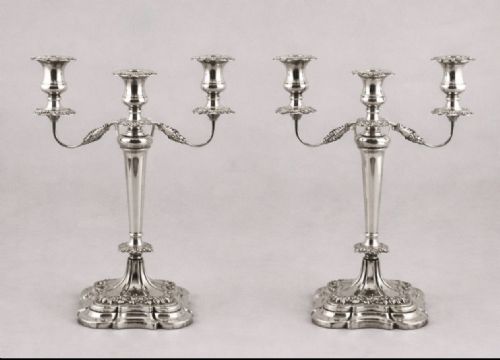
A three branch candlestick pair provides balanced lighting through a central nozzle flanked by two branching arms. These matching pairs originate across several centuries, with Victorian silver plated examples and earlier George III designs appearing frequently on this page.
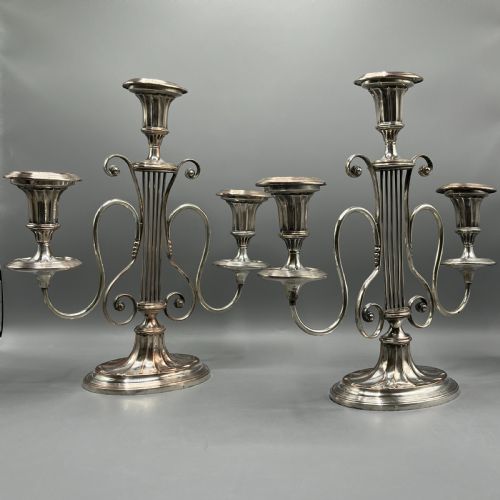
Forms range from classical lyre-shaped Old Sheffield Plate to ornate Rococo Revival gilt bronze and sturdy polished brass. Buyers encounter both traditional candle-burning pairs and later electrified conversions designed for domestic interiors.
Originating from British workshops, continental European foundries and prominent silversmiths, these pairs serve as both functional lighting and decorative focal points for a room.
Materials and Manufacture
Metals form the foundation of these pieces, utilising solid sterling silver, copper fused with silver in Old Sheffield Plate, and durable electroplated nickel silver. Brass and bronze provide robust alternatives, often enriched with fire gilding or polished finishes.
Casting techniques shape the detailed scrollwork, floral motifs and figural elements such as cherubs found on nineteenth-century examples. Silversmiths and metalworkers assembled the weighted circular bases, stems and detachable nozzle branches by soldering and mechanical fitting.
Three Branch Candlestick Pair Retail Price Guide 2026
Typical asking prices for three branch candlestick pair among the pieces listed under this phrase on Sellingantiques today, from the lower quarter to the upper quarter. They describe what is for sale here now, not the wider market.
Listings span periods from the 18th century through the 1930s, featuring materials from raw copper and brass to sterling silver.
Assessing Quality
Quality rests in the crispness of the casting and the proportion of the branches relative to the base. Finer examples retain sharp detail in high-relief chasing and possess heavy, stable foundations without distortion in the arms.
The integrity of the surface coating distinguishes superior pieces, whether through the preservation of original silver plating, genuine Old Sheffield Plate copper show-through, or the rich patina developed on unlacquered bronze and brass over generations.
Garrard & Co·Matthew Boulton·Wm. Tonks & Sons·Blagden, Hodgson & Co.
The Three Branch Candlestick Pair Glossary
- Old Sheffield Plate
- A method of fusing a thin sheet of sterling silver to a thicker copper base before rolling and shaping. This technique creates items with the appearance of solid silver but distinct wear characteristics.
- Gilt Bronze
- Bronze metal treated with a fine layer of gold, often via mercury gilding in nineteenth-century French pieces. This finish offers a durable golden lustre that resists tarnishing.
- Rococo Revival
- A nineteenth-century design movement favouring asymmetrical scrollwork, C-scrolls, and naturalistic floral ornamentation. It draws inspiration from the eighteenth-century French Rococo style.
- Regency
- A British design period spanning the early nineteenth century defined by neoclassical restraint, architectural lines, and classical motifs such as lyres and fluting.
- Nozzle
- The upper cup-shaped socket designed to hold a taper or candle firmly in place. These components are frequently detachable for cleaning wax residue.
Three Branch Candlestick Pair: Frequently Asked Questions
How do I clean silver plated candelabra?
Clean silver plated surfaces gently with a soft microfibre cloth and a specialist silver cream formulated to protect thin plating layers. Avoid harsh chemical dips that strip away remaining silver.
Polish sparingly in the direction of the metal grain, and keep moisture away from weighted felt bases to prevent internal corrosion.
Can electric candelabra be reverted to candles?
Reversion depends on whether the original wiring required drilling through the central stem or sockets. Many conversions use existing apertures without structural alteration, allowing the removal of lamp cord assemblies.
Consult a qualified electrician to inspect internal wiring paths before attempting any mechanical changes to vintage lighting.
How do I date an antique candelabra pair?
Dating relies on stylistic markers such as neoclassical urn shapes for Georgian pieces or heavy floral casting for Victorian examples. Makers' marks, registry stamps, and base construction methods provide additional chronological context.
Examining the manufacturing seams and wear patterns helps distinguish nineteenth-century production from later revivals.