
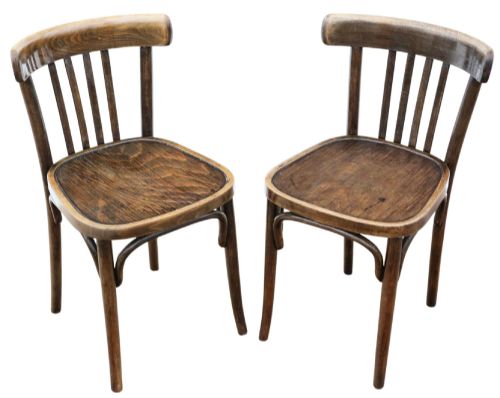
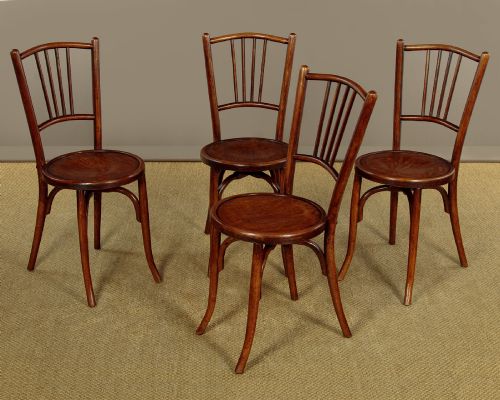
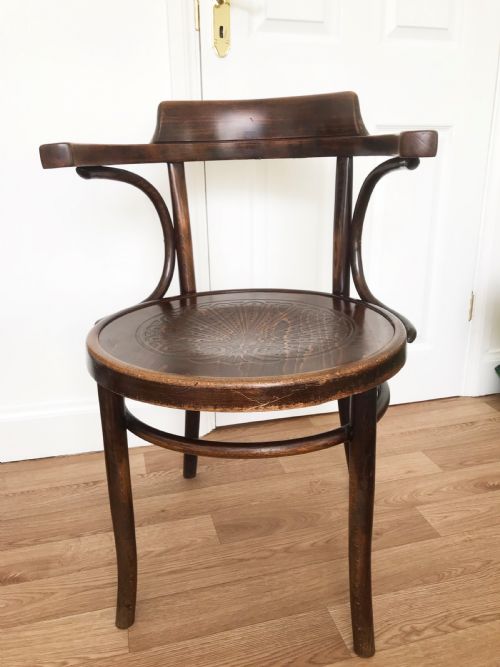

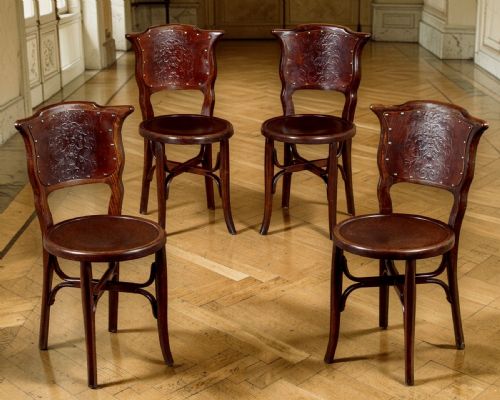

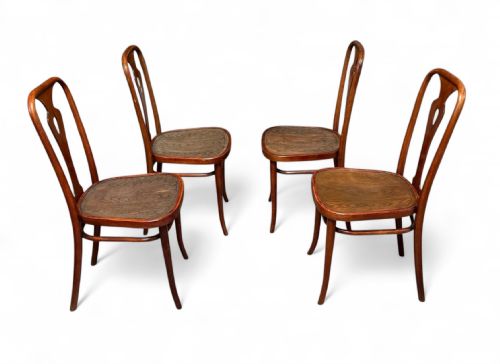


Thonet Dining Chairs
Thonet dining chairs are steam-bent wooden seats built for bistros and cafes, offering light curves and reliable strength.
Thonet Dining Chairs
Thonet dining chairs are practical wooden seats designed for commercial and domestic use, frequently found as sets of bistro chairs from the late Victorian period up to the mid-century. When searching for thonet dining chairs, buyers encounter various configurations including carvers, armchairs, and standard dining chairs suited for everyday seating.
The pieces originating from this selection span several decades, notably the nineteen hundreds, nineteen tens, and nineteen twenties, alongside later nineteen sixties examples. Forms range from simple hoop-back kitchen chairs to grotto style carvers and matched sets originating from notable locations like the Cafe Royal in London.
Makers and associated firms represented in the archive include prominent bentwood manufacturers and related workshops such as Codina, Fischel, and J & J Kohn. These chairs combine utilitarian function with distinct stylistic influences including art nouveau, Edwardian design, and mid-century bentwood production.
How they were made
The construction relies on solid beech and beechwood subjected to steam to render the timber pliable for bending into sweeping curves. This technique forms the iconic rounded backs and structural frames characteristic of bentwood furniture.
Secondary materials such as plywood, embossed plywood, cane, and occasional brass studs provide seats and structural reinforcement. Stained wood finishes protect the timber while highlighting the natural grain of the beech.
Several chairs preserve the lively bustle of historic cafes, having survived decades of diners leaning back.
What varies in quality
Quality in these chairs lies in the complexity of the steam-bent components and the crispness of any embossed seat detailing. Examples featuring intricate multi-ply embossing or refined carver arms demonstrate a higher degree of workshop execution.
The integrity of the original bentwood joins and the matching consistency across larger sets dictate the desirability of the grouping. Sets retaining uniform maker markings and cohesive timber patination stand apart from mixed or heavily restored assemblies.
Thonet·Codina·J & J Kohn·Fischel
The Thonet Dining Chairs Glossary
- Bentwood
- Wood that has been heated with steam and manually curved into structural forms. This method defines the primary framework of these seats.
- Hoop back
- A continuous curved wooden piece forming the backrest and arm support of a chair. This design distributes weight evenly across the frame.
- Embossed plywood
- Plywood pressed with a decorative pattern using metal dies under pressure. It provides textured detail to wooden seats.
- Carver
- An armchair designed with armrests, traditionally placed at the head of a dining table. These offer additional support compared to standard dining chairs.
- Bistro chair
- A lightweight, sturdy chair created for commercial cafe and restaurant use. They stack easily and withstand heavy daily wear.
Thonet Dining Chairs: Frequently Asked Questions
How do I clean bentwood chairs?
Dust the curved wooden frames regularly with a dry cloth to prevent dirt accumulation in the crevices.
Avoid excessive moisture and harsh chemical cleaners to protect the original stained wood finish.
Can I mix different bentwood sets?
Matched sets offer a uniform look around a dining table, but paired styles provide flexibility.
Pay attention to seat height and wood tone to ensure visual harmony when combining different chairs.
Are these chairs suitable for daily use?
These seats were originally built for heavy commercial service in cafes and bistros, proving their structural durability.
Their lightweight construction makes them easy to move around a modern dining space.
How do I date a bentwood chair?
Examine the construction methods, screw types, and any maker stamps or paper labels underneath the seat.
Stylistic markers such as art nouveau curves or later mid-century proportions also help narrow down the production era.