



Thonet Bistro Chairs
Thonet bistro chairs are robust bentwood seats designed for European café culture, offering timeless lightness and organic curves that suit both modern and traditional interiors.
Thonet Bistro Chairs
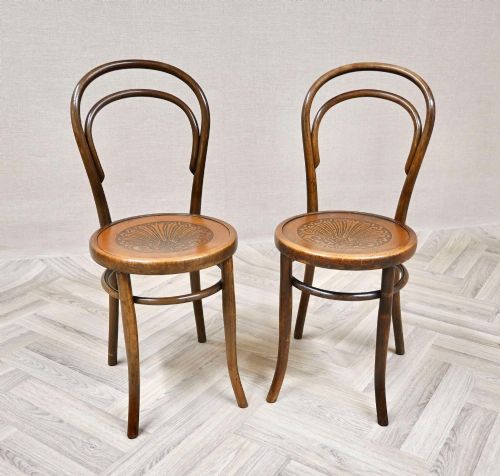
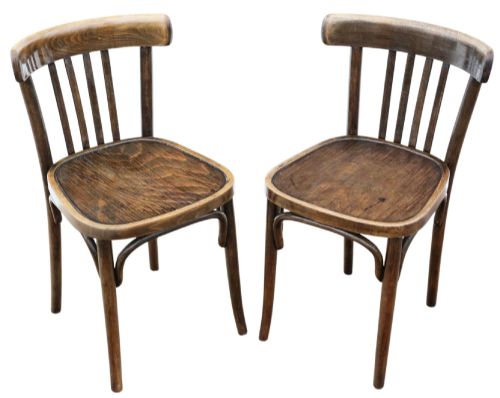
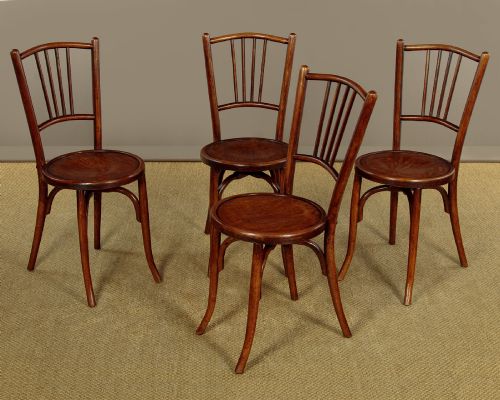
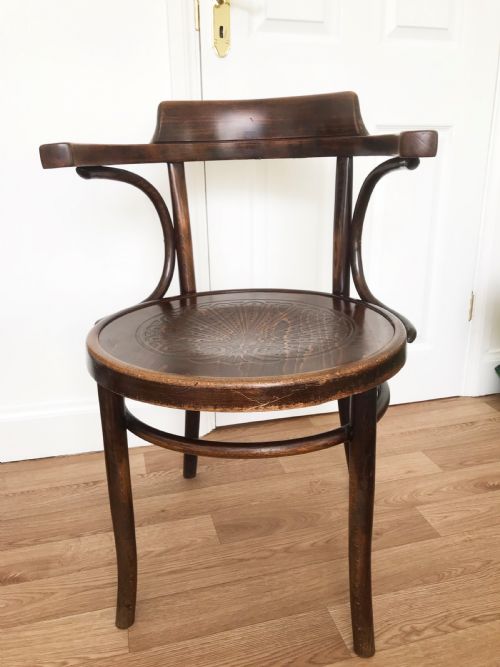
Thonet bistro chairs are iconic seating forms primarily encountered as dining chairs and armchairs, though occasional children's chairs and carvers also appear. These pieces span multiple decades from the Victorian and Edwardian eras through to the mid-century period, reflecting continuous production across Europe.
Buyers seeking these chairs will most frequently find examples originating from around nineteen hundred up to the nineteen twenties. The inventory includes matched sets, pairs, and individual pieces sourced from notable locations such as the Cafe Royal in London.
The aesthetic merges functional utility with the fluid lines characteristic of the European bistro style and Art Nouveau periods. Whether configured as standard side chairs or desk chairs, each piece retains the characteristic lightweight silhouette developed for bustling hospitality environments.
How they were made
The construction relies fundamentally on solid timber, predominantly beech and beechwood, which is subjected to steam-bending techniques to achieve continuous curved frames. This method allows straight lengths of wood to form the graceful backrests and rear legs without weak joints.
Plywood and embossed plywood are frequently employed for seat panels, often featuring pressed decorative patterns that add texture to the central surface. Alternatively, woven cane provides a flexible and breathable seating base on specific models like children's chairs.
Thonet Bistro Chairs Retail Price Guide 2026
Typical asking prices for thonet bistro chairs among the pieces listed under this phrase on Sellingantiques today, from the lower quarter to the upper quarter. They describe what is for sale here now, not the wider market.
Listings feature beech and bentwood materials spanning the Victorian era through to the nineteen sixties.
What varies in quality
The distinction between standard commercial output and superior examples often lies in the crispness of the steam-bent sections and the depth of the embossed details on the plywood seats. Makers who maintained rigorous standards achieved tighter curves and cleaner structural junctions.
The integrity of the timber species and the precision of the original joints dictate the overall resilience of the frame over decades of daily use. Cohesion within larger sets also influences desirability, as matched groups originating from specific historical venues command greater architectural interest.
Codina·Thonet·J and J Kohn
The Thonet Bistro Chairs Glossary
- Bentwood
- Timber shaped by exposure to steam and pressure into permanent curves. This technique forms the primary structural frames of these chairs.
- Embossed plywood
- Manufactured wood pressed with a patterned metal die while warm. This process creates decorative surface reliefs on the seat bases.
- Cane
- Woven rattan material used to form flexible seating panels. It offers a lightweight and breathable alternative to solid wood.
- Carver
- An armchair featuring arms integrated into the backrest design. These pieces provide additional support around a dining or desk table.
Thonet Bistro Chairs: Frequently Asked Questions
How do I date these chairs?
Dating relies on construction methods, manufacturer stamps, and stylistic cues associated with periods like the Edwardian era or the nineteen twenties. Examining the complexity of the bentwood framing and seat embossing helps narrow the timeframe.
Early pieces often feature distinct maker marks pressed into the underside of the seat frame. Comparing these details with known production eras provides a reliable chronological placement.
Are these chairs comfortable for daily dining?
Designed originally for bustling European cafes, these seats prioritise lightweight agility and supportive curved backrests. Most users find them well-suited for regular dining use.
Some models feature shaped plywood seats or woven cane bases that offer natural give. Adding loose cushions can further enhance comfort for extended sitting.
Can I mix different sets around a table?
Combining various styles of bentwood seating creates a layered, eclectic aesthetic common in traditional European bistros. Similar wood tones help unify mismatched groups.
Matching heights and seat proportions ensures everyone sits comfortably at the same table level. Cohesion in material often matters more than strict uniformity in design.
How do I care for stained wood finishes?
Maintaining the timber surface requires simple dusting with a soft cloth and occasional treatment with appropriate wood balms. Avoiding excessive moisture protects the bentwood joints.
Kept away from direct heat sources and dramatic humidity shifts, the original stained wood and polished finishes retain their natural lustre over time.