



Thonet Bentwood Furniture
Thonet bentwood furniture combines steam-bent beech and inventive joinery to create remarkably light, resilient domestic seating and stands.
Thonet Bentwood Furniture
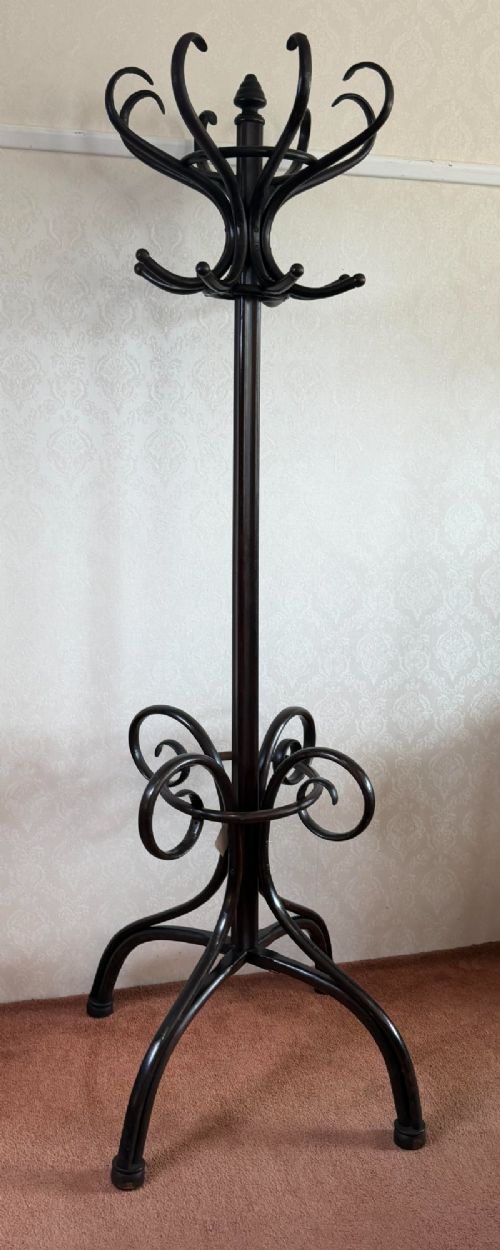
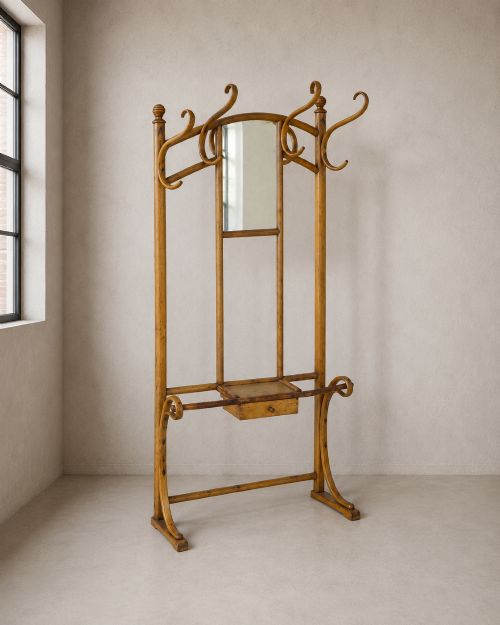
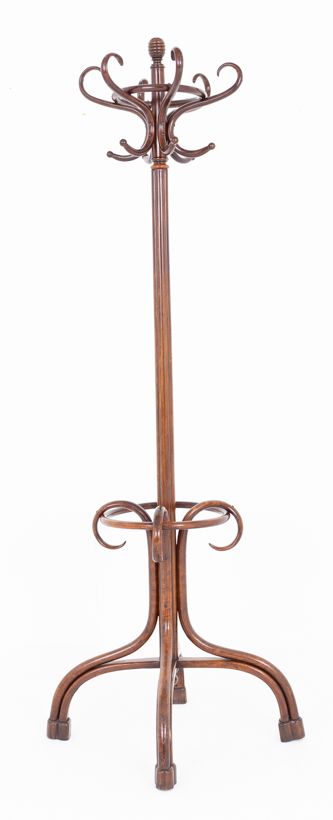
Thonet bentwood furniture encompasses domestic pieces produced across the Victorian, Edwardian and early twentieth century periods, featuring prominent examples from around 1890 to 1920. Buyers searching for thonet bentwood furniture typically encounter practical everyday forms such as coat stands, hall stands, bistro chairs, card tables and footstools. These items reflect an industrial shift towards mass production while maintaining sculptural curved silhouettes suitable for period interiors.
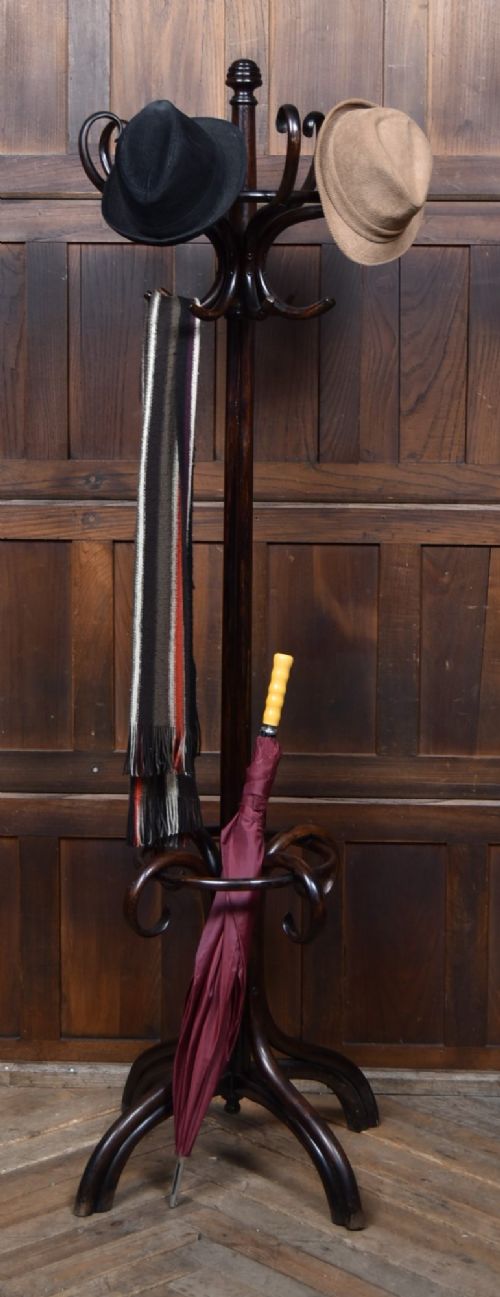
The selection on this page relies heavily on utilitarian items intended for hallways and reception rooms, dominated by tall hall stands and coat stands with multiple hanging hooks. Alongside these vertical stands appear occasional armchairs, rocking chairs, console tables and games tables styled in Austrian bentwood and Art Nouveau designs. Beechwood and bentwood dominate the physical evidence, occasionally supplemented by cane, glass, baize and felt inserts.
Originating largely from the late nineteenth century and progressing through the Edwardian era into the 1920s, these pieces represent an era of pioneering steam-bending techniques. Makers utilised solid timber manipulated under heat and moisture to eliminate heavy traditional joinery, resulting in sturdy yet airy frameworks. The surviving inventory demonstrates how domestic spaces utilised these modular items for everyday convenience.
How they were made
Production centres on the use of beech and beechwood, selected for its ability to accept steam and retain rigidity once curved. Steam softening allowed long rods of solid timber to bend sharply along metal straps without fracturing the grain.
Component parts joined securely through precision-turned screws and internal threaded connections rather than bulky mortise joints. Surfaces often received simple polish or honey-coloured finishes to accentuate the natural grain of the bent wood.
Thonet Bentwood Furniture Retail Price Guide 2026
Typical asking prices for thonet bentwood furniture among the pieces listed under this phrase on Sellingantiques today, from the lower quarter to the upper quarter. They describe what is for sale here now, not the wider market.
A child's rocking chair sits quietly ready for a doll, proving that even nineteenth-century steam benders understood the power of miniature proportions.
What varies in quality
Distinctions in quality often rest on the complexity of the frame, such as double-top constructions on coat stands or intricate grotto styling on carver chairs. Pieces bearing maker labels or specific manufacturer attribution demonstrate higher factory execution.
The integrity of the bent components and the retention of original supporting elements, such as original bergere cane work or specialised console tops, distinguish superior examples from standard production items.
Thonet·Fischel
The Thonet Bentwood Furniture Glossary
- Bentwood
- Wood shaped by applying steam and moisture to timber until pliable enough to bend into curves. This process defined the structural innovations of late nineteenth-century seating and stands.
- Bergere
- A woven cane panel used for seats or inserts. It provides a lightweight, flexible surface commonly found on period stools and chairs.
- Baize
- A coarse woollen fabric used to line the surfaces of games and card tables. It offers a soft, protective playing field for cards and dice.
- Grotto
- A decorative style featuring organic, shell or cave-like motifs applied to wooden frames. It appears on specialised early twentieth-century carver chairs within this selection.
- Carver
- An armchair traditionally placed at the head of a dining table or utilised as a standalone salon seat. These versions incorporate steam-bent structural members.
Thonet Bentwood Furniture: Frequently Asked Questions
How do I identify a genuine Thonet piece?
Authentic items frequently feature impressed factory signatures, paper labels or specific model numbers stamped into the wooden framework. Examining the execution of the steam-bent joins and screw fittings also helps confirm period production.
Makers such as Thonet and Fischel utilised characteristic construction methods involving standardised replaceable components and precise curved assemblies. Comparing the piece against documented nineteenth and early twentieth-century catalogue forms provides further confirmation.
Can I use a bentwood hall stand daily?
These vertical stands were specifically engineered for daily domestic utility in Victorian and Edwardian hallways, holding heavy coats and hats with ease. Their wall-standing or weighted designs provide the necessary stability for everyday household use.
Care should be taken not to overload single hooks beyond their intended capacity to preserve the integrity of the steam-bent timber. Regular dusting and occasional wax maintenance will keep the beechwood finish secure.
What is a gout stool?
A gout stool is an adjustable footrest designed to elevate legs for comfort, often featuring upholstered pads or woven cane panels. Period examples frequently utilise bentwood frames to achieve a lightweight, portable profile.
These pieces allowed users to adjust the angle of support while sitting in armchairs or parlour chairs. Their compact construction made them easy to reposition around the room as needed.
How should I care for bentwood furniture?
Maintain the wood by keeping pieces away from direct heat sources and excessive moisture swings that can stress the steam-bent joints. Gentle cleaning with a soft cloth preserves the original polish and honey-coloured tones.
Avoid applying harsh chemical sprays or soaking cane inserts with water during routine cleaning. Checking and gently tightening structural screws periodically ensures the frame remains stable.