


Thames River Bridge Artwork
These thames river bridge artwork pieces capture centuries of London span and shipping, offering a rich window into the historic waterway for collectors.
Thames River Bridge Artwork
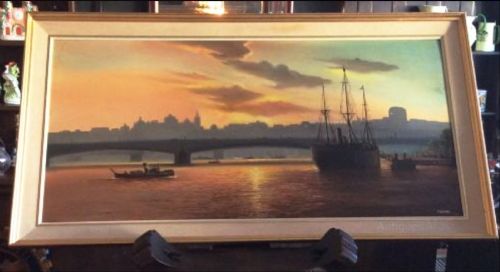
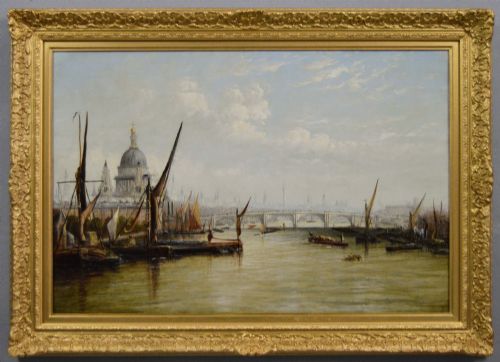
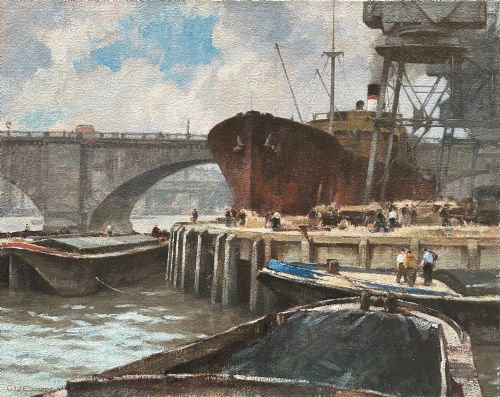
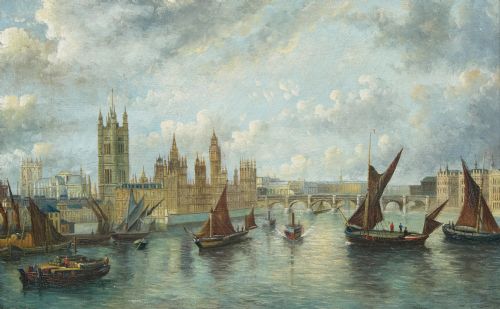
When you search for thames river bridge artwork, you encounter a focused selection of fine art and prints that record the capital's historic spans across varied periods. The pieces on this page span from Victorian and Edwardian works through to mid-century modern interpretations, documenting landmarks like Waterloo, Blackfriars, London, Charing Cross, Westminster, and Tower Bridge.
The visual forms include oil paintings, delicate watercolours, drypoint etchings, and framed coloured prints. These works range from panoramic marine seascapes and busy townscapes with shipping traffic to detailed topographical studies.
You are most likely to meet Victorian watercolours and oils alongside twentieth-century prints and paintings, reflecting both professional artistry and topographical record-making. Each item brings a distinct perspective on the river, capturing changing architectural details and atmospheric conditions along the Thames.
Materials and methods
Artists working on these river scenes relied primarily on oil on canvas, watercolour on paper, and various printmaking techniques including etching and drypoint. Oil paintings build rich texture and depth for shipping and water, while watercolours offer transparent washes that capture river light.
Framed works frequently incorporate traditional wooden mouldings, gesso, and occasional gold leaf details to house and protect the paper and canvas surfaces. Etchings and prints utilise inked plates pressed onto quality paper stocks to produce fine topographical lines.
The physical support structures range from canvas stretched over wooden frames to heavy art paper and card for watercolours and prints. These materials reflect standard studio practices of the nineteenth and twentieth centuries.
Several views record London fog so thick you can almost smell the coal smoke hanging over the Thames.
Factors that distinguish the work
The distinction between standard topographical views and superior pieces rests on the artist's handling of light, atmospheric perspective, and bustling river activity. Stronger compositions capture the dynamic interplay of shipping, smoke, and architecture rather than relying on stiff architectural documentation.
Material preservation significantly shapes the standing of each piece, particularly regarding the vibrancy of watercolour pigments, the stability of canvas grounds, and the clarity of printed lines. Skilled framing and paper conservation maintain the original tonal balance intended by the maker.
Francis Moltino·Cyril Walduck Edwards·John Macvicar Anderson·Jack Merriott·Harold E Frecker·Edgar J Maybery·William A Macdonald·Carleton Grant·Herbert John Finn·Edward Fletcher·Frank William Scarbrough·Edward Seago
The Thames River Bridge Artwork Glossary
- Topographical watercolour
- A detailed painting focused on accurately recording a specific landscape, building, or bridge view. These works served both artistic and documentary purposes before the dominance of photography.
- Drypoint etching
- A printmaking technique where an artist scratches a design directly into a metal plate with a sharp needle. This process produces characteristically soft, velvety lines due to the displaced metal burr.
- Marine seascape
- A genre of art centred on the sea, ships, and tidal rivers. In these works, maritime traffic and water conditions take precedence over dry land.
- British Impressionism
- A painting style influenced by French movements that prioritises natural light, loose brushwork, and plein-air observation. Practitioners sought to capture transient atmospheric effects on the Thames.
Thames River Bridge Artwork: Frequently Asked Questions
How do I date these river scenes?
Dating relies on identifying architectural changes to the bridges, the clothing of figures on the banks, and the types of vessels on the water. Signatures, inscriptions, and framing materials also provide vital clues.
Comparison with documented works by known artists helps narrow down the decade of creation.
Where should I hang watercolour art?
Watercolours require placement away from direct sunlight to prevent the fading of delicate pigments on paper. Stable indoor humidity protects both the paper support and the surrounding mount.
Using UV-filtering glass during framing offers an extra layer of protection for light-sensitive works.
What distinguishes an etching from a painting?
An etching is a printed multiple created by pressing an inked metal plate onto paper, showing fine linear detail and plate marks. A painting is a unique, handmade creation using wet media like oil or watercolour.
Close inspection under magnification reveals the flat ink layers of prints versus the built-up brushstrokes of paint.
How were these bridge artworks used?
Many began as studio pieces intended for exhibition, domestic decoration, or portfolio collection by middle-class patrons. Prints and watercolours allowed urban buyers to display familiar London landmarks in their homes.
Commissioned topographical views also served to document rapidly changing industrial riverfronts.