


London River Painting
A london river painting captures the maritime energy, historic bridges, and bustling commerce of the Thames across centuries of artistic interpretation.
London River Painting
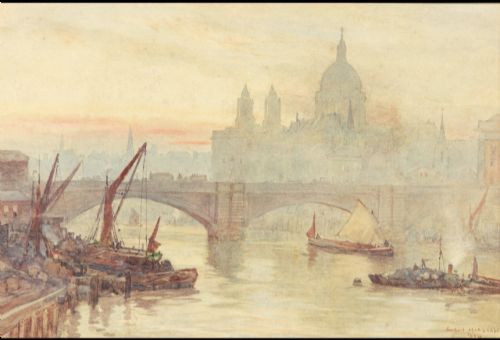
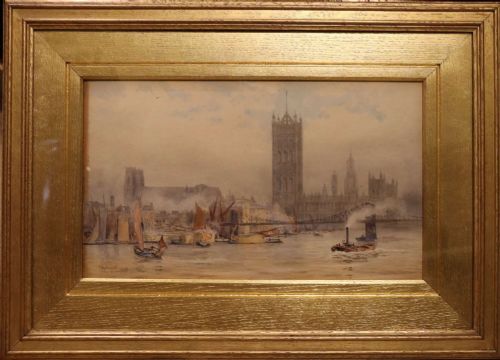
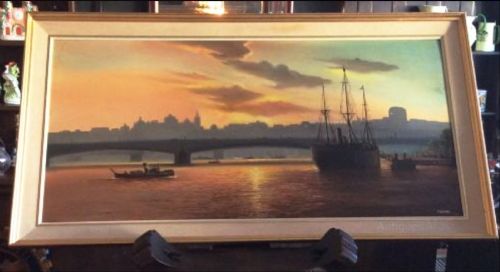
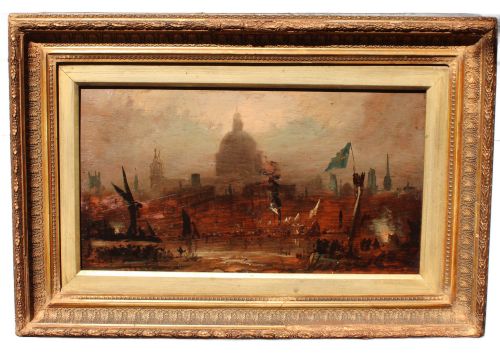
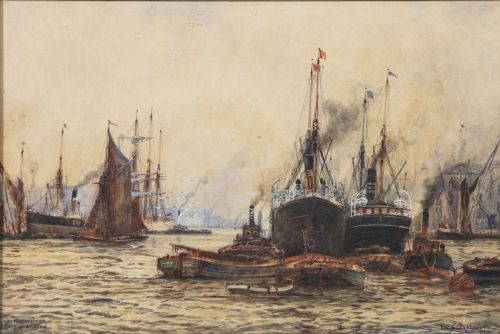
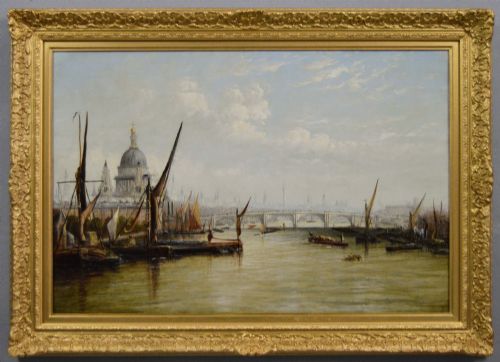
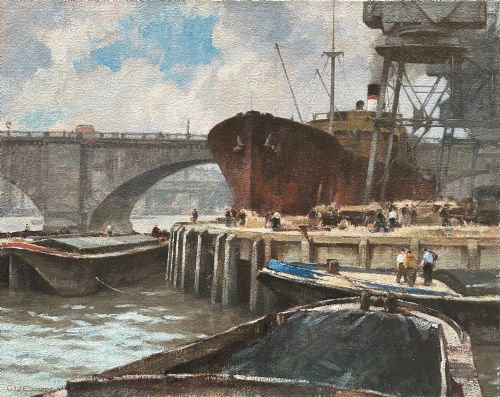
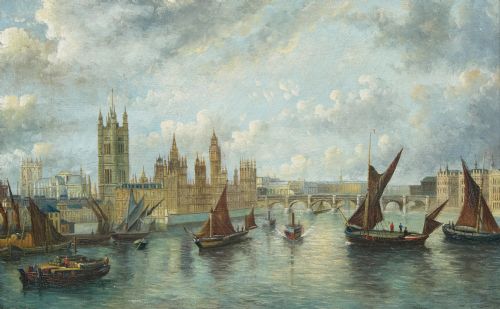
A london river painting depicts scenes along the Thames, ranging from bustling city bridges to industrial pools and historic processions.
Buyers encounter works stretching from the early nineteenth century through the Edwardian era and into the mid-twentieth century.
Common artistic subjects include the Houses of Parliament, St Paul's Cathedral, Tower Bridge, and various working river craft like Thames barges and tug boats.
Materials and techniques
Artists record these urban waterways primarily using watercolour on paper or oil on canvas, often framed in wood with gold leaf accents.
Watercolour works capture the atmospheric haze and atmospheric light of the capital, while oil paintings build texture through layered pigments on canvas or board.
Periods represented span from the early 1800s through Victorian, Edwardian, and mid-20th-century movements.
Judging quality in maritime works
Quality rests upon the artist's ability to render accurate topography alongside the shifting light and atmospheric conditions of the capital.
Stronger examples display confident brushwork or precise watercolour handling that brings the movement of water and shipping traffic to life.
Frank William Scarbrough·Francis Moltino·Edward Fletcher·Walter Duncan·Jack Merriott
The London River Painting Glossary
- Watercolour
- A painting method where fine pigments are suspended in a water-based solution on paper. This medium suits delicate atmospheric effects.
- Oil on Canvas
- A technique utilising pigments bound in drying oils applied to stretched fabric. It provides rich colour depth and durable surface texture.
- Maritime Art
- Works focusing on ships, harbours, and coastal or river scenes. This genre reflects the vital economic importance of waterways.
London River Painting: Frequently Asked Questions
What periods do these paintings cover?
The selection spans from the early nineteenth century through the Victorian and Edwardian periods up to the mid-twentieth century.
Most pieces date between the late Victorian era and the 1950s, capturing the changing industrial landscape of the Thames.
Which landmarks appear most often?
Artists frequently record iconic city structures including the Houses of Parliament, St Paul's Cathedral, and various historic bridges.
Views also encompass the Upper and Lower Pools of London alongside active shipping traffic and Thames barges.
How should I display these artworks?
Framed works on paper require protection from direct sunlight to preserve delicate watercolours against fading over time.
Oil paintings on canvas tolerate ambient interior light well when housed in appropriate wooden or gilded frames.
How do watercolours and oils differ?
Watercolour paintings utilise transparent washes on paper to achieve luminous atmospheric effects and hazy city light.
Oil paintings employ heavier pigments on canvas to build rich textures and deep tonal contrasts across the water.