


Terracotta Wooden Chair
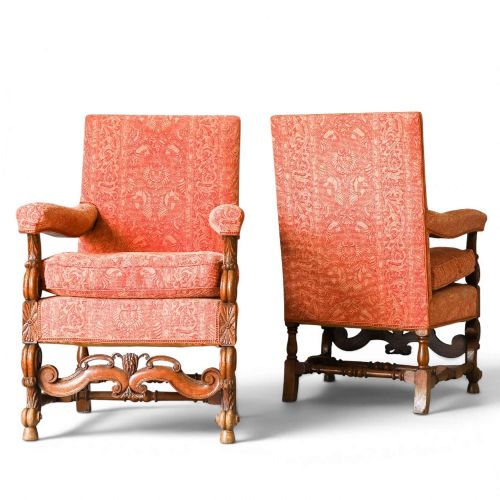
These terracotta wooden chair listings present seating options combining wood frames with terracotta upholstery, a combination of materials found across various periods.
Terracotta Wooden Chair
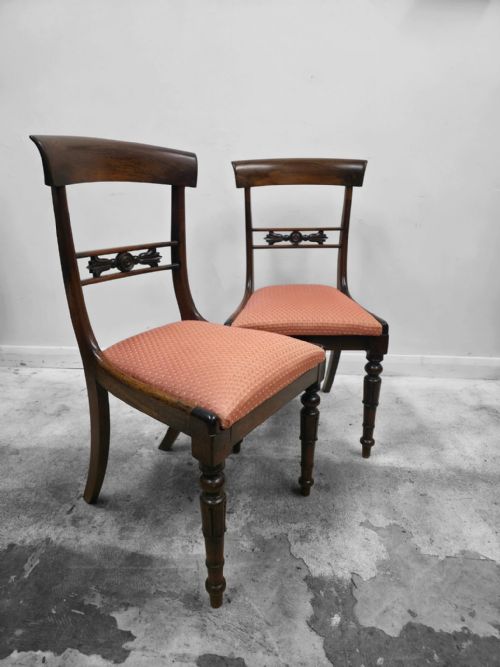
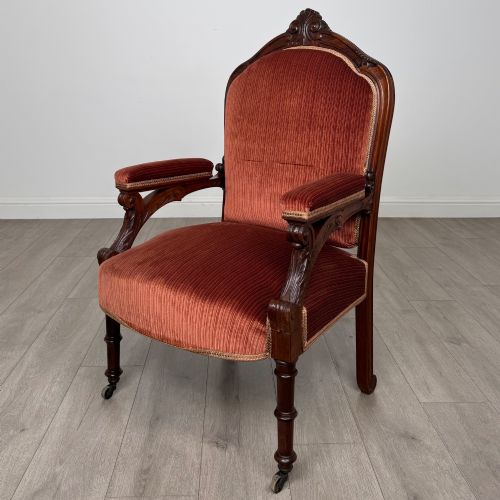
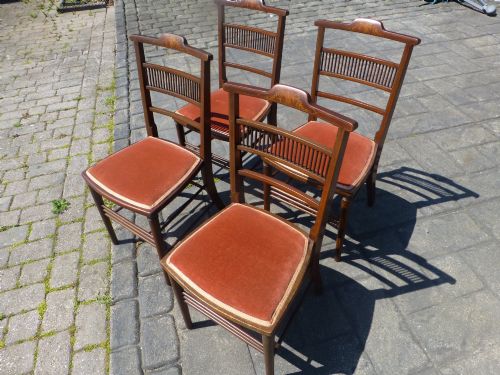
A terracotta wooden chair brings together a timber frame, such as mahogany, oak, walnut, or rosewood, with terracotta-coloured fabric, velvet, or textile upholstery. Buyers seeking a terracotta wooden chair examine forms ranging from armchairs and elbow chairs to side chairs and dining chairs.
The selections span the Victorian, Edwardian, and 19th Century periods, alongside revival styles like French Renaissance, Victorian, Louis XV, Georgian, and Jacobean. Windsor and hall chairs also appear among the offerings, providing diverse seating solutions for different rooms.
How they were made
Frames utilise hardwoods like mahogany, oak, walnut, and rosewood, shaped into turned components, pierced splats, or revival silhouettes. Brass accents sometimes appear alongside the timber structures.
Upholstery incorporates fabric, velvet, and textile materials in terracotta hues, fixed to armchair and dining chair constructions dating from the nineteenth and early twentieth centuries.
Some chairs require sturdy elbows to match their robust revival timber frames.
What varies in quality
Distinctions lie in the execution of timber framing, from plain farmhouse construction to detailed French Renaissance Revival or Jacobean Revival carving. The precision of inlaid details and pierced splat backs differentiates the work.
The choice of primary wood, whether standard oak or fine rosewood and mahogany, shifts the character of the piece. Upholstery finish and the cohesion of revival styles dictate the overall standard.
Morison and Co of Edinburgh
The Terracotta Wooden Chair Glossary
- Pierced splat
- A vertical central strip in a chair back that has been cut through to create a decorative pattern. This design feature appears on nineteenth-century side chairs.
- Elbow chair
- An armchair featuring short arms, often designed for dining or desk use. These pieces accommodate sitters with compact side support.
- Revival style
- A design movement that reinterprets historic aesthetics, such as French Renaissance, Jacobean, or Louis XV. Makers borrow motifs from earlier centuries to suit later tastes.
- Windsor chair
- A traditional wooden seating form characterised by a solid sculpted seat into which the legs and back spindles are wedged. This vernacular form remains distinct from upholstered parlor chairs.
Terracotta Wooden Chair: Frequently Asked Questions
What periods do these chairs represent?
The selection covers pieces from the nineteenth and early twentieth centuries, spanning the Victorian and Edwardian eras. Dates extend from the mid-nineteenth century through to the nineteen-twenties.
Revival movements heavily influence the design vocabulary across these decades. Makers drew upon French Renaissance, Jacobean, and Georgian precedents.
What woods are used in the frames?
Frames are constructed from solid hardwoods including oak, mahogany, walnut, and rosewood. Each timber brings distinct grain patterns and structural properties to the seating.
Lighter woods like oak serve farmhouse styles, while mahogany and rosewood suit more formal revival armchairs and dining suites.
How are the upholstery fabrics described?
Upholstery materials include general fabrics, velvet, and textiles presented in terracotta tones. These soft coverings partner with wood frames on armchairs and dining seats.
The textile elements soften the timber structure while introducing warm reddish-brown colourations to the seating.
Are these chairs sold individually or in sets?
Listings comprise both single items and assembled groups. Sets range from pairs of hall chairs and armchairs to dining sets of four or six.
Individual side chairs and armchairs also feature independently, allowing buyers to select singular accent pieces.