
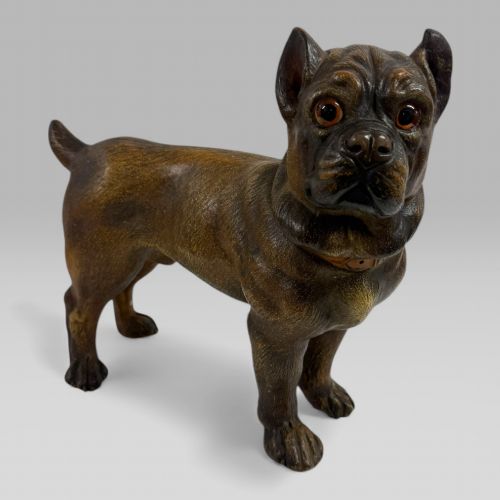


Terracotta Dog Ornament
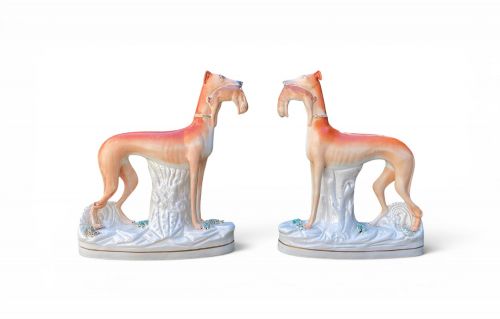
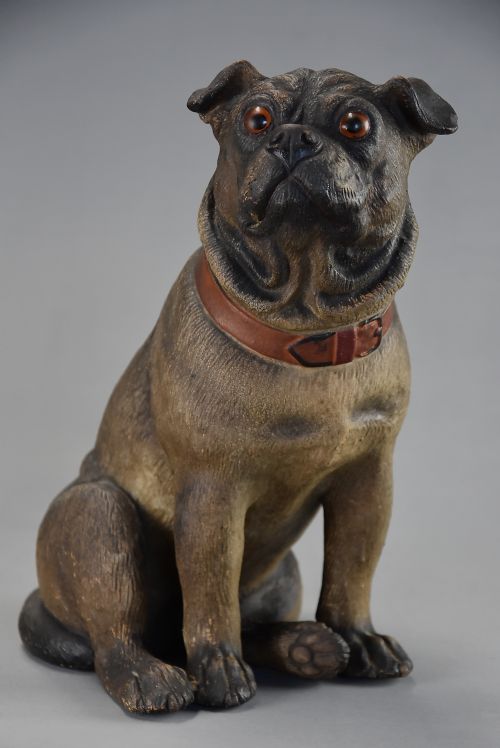
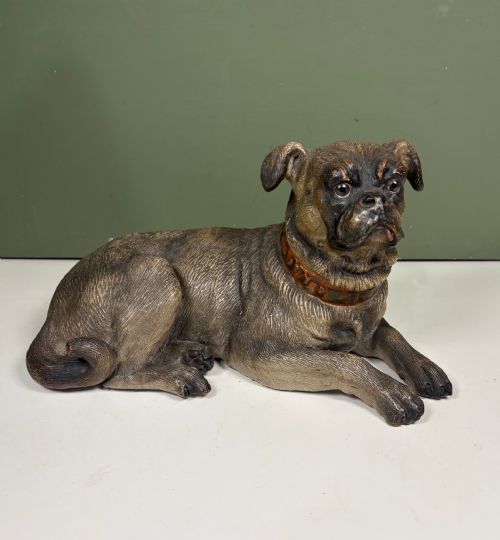
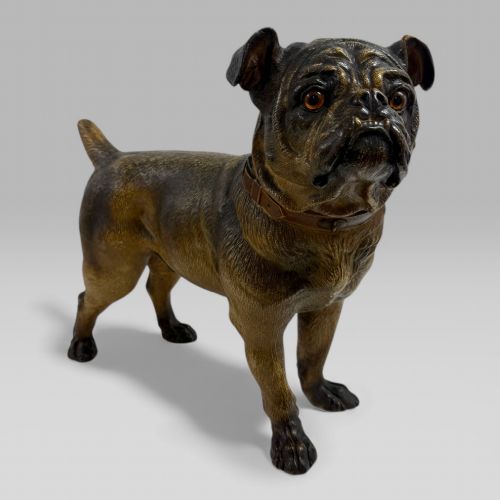
These terracotta dog ornaments are substantial figures spanning the nineteenth and early twentieth centuries, prized for bringing character to a room.
Terracotta Dog Ornament
The objects take many forms, including decorative figurines, desk accessories, quill holders, and monumental life-size sculptures. Alongside British Staffordshire pairs, the listings span French animalier pieces and Chinese temple guard dogs, offering both mantel ornaments and floor-standing figures.
How they were made
These pieces are constructed from earthenware and terracotta, often shaped in moulds before firing. Makers utilised glazes, enamel paint, and occasionally gold leaf to finish the surface details of the animals.
Several makers focused specifically on pugs, capturing the soulful gaze of the breed in full life-size scale.
What varies in quality
The distinction between standard production pieces and superior works lies in the modelling of the form and the precision of the surface decoration. Life-size sculptures and signed animalier examples demonstrate a higher degree of anatomical observation than smaller, mass-produced shelf ornaments.
Thomas Parr·Foucher·Bernard Bloch·Royal Dux
The Terracotta Dog Ornament Glossary
- Terracotta
- A porous, fired red earthenware clay used widely for sculptural figures and ornaments. It is often left unglazed or painted with enamels.
- Animalier
- A nineteenth-century artistic style focusing on the realistic depiction of animals, particularly common in French sculpture. Figures in this style capture creatures in natural or alert postures.
- Staffordshire pottery
- Earthenware figures produced in the Staffordshire potteries, famous for pairs of spaniels, greyhounds, and hunting dogs. These traditional mantel ornaments date primarily to the Victorian era.
- Lead glaze
- A glossy coating applied to ceramic pieces before firing to waterproof the clay and enrich the surface colour. It gives the pottery a smooth, reflective finish.
- Foo Dog
- A traditional Chinese guardian lion sculpture often depicted protecting sacred spaces. These temple figures appear in ceramic forms alongside European canine subjects.
Terracotta Dog Ornament: Frequently Asked Questions
How do I date a terracotta dog ornament?
Dating relies on stylistic clues, the type of clay body, and any signatures or registry marks present on the base. Victorian pieces often exhibit specific Staffordshire modelling conventions, while late nineteenth and early twentieth-century continental works show distinct Austrian or French sculptural traits.
Examining the underside and the wear on the earthenware helps confirm the period. Unglazed terracotta from the 1850s to 1900s displays ageing characteristics unique to its firing era.
Were these figures meant for the garden?
Most terracotta dog ornaments designed in the nineteenth century served as interior decorations, placed on mantelpieces, desks, or hearths. Smaller Staffordshire figures and glazed pugs were strictly indoor household ornaments rather than hardy garden statuary.
Life-size sculptures could stand in hallways or protected vestibules. Placing them outdoors subjects the porous earthenware and painted surfaces to moisture and frost damage.
What is an animalier dog sculpture?
Animalier refers to a nineteenth-century European sculptural movement dedicated to realistic representations of animals. These pieces capture the musculature, posture, and distinct personality of breeds like pugs and alsatians with high anatomical accuracy.
French and Austrian workshops excelled in this style, producing both small decorative figures and imposing life-size sculptures. The focus remained on true-to-life forms rather than stylised decoration.
How should I clean my terracotta ornament?
Dusting gently with a soft, dry brush is the safest method for maintaining unglazed terracotta surfaces. Moisture can soak into porous earthenware and alter painted or gilt details over time.
Glazed pieces tolerate careful wiping with a damp cloth if necessary. Avoiding harsh cleaning agents preserves the original nineteenth-century finish and prevents surface degradation.