
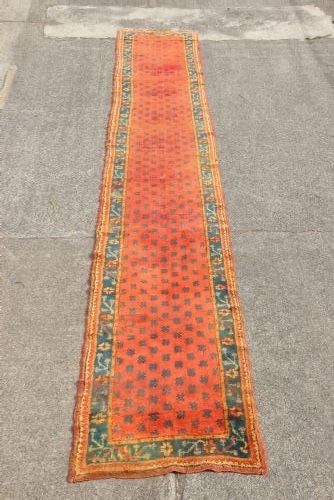
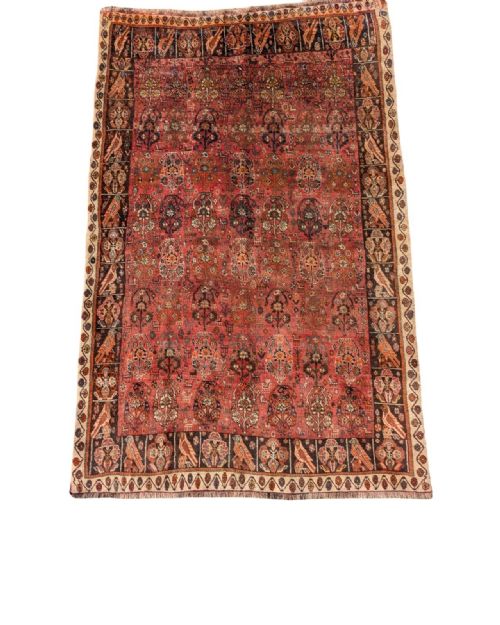
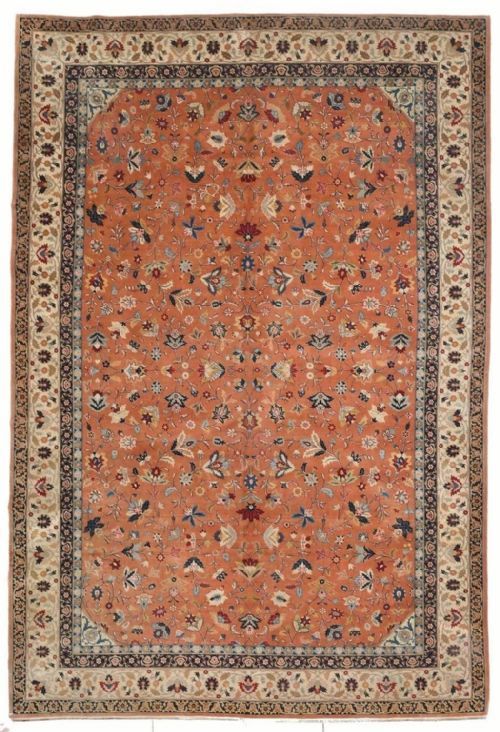
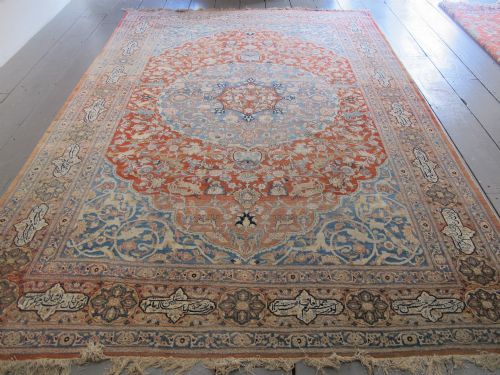


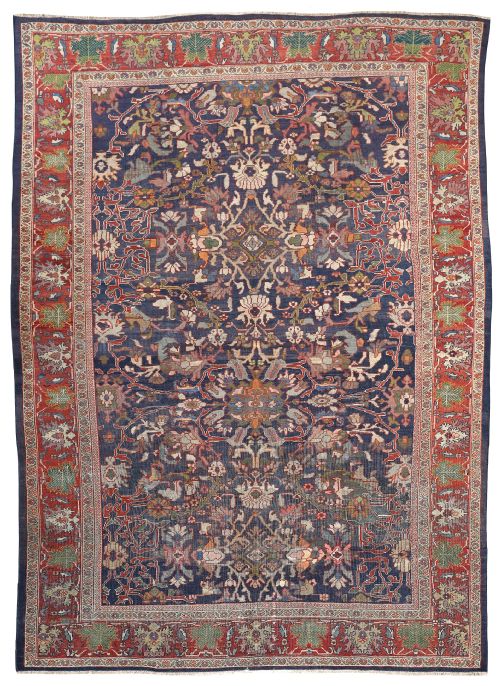
Terracotta Border Oriental Rug
When you search for a terracotta border oriental rug, you are looking for hand-knotted floor coverings spanning the late nineteenth and early twentieth centuries.
Terracotta Border Oriental Rug
A terracotta border oriental rug brings together Persian and Turkish weaving traditions, ranging from room-sized carpets to long runners. The selection spans distinct regional workshops and tribal traditions, dating from the eighteen-seventies through to the nineteen-thirties.
Makers utilised traditional formats including large carpets, square room-sized formats, and narrow gallery runners. These floor coverings display rich terracotta, ivory, and blue grounds framed by distinctive decorative borders.
The material palette consists primarily of wool and cotton, often utilising hand-spun wool for pile construction. Examples emerge from weaving centres such as Heriz, Sultanabad, Ushak, Tabriz, and Khorasan.
Materials and Construction
Weavers constructed these pieces using hand-knotted pile techniques on foundation warp and weft threads. Cotton and wool served as the primary structural materials for foundations and pile.
The utilisation of hand-spun wool provided durability and subtle variations in dye absorption across the surface of each carpet. Natural dyestuffs produced the terracotta tones and secondary palette hues seen in the nineteenth and early twentieth-century examples.
Listings span production dates from the eighteen-seventies through to the nineteen-thirties, featuring regional Persian and Turkish workshop styles.
Distinctions in Quality
Quality depends upon the fineness of the knotting and the precision of the design execution across the field and border. Regional attribution also influences distinction, with specific workshops commanding greater recognition for their palette and drawing.
The condition of the wool pile and the integrity of the foundation threads determine the structural longevity of each carpet. Handling by established makers or specific commercial houses such as Ziegler and Co adds historical context to individual pieces.
Haji Jalili·Ziegler and Co
The Terracotta Border Oriental Rug Glossary
- Terracotta
- A brownish-red earthenware colour used extensively in the borders and fields of these woven pieces. It provides a warm structural frame for central medallions and geometric motifs.
- Warp
- The vertical foundation threads stretched tightly on the loom before knotting begins. Cotton is frequently utilised for this structural grid.
- Weft
- The horizontal threads passed through the warps after each row of knots to secure the pile. These threads bind the foundation together.
- Pile
- The soft, upright surface of a rug formed by the cut ends of knots. Hand-spun wool creates this tactile layer.
- Runner
- A long, narrow carpet format designed for hallways and corridors. Surviving examples often display extended repeating border patterns.
Terracotta Border Oriental Rug: Frequently Asked Questions
Where were these rugs made?
Production took place across established weaving towns and tribal districts in Persia and Turkey, including Heriz, Sultanabad, Ushak, Tabriz, and Khorasan.
Each region developed specific design vocabularies, colour combinations, and knotting structures.
How do I care for an antique rug?
Gentle vacuuming without a rotating brush helps remove embedded dust from the wool pile without damaging the antique foundation threads.
Professional cleaning tailored to antique textiles preserves the natural lanolin in the hand-spun wool and protects the vegetable dyes.
How are different regional styles distinguished?
Distinctions rely on examining the geometric or floral motifs, the composition of the central field, and the specific palette used in the border.
For instance, Heriz carpets often display bold geometric medallions, while Ushak pieces favour softer floral interpretations.