




Tempus Fugit Dial
Tempus fugit dials mark time on grandfather and grandmother clocks, offering classic movement and traditional cabinet work for the home.
Tempus Fugit Dial
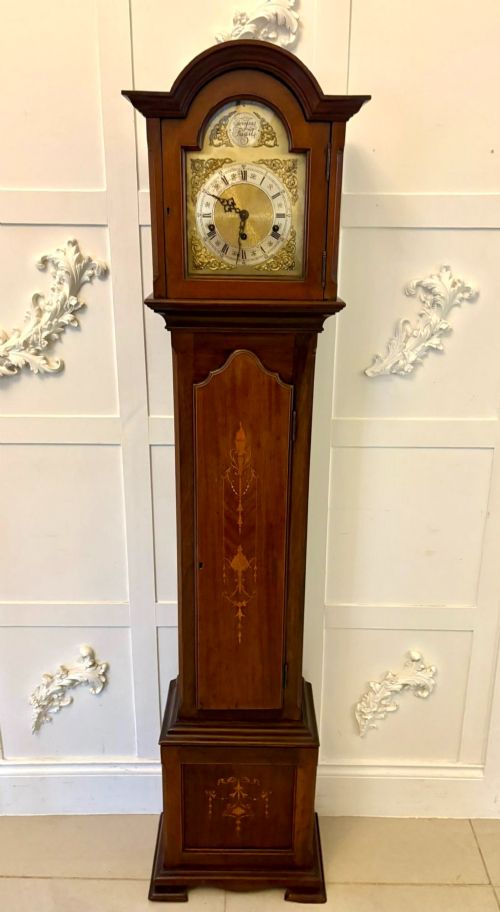
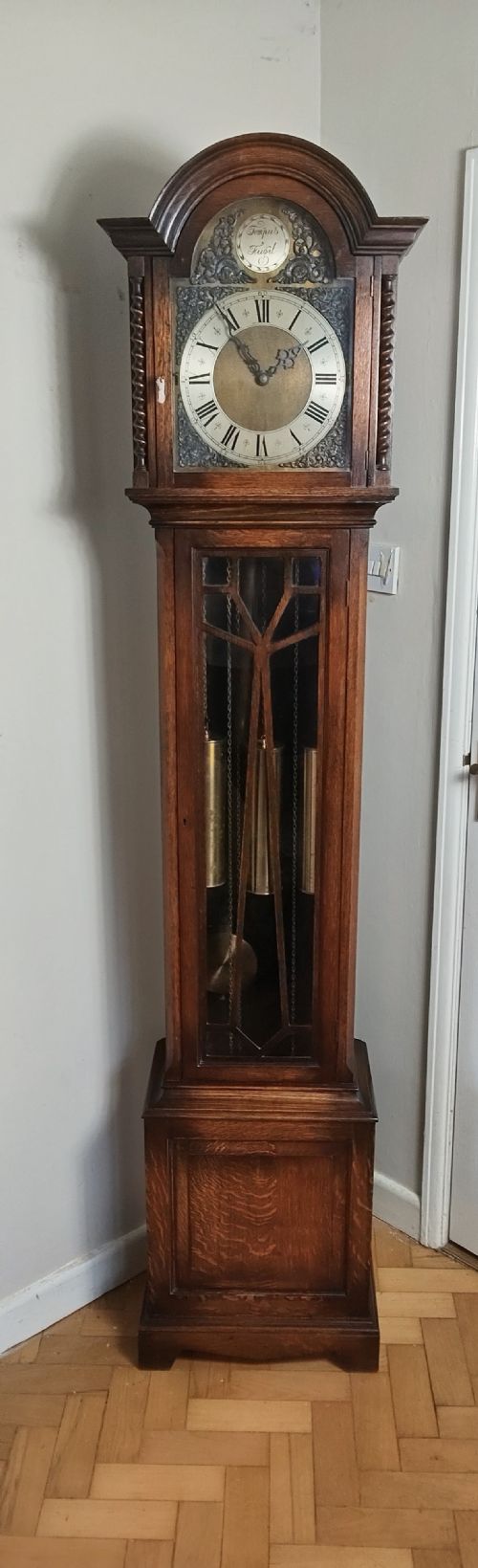
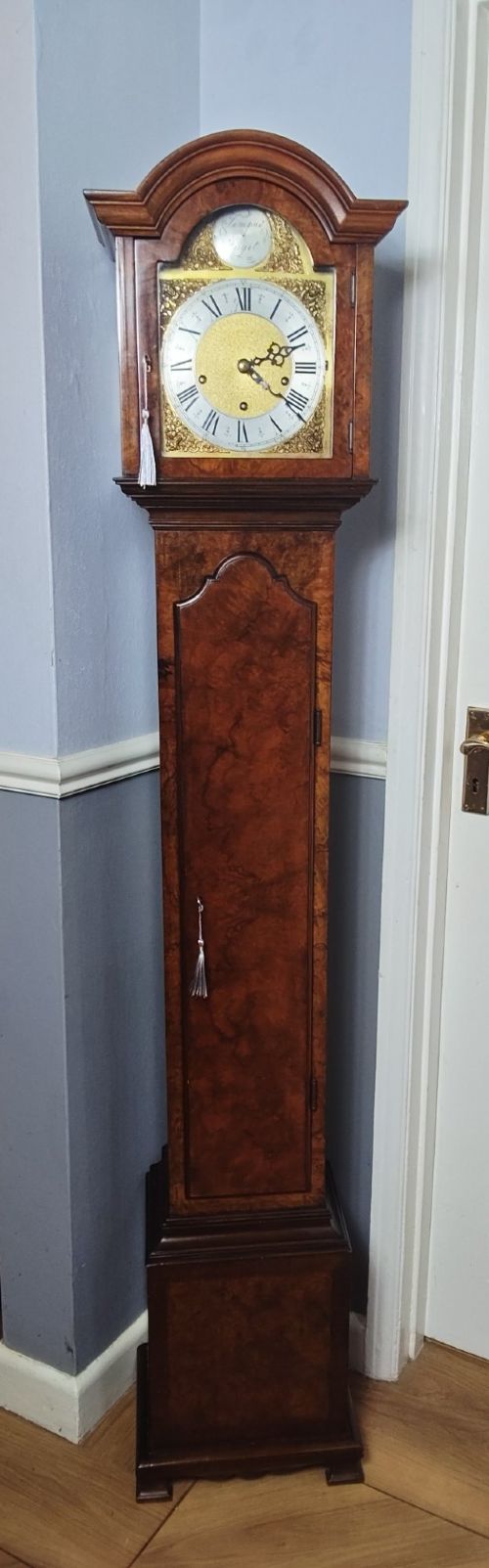
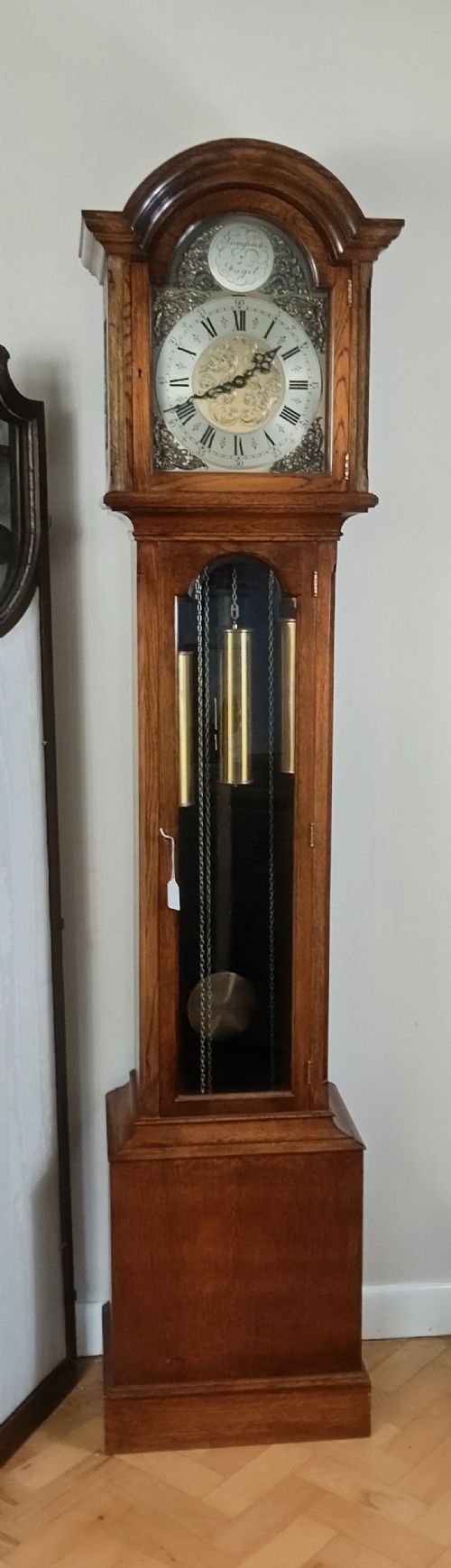
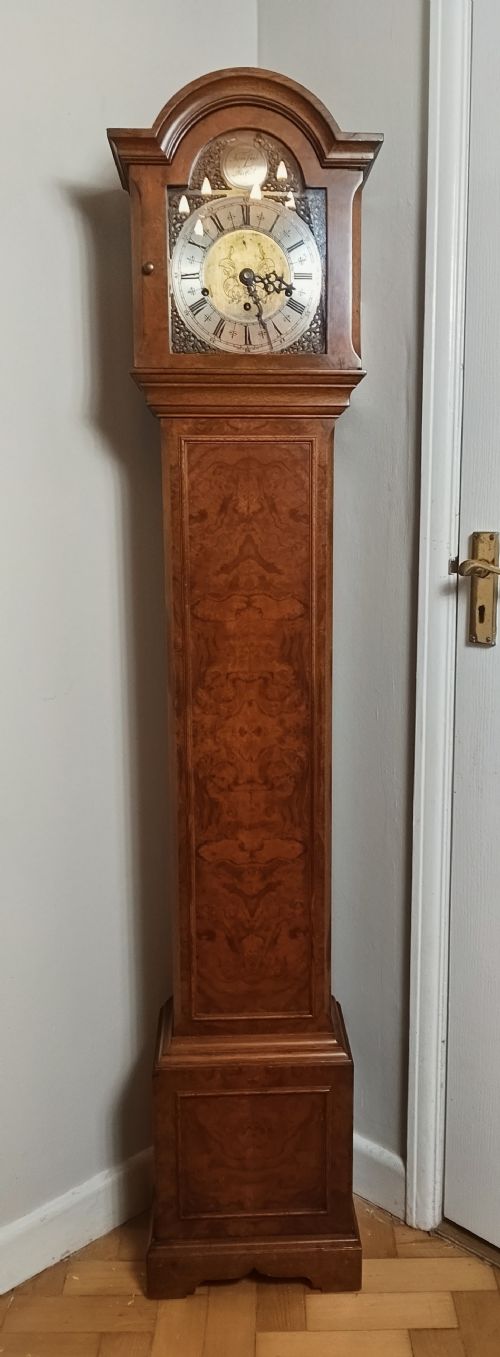
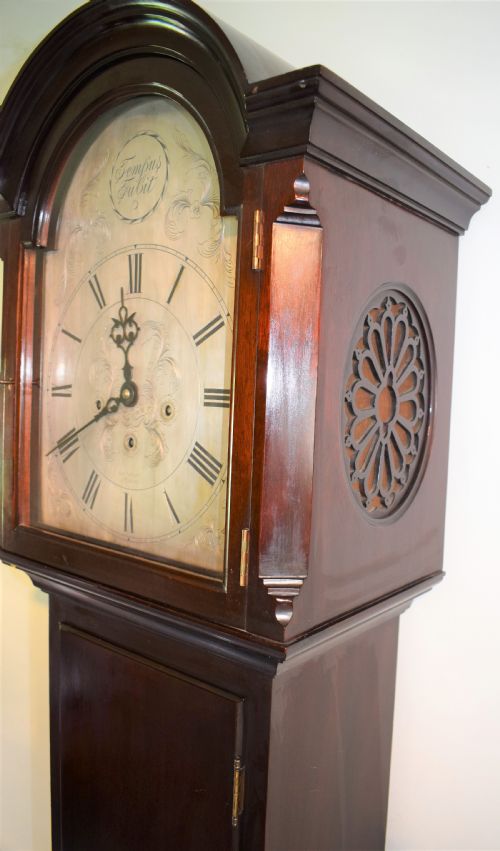
A tempus fugit dial forms the central face of tall case clocks, often inscribed with the Latin phrase meaning time flies. These faces appear primarily on longcase clocks, grandfather clocks, and smaller grandmother clocks found across the inventory.
The pieces span various eras, from mid-Georgian examples through Edwardian revivals to twentieth-century musical models. Buyers most frequently encounter early twentieth-century oak and walnut longcase clocks fitted with chiming mechanisms.
Cabinets range from substantial mahogany and oak floor clocks to slender burr walnut miniatures. Styles incorporate classic revivals including Queen Anne, Jacobean, and Georgian influences alongside Edwardian craftsmanship.
How they were made
Cabinet makers constructed the tall wooden cases using timbers such as mahogany, oak, walnut, burr walnut, and satinwood. Many surfaces feature figured veneers, quarter veneering, or inlaid decoration to accentuate the grain.
Dial faces incorporate brass, steel, and glass components to house the intricate gear trains and chiming movements. Makers housed these mechanisms within floor clocks designed to stand upright in domestic halls and living rooms.
Tempus Fugit Dial Retail Price Guide 2026
Typical asking prices for tempus fugit dial among the pieces listed under this phrase on Sellingantiques today, from the lower quarter to the upper quarter. They describe what is for sale here now, not the wider market.
Listings feature longcase clocks spanning the eighteenth, nineteenth, and twentieth centuries, constructed from brass, glass, mahogany, walnut, oak, burr walnut, and satinwood.
What varies in quality
The calibre of timber preparation and veneer selection separates standard production from finer work. Rich burr walnut and figured mahogany displays superior grain matching across the tall case structure.
Complexity of movement distinguishes standard timepieces from musical versions playing quarter chimes. Finer examples feature triple weight systems and quarter chiming mechanisms signed by established makers.
ELLIOTT·Enfield·Geo Tarratt of Leicester
The Tempus Fugit Dial Glossary
- Tempus fugit dial
- A clock face inscribed with the Latin phrase meaning time flies. This inscription often appears on the upper arch of grandfather clock dials.
- Grandmother clock
- A smaller version of the traditional longcase clock standing shorter in height. These compact floor clocks became popular during the early twentieth century.
- Quarter chiming
- A clock mechanism that sounds musical notes every fifteen minutes. These movements often feature Westminster chimes driven by multiple weights.
- Burr walnut
- A prized timber veneer showing swirling knot formations. Cabinet makers used this decorative wood on the doors and panels of high-status clocks.
- Longcase clock
- A tall pendulum clock enclosed in a wooden case designed to stand on the floor. These pieces are also commonly known as grandfather clocks.
Tempus Fugit Dial: Frequently Asked Questions
What does tempus fugit mean on a clock?
The phrase translates from Latin as time flies, serving as a traditional reminder of the fleeting nature of hours. It frequently decorates the arch of clock faces.
Clock makers inscribed these words to add a philosophical touch to domestic timepieces that measured the rhythm of daily life.
How do grandfather and grandmother clocks differ?
Grandfather clocks are standard full-sized longcase timepieces designed to stand tall in hallways or reception rooms. Grandmother clocks are scaled-down versions built with slimmer proportions.
Both types utilise similar mechanical movements and dial layouts, but the smaller grandmother clocks suit modern room dimensions better.
Where should I place a longcase clock?
These tall floor clocks require a stable, level surface against a solid wall to ensure the pendulum swings accurately. Hallways and landings provide traditional placement.
Keep the wooden case away from direct sunlight and strong heat sources to protect the polished mahogany, oak, or walnut finishes.