



Telescopic Reading Lamp
These telescopic reading lamp pieces deliver adjustable height and directional light, bringing period character and practical illumination to any corner.
Telescopic Reading Lamp
A telescopic reading lamp is a tall floor-standing lighting fixture designed to adjust in height, providing targeted illumination for reading and daily tasks. When you search for this phrase, you find standard and floor lamps originating from the nineteenth and twentieth centuries, spanning periods from early Victorian examples to mid-century revivals.
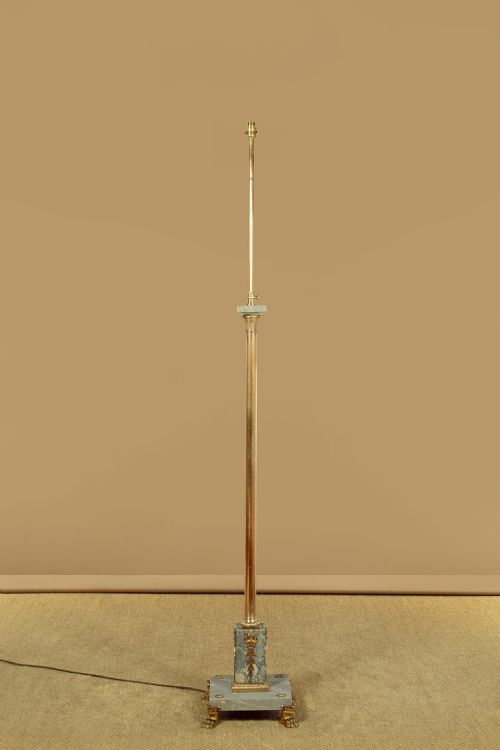
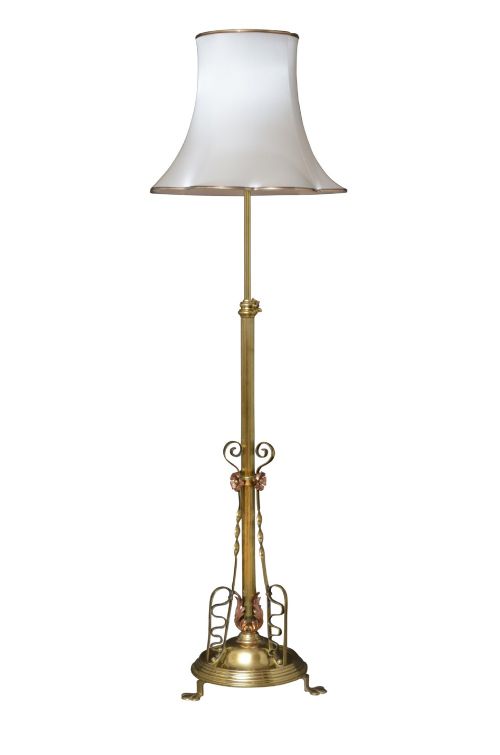
The version you are most likely to meet on this page is constructed primarily from brass, often featuring a rising and falling shaft mechanism. These lamps frequently appear in Victorian and Edwardian styles, alongside Arts and Crafts interpretations and occasional French Empire or Neoclassical revivals.
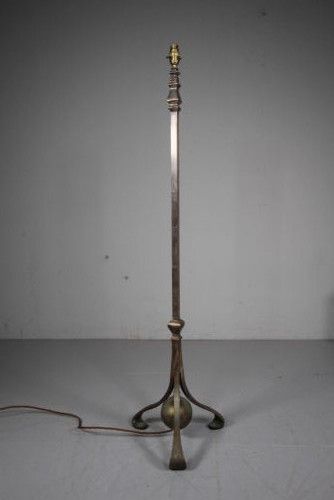
Makers and designers utilised these extending mechanisms to allow users to alter the height of the light source according to need. The forms range from simple columnar shafts to tripod bases and electrified oil lamp conversions.
How they were made
Makers constructed these lamps using metalworking techniques suited to brass, copper, wrought iron, and silver plate. Telescopic columns were engineered with inner and outer sliding tubes that locked into position to control height.
Details such as Corinthian columns, onyx inserts, and ormolu mounts were cast and turned by hand, while bases were weighted with marble or heavy metals to ensure stability when the stem was fully extended.
Telescopic Reading Lamp Retail Price Guide 2026
Typical asking prices for telescopic reading lamp among the pieces listed under this phrase on Sellingantiques today, from the lower quarter to the upper quarter. They describe what is for sale here now, not the wider market.
Some tall brass standards still retain traces of soot inside their converted oil reservoirs from long-forgotten Victorian evenings.
What varies in quality
Quality in a telescopic reading lamp rests on the engineering of the extension mechanism and the weight of the materials. Superior examples feature smoothly operating sliding rods that hold their position securely without slipping.
The choice of materials also dictates the tier of the piece, with solid cast brass, carved marble bases, and detailed ormolu mounts distinguishing finer workshops from simpler production.
The Telescopic Reading Lamp Glossary
- Telescopic
- A design incorporating sliding tubular sections that allow an object to extend or contract in height. This mechanism is central to adjusting the reach of the light source.
- Standard lamp
- A traditional British term for a tall floor lamp intended to stand beside a chair or sofa. These fixtures provide ambient or task lighting at a higher elevation than table lamps.
- Ormolu
- Gilt bronze mounted as decorative ornamentation on furniture and lamps. This technique imparts a rich golden finish to metal details.
- Corinthian column
- An architectural column style featuring an ornate capital decorated with acanthus leaves. This classical motif appears frequently on Victorian lamp standards.
Telescopic Reading Lamp: Frequently Asked Questions
How do I adjust the height?
The telescopic shaft relies on an inner and outer tube mechanism that slides vertically. Users raise or lower the upper section to position the light at the desired level.
Many period examples use a thumb screw or internal friction collar to secure the stem at the chosen height.
Where should I place a floor lamp?
These tall fixtures suit placement beside armchairs, desks, or sofas where focused illumination is required for reading. Their adjustable reach allows the light source to project over seating furniture.
Ensure the heavy base rests on a stable, level surface, particularly when the telescopic column is fully extended.
Were these originally oil lamps?
Some nineteenth-century examples began life as floor-standing oil lamps featuring burners and reservoirs at the top. These pieces were subsequently electrified during later rewiring.
Other standard lamps were manufactured specifically for electricity from the outset, particularly those dating to the Edwardian period and later.
How do I identify the period?
Dating relies on stylistic details such as the presence of Corinthian columns for Victorian pieces or simpler linear geometry for Arts and Crafts and 1920s examples. Materials like onyx and silver plate also point toward specific late nineteenth and early twentieth-century tastes.
Examining the construction methods of the base and wiring entry points provides further clues to the manufacturing era.